









Key Takeaways:
- Screw-mounted holders support 5-10 lbs on drywall alone but exceed 150 lbs capacity with proper anchor systems for secure permanent installation.
- Acrylic provides optimal balance with 92% light transmittance, superior scratch resistance (Mohs 3-4), and 10+ year indoor lifespan at $1.75/kg.
- The mounting method must match wall material—drywall requires anchors, concrete needs masonry bits, while glass and metal suit adhesive or magnetic systems.
- Adjustable angle holders range 0° to 90° with fine adjustment (0.100"-0.375") ensuring ADA compliance and optimal viewing in varied environments.
- Material costs span $1.20/kg (polystyrene economy) to $3.50/kg (polycarbonate premium) with total ownership costs depending on replacement frequency and lifespan.
Wall sign holders serve critical communication functions across retail, corporate, medical, and hospitality environments. Material selection, mounting method, and holder style directly impact visibility, durability, and maintenance. This guide compares holder types using quantitative performance data to match configurations with specific applications and budgets.
What Is a Wall Sign Holder and How Does It Work?
Wall sign holders mount to vertical surfaces to display information permanently or semi-permanently. Understanding fundamental differences from other display types guides proper selection.
How Does a Wall-Mounted Sign Holder Differ from Countertop Displays?
Wall-mounted holders attach to vertical surfaces using screws, adhesives, or magnetic systems. Countertop displays rest on horizontal surfaces with weighted bases. Wall mounting eliminates counter and floor space consumption while positioning signage at optimal eye level.
Why Do Businesses Use Wall Sign Holders Instead of Freestanding Options?
Permanent installation reduces theft and displacement concerns. Wall holders free floor space for merchandise and customer flow. Screw-mounted systems withstand daily contact better than weighted bases. Flush mounting integrates signage into architectural design professionally.
Where Are Wall Sign Holders Most Commonly Installed?
Retail stores use holders for product information and pricing. Offices display directories and wayfinding throughout facilities. Medical offices show health information in waiting rooms. Real estate spaces showcase property listings in lobbies.
What Are the Main Types of Wall Sign Holders?
Multiple holder configurations serve distinct functional requirements. Design variations affect content accessibility, installation complexity, and visual impact.
What Is a Single-Sided Wall Sign Holder?
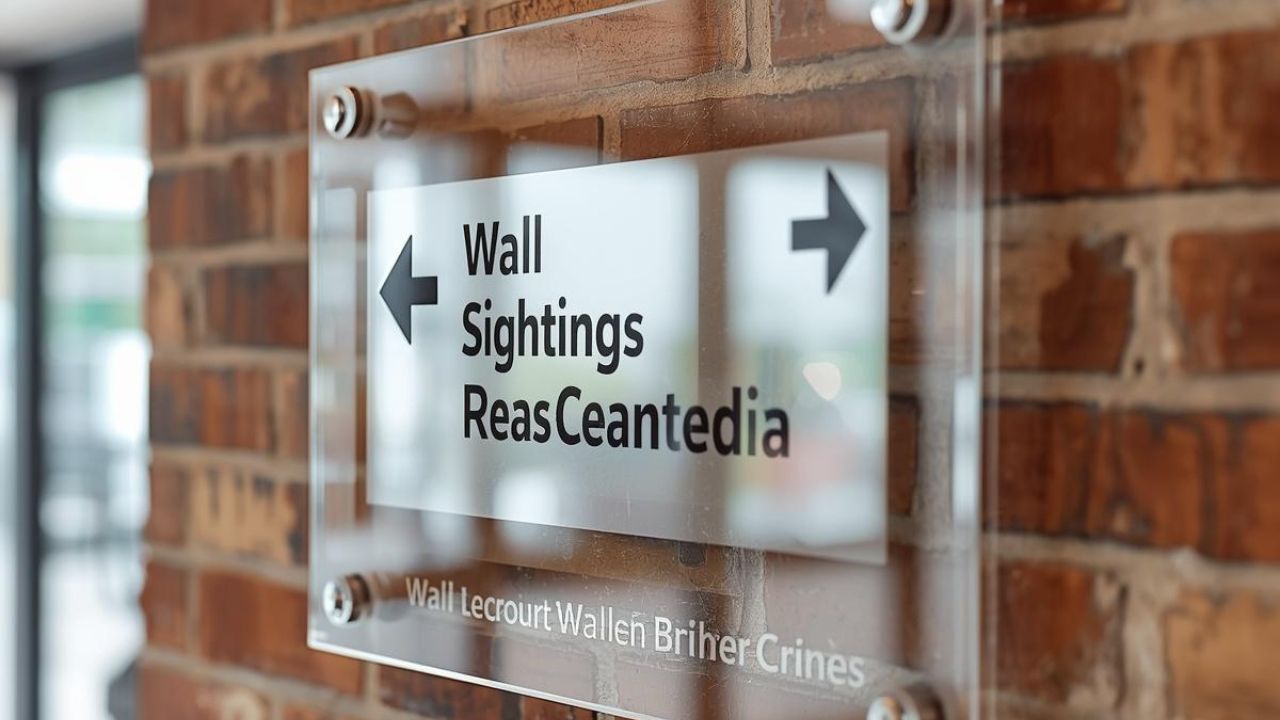
Flat wall mounts represent the most common configuration using folded acrylic or plastic flush against walls. Installation uses screws or adhesive tape. Best for walls with visibility from one direction only.
What Is a Double-Sided Wall Sign Holder?
Double-sided designs allow viewing from both faces simultaneously. Requires transparent materials for optimal visibility. Applications include center aisles, room dividers, and window displays. Installation typically uses standoff mounting creating rear viewing clearance.
What Is a Top-Loading Wall Sign Holder?
Insert slides from top opening for easy content changes. Design prevents accidental bottom removal during cleaning. Ideal for promotional calendars, daily specials, and rotating announcements requiring weekly or monthly updates.
What Is a Side-Loading Wall Sign Holder?
Content inserts through side opening rather than top. Pocket-style holders feature slide-in side loading. Suits permanent signage with infrequent changes. Requires lateral wall space for access.
What Is a Slant-Back or Angled Wall Display?
Adjustable angle holders allow viewing angle modification for ADA compliance. Viewing angle adjusts from 0° to 90° with fine adjustment range of 0.100" to 0.375". Sign frames maintain vertical orientation on sloped surfaces. Applications include hallways and retail aisles where angle optimization proves critical. For specialized angled mounting, explore angled display options for optimal viewing.
What Is a Multi-Pocket Wall Literature Holder?
Pocket-style holders combine signage with literature distribution through integrated compartments. Brochure pockets measure 1.75"D x 5.5"H, 4"W x 9"H x 1.5"D, or 4.0625"W x 5"H x 1.25"D. Business card pockets typically measure 3.75"W x 0.875"D. Common in travel agencies, medical offices, and retail.
How Do Vertical and Horizontal Wall Sign Holders Compare?
Orientation significantly affects readability and space utilization. Selection depends on wall dimensions and content format.
When Should You Choose a Vertical Wall Sign Holder?
Portrait orientation accommodates standard 8.5" x 11" documents without modification. Vertical displays maximize limited wall width in narrow corridors and cubicle panels. Door signs and nameplates favor portrait format.
When Is a Horizontal Wall Sign Holder the Better Option?
Landscape orientation suits wider signage including 11" x 17" and 22" x 28" sizes. Horizontal displays maximize visibility for panoramic content and directional arrows. Hallway signs benefit from landscape format aligning with walking direction.
How Does Orientation Affect Readability and Layout?
Horizontal text arrangement matches natural left-to-right reading patterns reducing eye strain. Portrait orientation requires closer viewing distance for equivalent text size and detail visibility. Landscape allows 30-40% larger text within identical square footage improving readability from greater distances. Content layout flexibility increases in landscape format accommodating side-by-side comparisons and wider images without vertical compression.
What Materials Are Used in Wall Sign Holders?
Material selection impacts clarity, durability, scratch resistance, cost, and lifespan. Four primary materials dominate wall holder applications with distinct performance profiles.
Why Is Acrylic Commonly Used for Wall Sign Holders?
Acrylic delivers 92% light transmittance providing highest optical clarity. Superior scratch resistance rates Mohs 3-4 and Rockwell M 94-105. Natural UV resistance shows only 3% degradation over 10-year outdoor periods. Acrylic signs last 5-10 years of general use, exceeding 10 years indoors. Weighs half of glass simplifying installation. Mid-range pricing at $1.75/kg. Heat deflection temperature of 110-115°C.
Are There Plastic Alternatives to Acrylic?
Polystyrene offers 89% transmittance at $1.20/kg but has poor impact strength and softens at 90-100°C. PETG provides 90% transmittance at $2.25/kg with 85x glass impact strength. Polycarbonate achieves 88% transmittance at $3.50/kg with 200x glass impact strength and 135°C temperature stability. Polystyrene available in 0.080", 0.098", 0.118" thicknesses.
How Does Material Thickness Affect Durability?
Standard thickness ranges from 1/10 inch to 3/16 inch for sign holders. Common specification uses 1/8 inch balancing rigidity and weight. Grip capacity for adhesive holders spans 3/16 inch to 1/4 inch. Cable/rod suspended displays use 1/8" thick acrylic. Steel components measure 1/8 inch thickness.
Which Material Provides the Most Professional Appearance?
Acrylic maintains 90% clarity after 30 years. Superior 92% transmittance displays content without haze. Polycarbonate's 88% transmittance appears slightly clouded. Scratch resistance (Mohs 3-4) keeps surfaces looking new. Professional environments invest in acrylic despite 46% higher cost versus polystyrene.
How Are Wall Sign Holders Mounted?
Installation method determines weight capacity, wall compatibility, installation difficulty, and long-term stability. Three primary mounting systems suit different requirements.
What Are Screw-Mounted Wall Sign Holders?
Screw mounting requires drilling creating permanent modifications. Drywall supports 5-10 lbs with screws, 10-25 lbs with plastic anchors, 25-50 lbs with metal toggle/molly bolts. Appropriate anchors enable over 150 lbs capacity. Concrete and brick demand masonry bits and specialized anchors. Frame systems require precise leveling.
What Are Adhesive or Tape-Mounted Options?
Adhesive mounting requires no tools. Works on concrete, wood, glass, metal, and plastic. Standard 3M strips measure 1"H x 5"L. Velcro strips dimension 1" x 1" in sets of 4. Weight limitations restrict adhesive to lightweight signs on smooth surfaces.
When Should You Use Standoff Hardware?
Standoff systems create floating effect mounting signs away from walls. Metal hardware provides a contemporary aesthetic. Standard 8.5" x 11" systems measure 10.87" x 13.37" at $22.99. For wall mount display systems including standoffs, professional guidance ensures results.
How Does Mounting Method Affect Stability and Security?
Screw mounting delivers the highest security and weight capacity. Adhesive suits lightweight signs on smooth surfaces. Magnetic holders function on ferrous metal surfaces only. The installation method must align with wall material, sign weight, and security requirements.
How Do Wall Sign Holders Perform in Different Business Environments?
Application-specific requirements determine optimal holder selection. Environmental factors and usage patterns guide material and mounting decisions.
Which Styles Work Best for Retail Stores?
Flat wall mounts display product information and pricing. Adjustable angle holders optimize visibility in retail aisles. Multi-pocket holders distribute brochures alongside signage. Acrylic's 92% transmittance ensures maximum visibility and color accuracy.
What Is Ideal for Restaurants and Hospitality Settings?
Menu holders accommodate 8.5"W x 11"H and 11"W x 14"H formats. Slant-back designs provide comfortable reading angles. Acrylic resists food service chemicals and cleaning solutions. Easy-change designs facilitate frequent menu updates.
What Should Corporate Offices and Lobbies Choose?
Premium standoff systems enhance corporate image. Directory signs with 0° to 90° adjustable angle accommodate viewing heights. Acrylic maintains professional appearance through years of use. Frame systems provide sophisticated presentation.
What Are the Best Options for Medical Offices and Real Estate Spaces?
Clear pocket-style holders distribute health information in medical waiting areas. ADA-compliant adjustable displays ensure accessibility. Easy-to-sanitize acrylic meets healthcare hygiene standards. Property listing holders require frequent updates favoring top-loading configurations.
Which Wall Displays Work Well at Trade Shows and Events?
Cable/rod suspended systems offer temporary installation flexibility. Cable suspension uses 1.5mm cable with 4M length. Rod suspension employs 6mm rods extending 3M. For hanging display solutions, cable and rod systems provide professional presentation.
What Should You Consider Before Choosing a Wall Sign Holder?
Five critical factors determine optimal holder selection. Systematic evaluation ensures long-term satisfaction and value.
What Size Insert Will You Be Displaying?
Common flat wall mount dimensions include 5.5"W x 8.5"H, 8.5"W x 11"H (most common), 11"W x 14"H, 11"W x 17"H, 12"W x 17"H, and 22"W x 28"H. Cable/rod suspended signs accommodate sizes from 8.5" x 11" to 36" x 48". Standard 8.5" x 11" offers widest availability and lowest cost.
How Often Will the Signage Be Updated?
Daily or weekly updates favor top-loading or magnetic designs. Permanent signage justifies screw-mounted installation. Adhesive allows one-time installation with periodic replacement. Update frequency impacts labor costs and installation method selection.
Will the Holder Be Placed in a High-Traffic Area?
High-traffic environments require impact-resistant polycarbonate delivering 200x glass strength. Acrylic's scratch resistance (Mohs 3-4) maintains a clear appearance despite frequent cleaning. Screw-mounted installation prevents displacement. Polycarbonate's 135°C temperature stability suits harsh conditions.
Is Tamper Resistance or Security Important?
Screw-mounted systems offer highest tamper resistance requiring tools for removal. Frame systems enclose and protect sign content preventing unauthorized modifications. Adhesive-backed options prove vulnerable to deliberate removal in unsupervised public spaces. Metal toggle/molly bolts support 25-50 lbs creating secure mounting resisting forceful tampering. Security requirements vary dramatically between controlled office environments and unmonitored public spaces. Investment in tamper-resistant mounting prevents content theft and vandalism costs.
Does Brand Image and Presentation Quality Matter?
Premium standoff systems signal quality and professionalism reflecting brand standards. Acrylic's 92% transmittance provides clearest content presentation maximizing visual impact. Frame-style systems create sophisticated enclosed displays appropriate for corporate lobbies and executive offices. Material selection communicates brand values with premium materials suggesting quality service. Budget materials risk undermining brand perception despite initial cost savings. Professional presentation justifies investment in superior materials and installation methods.
How Do Custom Wall Sign Holders Differ from Standard Sizes?
Standardization reduces costs while customization addresses specific requirements. Understanding trade-offs guides appropriate selection.
When Should You Choose a Standard Size Like 8.5" x 11"?
Standard 8.5" x 11" format proves most cost-effective with widest manufacturer availability. Letter-size documents insert without trimming or reformatting reducing production costs. Replacement inserts readily available from office supply sources. Price range for plastic/acrylic flat mounts spans $23.78 - $26.05 representing lowest entry cost. High-volume production reduces per-unit pricing through manufacturing economies. Standard sizes ship immediately without custom fabrication delays.
When Do You Need Custom Dimensions?
Non-standard signage dimensions require custom fabrication matching content specifications. Branding guidelines may mandate specific sizes maintaining visual consistency. Architectural constraints necessitate custom dimensions fitting available wall space precisely. Unique applications demand specialized configurations unavailable in standard product lines. Custom cut-to-size services accommodate specific requirements with corresponding cost increases and extended lead times.
Can Wall Sign Holders Be Custom Printed with Logos?
UV printing applies permanent graphics to UV-stable acrylic showing only 3% degradation over 10 years. Polystyrene's poor UV resistance causes rapid print fading outdoors within months. Custom printing maintains brand consistency across multiple locations with standardized graphics. Acrylic's scratch resistance (Mohs 3-4) protects printed elements from handling damage. Branded holders differentiate professional installations from generic commodity displays reinforcing corporate identity.
How Does Custom Fabrication Improve Brand Consistency?
Standardized custom sizes ensure uniform appearance across all company locations. Branded elements reinforce corporate identity with every customer interaction. Custom materials match specific environmental requirements unavailable in standard products. Precision fabrication achieves CNC tolerances of +/- 0.001 inches ensuring consistent fit and appearance. Multi-location deployments benefit from centralized custom specifications eliminating local procurement variations. Brand standards compliance justifies custom fabrication investment.
What Are the Advantages and Limitations of Wall Sign Holders?
Balanced evaluation considers both benefits and constraints. Realistic expectations guide successful implementation.
What Are the Benefits of Using Wall-Mounted Displays?
Space-saving design eliminates floor and counter space consumption freeing premium real estate. Permanent installation provides superior security and stability versus freestanding alternatives. Professional flush-mounted appearance integrates signage into architectural design. Acrylic options last over 10 years indoors with minimal maintenance. Weight capacity reaches 150+ lbs with appropriate drywall anchor systems. Multiple mounting options accommodate diverse wall materials and security requirements. Eye-level positioning optimizes visibility without obstructing traffic flow.
What Are the Potential Limitations to Consider?
Installation requires wall modification through drilling for screw-mounted systems. Adhesive may damage paint or wallpaper surfaces during removal. Wall material composition limits mounting options and maximum weight capacity. Repositioning demands complete reinstallation with new wall penetrations or fresh adhesive. Polystyrene proves unsuitable for outdoor applications due to poor UV resistance and brittleness. Rented spaces may prohibit permanent wall modifications restricting mounting options. Improper installation risks holder failure and content damage.
How Do Wall Sign Holders Compare to Floor or Counter Displays?
Wall mounting eliminates tipping hazards inherent in freestanding weighted base designs. No base weight requirements reduce material costs and shipping expenses. Counter displays offer greater accessibility for frequent content updates without tools. Floor stands provide superior visibility in open spaces but consume valuable floor area. Wall holders protect signage from handling damage in high-traffic zones. Vertical mounting positions content at consistent eye level across varied viewer heights. For comprehensive sign holder and ad frame options including wall, counter, and floor configurations, selection guidance ensures optimal placement.
Which Wall Sign Holder Style Is Right for Your Space?
Application-specific selection optimizes performance and value. Systematic evaluation matches holder characteristics to operational requirements.
Should You Choose Top-Loading or Side-Loading?
Top-loading enables easier frequent updates with tool-free content insertion. The bottom edge remains closed preventing accidental content removal during cleaning or customer contact. Side-loading suits permanent signage applications where infrequent changes occur. Pocket-style side-loading combines primary signage with integrated literature distribution. The access method should align with anticipated update frequency and content change procedures. Labor costs for updates favor accessible top-loading designs.
Is Single-Pocket or Multi-Pocket Better for Your Needs?
Single-pocket delivers focused messaging with cleaner visual appearance. Multi-pocket systems distribute brochures and business cards alongside main signage maximizing information delivery. Pocket dimensions accommodate standard brochure sizes including 1.75"D x 5.5"H and 4"W x 9"H x 1.5"D formats. Business card pockets measuring 3.75"W x 0.875"D add functional value for networking applications. Literature distribution requirements justify multi-pocket complexity and higher cost.
What Is the Best Option for Long-Term Professional Use?
Acrylic provides optimal balance delivering 92% clarity, superior scratch resistance (Mohs 3-4), and reasonable $1.75/kg cost. Expected lifespan exceeding 10 years indoors justifies higher initial investment through extended replacement intervals. Screw-mounted installation offers maximum longevity and security for permanent applications. Premium standoff systems deliver sophisticated appearance appropriate for corporate environments emphasizing brand quality. Total ownership cost calculations favor durable materials over economy options requiring frequent replacement.
How Do You Match Style to Environment and Budget?
Budget tiers guide material selection from economy polystyrene at $1.20/kg for short-term indoor use to premium acrylic at $1.75/kg for professional long-term installation. Standoff systems priced at $22.99 for 8.5" x 11" format deliver corporate image enhancement. Environmental factors including high-traffic areas demand polycarbonate at $3.50/kg providing 200x glass impact resistance. Indoor controlled environments optimize acrylic's 92% clarity and 10+ year lifespan. Outdoor applications require UV-stabilized materials with threaded metal rod mounting. Temperature extremes necessitate polycarbonate (135°C stability) or PETG (70-80°C tolerance). Consider wall poster frames for premium enclosed presentations protecting high-value graphics.
What Are the Key Differences Between Wall Sign Holder Styles at a Glance?
Comparative analysis simplifies selection across multiple options. Key metrics enable objective evaluation.
Which Features Matter Most for Daily Use?
Easy content replacement through top-loading versus side-loading access affects operational efficiency. Material clarity spanning 88-92% transmittance range impacts visual effectiveness. Scratch resistance rated Mohs 3-4 for acrylic maintains professional appearance through daily cleaning cycles. Weight capacity matching sign dimensions and material density prevents installation failures. Update accessibility determines labor costs for content management. Environmental resistance to UV, chemicals, and temperature extremes extends service life.
Which Mounting Style Offers the Most Stability?
Screw-mounted systems support 5-10 lbs on drywall alone, 10-25 lbs with plastic anchors, 25-50 lbs using metal toggle/molly bolts, and exceed 150 lbs with appropriate anchor systems. Adhesive mounting suits lightweight signs on smooth surfaces with proper preparation. Magnetic attachment depends on ferrous surface material and magnet strength specifications. Adjustable angle holders use 11.25"W x 11.375"H sign cards with 1/8" thick steel construction. Telescopic height options range 34" to 49" for varied mounting applications. Weighted designs minimize tipping in high-traffic areas. Stability requirements increase with sign size and environmental exposure severity.
How Should You Make the Final Selection?
Evaluation criteria ranked by priority guide systematic decision-making. Wall material compatibility determines feasible mounting methods across drywall, concrete, glass, and metal surfaces. Sign size selection between standard 8.5" x 11" and custom dimensions affects availability and cost. Update frequency dictates loading style preference for daily/weekly changes versus permanent installation. The budget spans $1.20/kg (polystyrene) to $3.50/kg (polycarbonate) material costs plus installation expenses. Environmental factors including indoor/outdoor placement, temperature ranges, and UV exposure narrow material options.
Appearance preferences balance flat mounts versus premium standoffs versus enclosed frames. Lifespan expectations from short-term 1-year polystyrene to 10+ year acrylic guide investment decisions. Security requirements including tamper resistance and weight capacity finalize the mounting method. For applications requiring elevated product presentation alongside signage, U-risers and merchandise displays complement wall-mounted systems effectively.
Ready to Install Professional Wall Displays That Last?
Material selection directly impacts brand perception and displays longevity. Wrong choices lead to cloudy holders, scratched surfaces, and premature replacement costs. The right combination delivers years of service while strengthening brand presence. Proper specification prevents costly mistakes whether you need acrylic for premium retail, polycarbonate for high-traffic areas, or budget options for temporary campaigns.
Displays and Holders match businesses with optimal wall sign holder solutions across materials, mounting systems, and applications. Our team translates specifications into practical recommendations for your wall material, traffic patterns, and update frequency. From single installations to nationwide rollouts, we deliver professional displays performing exactly as required. Contact Displays and Holders today for expert guidance backed by industry-leading product selection.