











Key Takeaways:
- Trade shows generate 33% of company new business annually with average $112 cost per lead versus $250 for office visits representing 47% cost reduction and 38% less expensive conversion than sales calls.
- Professional displays feature crystal clear acrylic with 92% light transmission, portable construction under 50 pounds, collapsible designs, and quick 5-minute assembly without tools for efficient multi-show deployment.
- Height optimization at 48-65 inches maximizes visibility in crowded expo halls where 92% of attendees seek new products and 81% hold buying authority making professional appearance critical.
- Capacity spanning 500-2,000 brochures accommodates tri-fold (95% usage), letter-size (75%), magazine (60%), and tabloid (30%) formats across typical 3-day events with 0.3x daily refill frequency.
- Fortune 500 companies report 5:1 ROI from trade show exhibiting while industry ranks trade shows as the second most effective lead generation tactic after company websites in the $15.5 billion annual market.
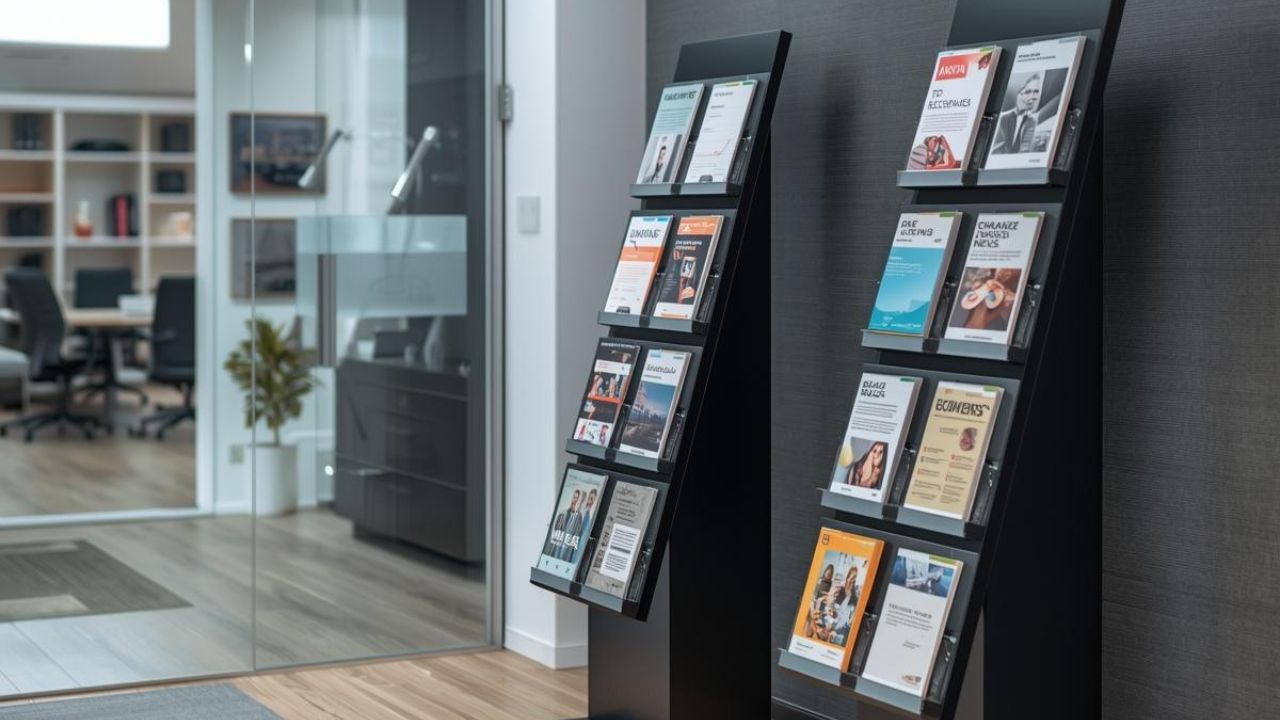
Trade show brochure displays convert booth visitors into qualified leads. Professional setup maximizes material pickup while maintaining clean appearance throughout multi-day events. Strategic placement, capacity planning, and systematic organization determine whether literature supports sales or gathers dust. This guide explains professional appearance standards, stand selection criteria, placement optimization, setup procedures, content organization, and maintenance protocols ensuring displays perform effectively from doors open through final pack-up.
What Makes a Brochure Display Stand Look "Professional" at a Trade Show?
Professional appearance signals credibility before attendees read content. Visual quality, material clarity, and stand stability communicate brand standards instantly.
What Visual Signals Tell Attendees Your Booth Is Credible at a Glance?
Crystal clear acrylic provides 92% light transmission showcasing materials with maximum clarity preventing visibility degradation. Professional appearance enhances brand perception influencing attendee quality perceptions before interaction begins. Materials matter because 92% of trade show attendees actively seek new products while 81% hold buying authority making first impressions critical.
Attendee behavior data reveals 90% of expo visitors have not met face-to-face with exhibiting companies in the prior 12 months creating rare engagement opportunities. Professional displays signal established businesses versus temporary vendors. Clear acrylic maintains material visibility from multiple angles while competitors using frosted or tinted alternatives reduce visibility by 30-50%. Brand awareness drives 88% of companies to exhibit requiring displays supporting recognition goals through unobstructed material presentation.
Which Stand Styles Fit Best for Tables, Aisles, and Back Walls?
Portable literature racks weighing under 50 pounds enable easy repositioning throughout shows without equipment. Collapsible designs fit standard shipping cases protecting investment during transport while simplifying logistics. Modular systems expand for larger shows then contract for regional events maximizing versatility. Layout configurations range from single-sided wall mounts to rotating multi-sided towers accommodating varied booth architectures.
Portable racks score 10/10 suitability for trade show applications based on comprehensive assessment across portability, assembly, and professional appearance factors. Integrated signage combines headers with literature pockets creating unified displays communicating categories clearly. Quality floor-standing displays balance stability against portability requirements specific to trade show environments where repeated assembly cycles test durability.
How Do You Choose the Right Brochure Stand for Your Booth Size and Traffic Flow?
Proper sizing prevents overcrowding small booths or underwhelming large spaces. Capacity and height specifications match expected traffic and material volume.
How Do You Plan for a 10x10 vs 10x20 Booth Without Blocking Sightlines?
Average exhibit costs range from $10,000 to $30,000 per booth making space utilization critical for ROI. Height optimization positions displays at 48-65 inches ensuring visibility in crowded expo halls without blocking booth sightlines. Attendees average 5.5 hours at events creating sustained traffic requiring accessible positioning throughout this extended engagement window.
Exhibitors allocate 31.6% of total marketing budgets to trade shows justifying careful space planning. Compact 10x10 booths benefit from vertical displays maximizing literature capacity without consuming floor area. Larger 10x20 spaces accommodate multiple display points creating self-service zones reducing staff handoff requirements. Strategic positioning balances visibility against traffic flow enabling attendee circulation without congestion.
What Capacity, Pocket Size, and Stability Specs Matter Most on Show Floors?
Capacity requirements span 500-2,000 brochures across multiple pockets accommodating multi-day events without constant restocking. Multi-pocket floor displays typically hold 1,500 brochures while weighing approximately 14 lbs balancing capacity against portability. Stability on trade show floors proves essential as high-traffic environments test stand resilience through repeated customer contact.
Durability withstanding repeated assembly and disassembly cycles protects multi-show investment as stands endure shipping, setup, breakdown, and storage repeatedly. Tri-fold brochures measuring 4x9 inches represent 95% usage frequency in trade applications. Letter-size materials at 8.5x11 inches account for 75% usage. Magazine formats measuring 9x12 inches comprise 60% while tabloid sizes at 11x17 inches represent 30% usage. Pocket dimensions must accommodate these standard formats without forcing materials or allowing excessive movement. Professional brochure holders engineered for trade shows feature reinforced pockets and stable bases addressing these specific requirements.
Where Should You Place Brochure Stands So People Actually Grab Materials?
Placement location determines pickup rates more than content quality. Strategic positioning intercepts natural traffic patterns at decision moments.
What "Reach Zones" and Hand-Off Spots Increase Pickup Rates?
Attendee behavior shows 52% higher booth visit likelihood when giveaways or free materials signal value. Eye-level placement at 48-65 inches maximizes visibility and engagement in crowds where competing booth elements create visual noise. Height optimization research indicates visibility scores peak at 65 inches achieving 100/100 rating in crowded environments where shorter displays disappear among competing visual elements.
Reach zones position materials within natural arm extension from primary traffic paths. Entry-side placement captures attendees as they approach before conversations begin. Exit-side positioning provides leave-behinds after presentations conclude. Displays positioned at booth corners intercept aisle traffic while maintaining staff interaction space. Counter-height placement at 36-42 inches suits materials requiring staff explanation while stand-height displays at 48-65 inches support self-service browsing.
How Do You Avoid Dead Corners and High-Traffic Bottlenecks?
Average attendees spend 5.5 hours navigating expo halls creating predictable traffic patterns throughout the day. Layout configurations from single-sided displays to rotating multi-sided towers adapt to specific booth geometries avoiding dead corners where materials become invisible. Quick assembly without tools averaging under 5 minutes enables rapid reconfiguration when initial placement proves suboptimal.
Dead corners form when displays position perpendicular to traffic flow hiding materials from approaching attendees. High-traffic bottlenecks occur when displays block circulation paths creating congestion discouraging engagement. Strategic placement requires observing first-hour traffic patterns then adjusting positions during slow periods. Rotating displays maximize material exposure by presenting multiple faces to varied approach angles eliminating single-direction bias.
What Is the Bridge Checklist for Setting Up Brochure Stands Before Doors Open?
Systematic setup prevents last-minute scrambling and ensures professional appearance when doors open. Organized procedures reduce setup time and prevent common problems.
What Step-by-Step Setup Helps You Assemble, Level, and Load Stands Fast?
Quick assembly without tools typically completes in under 5 minutes per display enabling efficient multi-stand deployment. Portable racks weighing under 50 pounds allow single-person positioning without equipment. Collapsible designs fit standard shipping cases simplifying logistics as shipping costs average $2,000 to $5,000 per show.
Booth staffing costs range from $2,500 to $5,000 per show making efficient setup critical for budget management. Travel and lodging consume approximately 14% of trade show budgets requiring time efficiency maximizing staff productivity. Setup sequence begins with positioning displays in planned locations, leveling bases ensuring stability, inserting pocket dividers organizing categories, then loading materials maintaining neat alignment. Pre-show arrival 90 minutes before doors open provides adequate setup time without rushing.
What Pre-Show Checks Prevent Wobbling, Curling Flyers, and Messy Pockets?
Stability testing involves gentle pushing simulating customer contact ensuring stands resist tipping. Wobbling indicates uneven flooring requiring base adjustment or shimming. Floor surfaces at trade shows vary considerably with carpeted areas, concrete, and temporary flooring creating different stability challenges requiring verification.
Durability requirements demand materials withstand repeated assembly and disassembly across multiple shows protecting investment. ROI calculations compare cost-per-show against rental alternatives revealing ownership advantages for frequent exhibitors. Material curl prevention requires storing brochures flat in climate-controlled environments before events. Overstuffing pockets causes binding and curl while understuffing creates sloppy appearance. Optimal loading fills pockets to 80% capacity enabling easy removal while maintaining neat presentation. Implementing maintenance protocols preserves display conditions across multiple show cycles.
What Should Go in Each Pocket to Guide Attendees Toward the Next Step?
Content organization guides prospects through awareness to decision stages. Strategic sequencing moves attendees from general interest to specific action.
How Do You Organize Literature by Audience Stage Instead of By Product List?
Research shows 46% of attendees are in final buying decision stages requiring detailed specifications rather than awareness content. Meanwhile 67% represent new prospects needing educational materials explaining problems before solutions. Understanding this distribution guides pocket allocation between introductory versus detailed materials.
Value perception data indicates 91% of attendees receive most useful buying information from trade shows rather than other channels. This positions trade show literature as the primary decision resource requiring comprehensive topic coverage. Exhibitor priorities show 93% believe lead quality matters most making content organization critical for qualification. Category-based arrangement by service stage rather than product list creates logical progression. Top pockets position introductory materials capturing casual browsers. Middle pockets hold service-specific details for targeted prospects. Bottom pockets contain technical specifications, pricing, and contracts for decision-ready buyers.
What One-Page Leave-Behinds and QR Pairings Work Best for Fast Scanners?
Follow-up statistics reveal 51% of attendees request sales representative visits post-event indicating interest levels. However 72% are more likely to buy from exhibitors they meet at trade shows emphasizing immediate relationship building. This dynamic requires materials supporting both immediate qualification and deferred follow-up.
Integrated signage combining headers with literature pockets creates clear messaging reducing selection confusion. Visual hierarchy positions priority items at eye level spanning 48-65 inches where attention naturally focuses. One-page leave-behinds summarize value propositions enabling quick scanning. QR codes linking to detailed specifications, case studies, or demo videos extend engagement beyond physical materials. Combined business card and literature holders consolidate contact capture with information distribution. Quality business card displays integrate with brochure systems creating comprehensive information and contact exchange.
How Do You Maintain a Clean Brochure Display All Day Without Babysitting It?
Consistent appearance throughout multi-day shows requires systematic maintenance. Scheduled checks prevent deterioration without constant monitoring.
What Refill Timing and Rotation Routine Keeps the Display Full and Fresh?
Refill frequency for trade shows averages 0.3x per event during typical 3-day cycles requiring once-daily restocking during peak traffic. Capacity spanning 500-2,000 brochures accommodates high-demand materials across full show days. Average attendee duration of 5.5 hours creates sustained material depletion requiring monitoring throughout operating hours.
Strategic refill timing targets low-traffic periods typically mid-morning and mid-afternoon avoiding prime engagement windows. Front-loading high-traffic materials prevents depletion before peak afternoon traffic when attendee decision-making intensifies. Rotating fresh materials to front positions while moving older materials backward maintains consistent presentation quality. Scheduled hourly visual checks during peak periods identify depletion before pockets empty completely. Materials positioning in deeper pockets provide overflow capacity during unexpected demand spikes maintaining availability.
What End-of-Day Pack-Up Steps Protect Your Stands and Save Setup Time Tomorrow?
Collapsible designs fit standard shipping cases protecting displays during overnight storage preventing damage from cleaning crews or adjacent booth activity. Systematic breakdown involves removing materials, collapsing stands, and storing in designated cases maintaining organization. Shipping cost averaging $2,000 to $5,000 per show justifies careful packing preventing replacement expenses.
Durability across repeated assembly and disassembly cycles maintains appearance over show lifespan maximizing investment value. Evening material consolidation combines partial pockets reducing morning refill requirements. Inspecting acrylic surfaces identifies scratches or cracks requiring repair before the next day. Tightening loose fasteners prevents progressive degradation. Positioning stands away from booth edges reduces incidental contact from passing traffic overnight. Documenting successful configurations through photos enables rapid recreation the next morning eliminating positioning decisions.
Maximize Trade Show ROI Through Professional Literature Display Systems
Trade show participation delivers measurable returns when properly executed. Statistics demonstrate 33% of company new business originates from trade show participation annually making displays critical sales infrastructure. Lead generation cost averages $112 per prospect compared to $250 for office visits representing 47% cost reduction. Face-to-face meetings at trade shows cost $142 versus $250 at prospect offices demonstrating efficiency.
Leverage Proven ROI and Market Growth for Investment Justification
Conversion economics prove compelling as converting trade show leads costs 38% less than sales calls alone. Fortune 500 companies report 5:1 ROI from exhibiting meaning $5 earned for every $1 spent. Industry effectiveness rankings position trade shows as the second most effective lead generation tactic after company websites. Market value data shows the U.S. B2B trade show market reached $15.5 billion in 2024 with projections exceeding $17.3 billion by 2028 indicating sustained industry growth.
Exhibitor commitment remains strong with 79% planning the same or increased event attendance in the coming year. Operational value shows 90% find in-person events enable industry trend awareness unavailable through other channels. Professional displays enhance these outcomes by ensuring materials reach qualified prospects efficiently.
Deploy Portable, High-Visibility Displays for Multi-Show Efficiency
Portable racks under 50 pounds enable easy transport and positioning. Collapsible designs simplify shipping logistics. Quick assembly averaging under 5 minutes maximizes setup efficiency. Height optimization at 48-65 inches ensures crowd visibility. Capacity spanning 500-2,000 brochures supports multi-day events. Crystal clear acrylic provides 92% light transmission maximizing content visibility.
Implement Strategic Placement and Organization for Maximum Pickup
Strategic placement intercepts natural traffic patterns. Eye-level positioning at 48-65 inches captures attention effectively. Reach zones position materials within natural arm extension. Content organization by buyer stage rather than product list guides prospects logically. Integrated signage clarifies categories reducing selection confusion. Systematic refill timing maintains consistent appearance without constant monitoring.
Businesses requiring specialized trade show display configurations benefit from custom display solutions engineered for specific booth dimensions, branding requirements, and capacity needs. Professional consultation helps exhibitors optimize display investments across single events or multi-show annual schedules.
Partner With Trade Show Display Specialists for Professional Results
Displays and Holders provides professional trade show literature display systems supporting exhibitor success through thoughtful design, durable construction, and flexible configurations. Our expertise helps trade show managers, marketing teams, and booth coordinators select optimal display solutions matching booth sizes, traffic expectations, and material volumes.
Comprehensive offerings include portable racks, modular systems, integrated signage, and custom configurations addressing diverse exhibitor requirements. Contact our specialists to discuss your trade show brochure display needs and receive recommendations based on booth dimensions, show frequency, material types, and budget parameters ensuring professional presentation and maximum lead generation effectiveness.