










Key Takeaways:
- Base stability matters critically: minimum 1.5 lbs for standard use, 4 lbs for high-traffic areas prevents daily tipping and repositioning frustration.
- Acrylic delivers superior performance with 92% light transmittance, 10x glass impact resistance, and Mohs 3-4 scratch resistance maintaining appearance for 10+ years.
- Material clarity differences impact readability: acrylic (92%) vs PETG (90%) vs polystyrene (89%) vs polycarbonate (88%) with 4% creating visible quality degradation.
- Top-loading enables faster daily updates while side-loading suits permanent displays, directly affecting whether staff maintains fresh content or avoids changes.
- Pricing spans $2.50-$18 by size (4"x6" to 11"x17") with material costs from $1.20/kg (polystyrene) to $3.50/kg (polycarbonate) affecting long-term value.
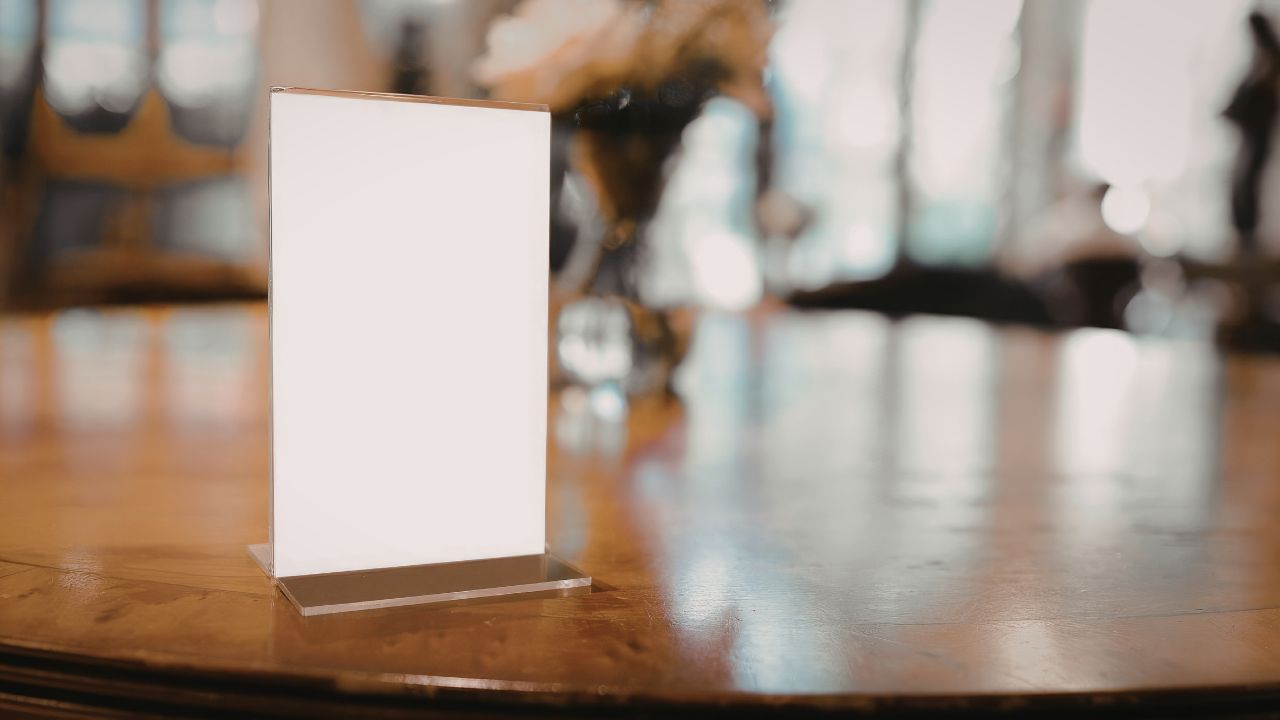
Tabletop sign holders deliver critical information at point-of-sale locations, reception desks, and service counters. Base stability, material clarity, insert compatibility, and loading style impact effectiveness. This guide compares features using quantitative data to match holders with business requirements.
What Is a Tabletop Sign Holder Stand and What Is It Used For?
Tabletop sign holders display information on horizontal surfaces without permanent installation. Understanding common applications guides proper selection.
Where Do Businesses Most Commonly Use Tabletop Sign Holders?
Restaurants use menu holders with ring binders or multiple acrylic sleeves. Table tents promote specials at dining tables. Retail point-of-sale uses compact designs for pricing where space proves critical. Trade shows favor lightweight, collapsible holders with literature racks. Reception desks use slant-back holders at comfortable reading angles. Medical offices, corporate lobbies, and service counters reduce customer questions.
Why Do Tabletop Sign Holders Work Better Than Taping Signs to a Surface?
Professional appearance enhances brand while protecting signage from damage. Weighted bases prevent movement unlike tape that fails under contact. Easy updates eliminate residue and surface damage. Protected inserts maintain fresh appearance through thousands of interactions.
What Types of Inserts Can a Tabletop Sign Holder Display?
Common insert sizes include 5.5" x 7", 8.5" x 11" (most prevalent), 11" x 17", and specialty dimensions from 4" x 6" to 30" x 40". Maximum thickness capacities span 1/32" to 1/4". Standard 8.5" x 11" offers widest compatibility.
What Are the Main Types of Tabletop Sign Holder Stands?
Multiple configurations serve distinct display requirements. Design variations affect visibility, accessibility, and counter space utilization.
What Is a Single-Sided Tabletop Sign Holder?
Single-sided displays show information viewable from one direction only. Typically L-shaped or slant-back design creates a compact footprint on counter surfaces. Best for wall-adjacent placements or directional customer flow where rear viewing is unnecessary.
What Is a Double-Sided Tabletop Sign Holder?
Double-sided displays maximize visibility requiring high transparency. Bottom-loading or T-style holders display information in two directions. Information viewable from both counter sides suits center placements. Ideal for queue lines with front and back viewing.
What Is a Slant-Back Tabletop Sign Holder?
Slant-back designs present information at comfortable reading angles. Tilt mechanisms adjust from 0° to 90°. Advanced models offer 360-degree tilt. Specific ranges include up to 20° slope. Popular for reception desks where seated visitors need ergonomic angles. For specialized tabletop sign solutions, professional designs enhance interaction.
What Is a Vertical Tabletop Sign Holder?
Portrait orientation accommodates standard formats maximizing vertical space. Letter-size (8.5" x 11") inserts fit without modification. Vertical suits narrow counter sections.
What Is a Tabletop Brochure-and-Sign Combo Holder?
Literature racks combine signage with material distribution. Tiered configurations available: 2-tier, 3-tier, multi-panel options maximizing countertop space.
What Features Should You Look for in a Tabletop Sign Holder Stand?
Critical features determine daily usability and long-term performance. Systematic evaluation prevents costly mistakes.
What Does "Top-Loading" Mean for a Sign Holder?
Insert slides from top opening enabling easier updates. Prevents bottom catching. Staff accesses without moving the holder. Ideal for frequent content changes.
What Does "Side-Loading" Mean for a Sign Holder?
Insert slides from the side opening. Requires more lateral clearance. Common for permanent displays. Lower manufacturing costs.
What Base Styles Affect Stability on Counters and Tables?
Weighted bases crucial for stability in high-traffic areas. Tabletop stands weigh 1.5 lbs minimum. Lightweight displays reach 4 lbs. Outdoor units withstand 40-50 MPH winds with fillable bases. Base dimensions: steel 1"H x 2.5"D, metal 3.5" x 5", round 2.0" diameter. Wide footprints and low centers of gravity prevent tipping. Metal bases feature vinyl coating for grip. High-traffic areas demand 4 lb or heavier bases.
What Edge and Corner Finishing Helps With Safety and Durability?
Polished edges prevent injuries and snags. Rounded corners enhance safety. Quality finishing extends lifespan.
How Does Material Thickness Change Strength and Feel?
Thicker acrylic provides enhanced stability resisting bending. Standard thicknesses contribute rigidity. Premium feel signals quality.
How Do Acrylic and Plastic Tabletop Sign Holders Compare?
Material selection impacts clarity, durability, cost, and maintenance requirements. Four primary materials dominate tabletop applications.
Why Do Many Businesses Choose Acrylic for Clear Displays?
Acrylic transmits 92% of visible light providing highest clarity. Material proves 10 times more impact-resistant than glass. UV-resistant properties prevent yellowing. Lightweight (half of glass weight) simplifies handling. Easy maintenance with soft cloths and soapy water. Recycled options available. Lifespan exceeds 10 years indoors.
When Is Plastic a Practical Choice for Tabletop Use?
Polystyrene delivers 89% transmittance at $1.20/kg (most economical). PETG provides 90% transmittance at $2.25/kg. Polycarbonate achieves 88% transmittance at $3.50/kg with maximum impact resistance. Alternatives suit short-term campaigns and budget applications.
How Do Clarity and Readability Compare Under Indoor Lighting?
Acrylic leads at 92% transmittance. PETG follows at 90%. Polystyrene reaches 89%. Polycarbonate delivers 88% (cloudiest). Glass reference: 91%. The 4% difference becomes apparent in side-by-side testing.
How Do Scratch Resistance and Long-Term Appearance Compare?
Acrylic demonstrates superior scratch resistance: Mohs 3-4, Rockwell M 94-105. Polycarbonate rates Mohs ~3, Rockwell M 70-75. PETG measures Mohs 3. Glass achieves Mohs 5.5. Polystyrene registers Mohs 2.5 (poorest). Acrylic maintains appearance through years of daily handling. The 24-point Rockwell difference impacts long-term clarity.
What Sizes and Orientations Are Most Popular for Tabletop Sign Holders?
Size selection affects readability, counter space consumption, and compatibility with existing materials. Standard dimensions reduce costs and lead times.
What Are the Most Common Insert Sizes Businesses Use?
Most prevalent: 4 x 6", 5.5 x 7", 8.5 x 11", 11 x 17". Standard 8.5 x 11 accommodates letter-size documents. Pricing: 4x6" ($2.50-$4.50), 5.5x7" ($3.50-$6.00), 8.5x11" ($5.00-$9.00), 11x14" ($8.00-$14.00), 11x17" ($10.00-$18.00). Standard sizes ship immediately.
When Should You Use Vertical vs Horizontal Orientation?
Most holders accommodate portrait and landscape. Rotating stands offer 360-degree capability. Some provide 180-degree rotation. Vertical suits documents, menus, lists. Horizontal accommodates wider graphics and promotions.
How Does Insert Size Affect Reading Distance and Layout?
Larger inserts (11" x 17") improve distant visibility. Smaller inserts (4" x 6") suit close-range interactions. Larger formats allow bigger fonts. Compact sizes maximize counter space.
What Benefits Do Tabletop Sign Holder Stands Provide in Real Spaces?
Quantifiable advantages justify investment beyond aesthetic considerations. Operational benefits impact daily efficiency and customer satisfaction.
How Do They Improve Customer Flow and Reduce Repeated Questions?
Self-service information reduces staff interruptions. Clear pricing accelerates purchasing decisions. Directional signage guides movement efficiently. The menu displays answer questions before ordering.
How Do They Help With Pricing, Promotions, and Product Info?
Point-of-sale displays highlight pricing at decision locations. Product information immediately accessible. Daily specials are easily updated. Information consistency maintained across locations.
How Do They Support Brand Presentation at the Point of Sale?
Professional appearance reinforces quality standards. Consistent display style strengthens brand identity. Premium materials (92% clarity) communicate quality. Scratch resistance (Mohs 3-4) maintains a pristine appearance.
How Do They Help Keep Counters Organized and Professional?
Contained signage prevents clutter. Standardized displays create a uniform appearance. Protected inserts resist damage. Easy updates maintain currency.
What Should You Consider Before Choosing a Tabletop Sign Holder?
Five critical factors determine optimal selection. Systematic evaluation matches features to operational requirements.
How Often Will You Swap Inserts and Update Messaging?
Daily updates favor top-loading. Weekly/monthly suit either style. Permanent displays work with side-loading.
Will the Holder Be Handled All Day by Staff or Customers?
High-handling demands impact-resistant materials. Acrylic's 10x glass resistance withstands contact. Weighted bases prevent tipping. Scratch resistance (Mohs 3-4) maintains appearance.
Is the Display Going in a Tight Space or a Busy Counter Area?
Compact designs (4" x 6", 5.5" x 7") maximize space. Slant-back styles require less depth. Base footprint affects available space. High-traffic demands 1.5-4 lbs minimum.
Do You Need Matching Displays Across Multiple Locations?
Standardized sizes ensure consistency across locations. Material specifications remain identical. Centralized purchasing leverages volume discounts.
Does Your Order Need Bulk Pricing and Repeat Ordering?
Volume discounts reduce unit costs. Consistent specifications simplify reordering. Multi-location deployments benefit from standardized lines.
Which Tabletop Sign Holder Works Best for Different Business Settings?
Application-specific recommendations optimize performance and value. Environment characteristics guide material and design selection.
What Works Best for Retail Checkout Counters and Displays?
Compact sizes (4" x 6", 5.5" x 7", 8.5" x 11") maximize counter space. Double-sided displays provide queue line visibility. Acrylic's 92% clarity ensures pricing visibility. Scratch resistance maintains appearance. Weighted bases (2-4 lbs) prevent displacement. For comprehensive countertop display options, professional solutions enhance effectiveness.
What Works Best for Restaurants, Cafes, and Hospitality Desks?
Menu holders accommodate 8.5" x 11" and 11" x 17" formats. Table tents promote specials. Slant-back designs provide table-height reading angles. Easy-to-clean acrylic withstands food service environments. Weighted bases (1.5-2 lbs) prevent tipping.
What Works Best for Corporate Front Desks and Waiting Areas?
Slant-back holders present information at comfortable angles for seated visitors. Professional acrylic enhances corporate image. Premium materials (92% clarity, Mohs 3-4) maintain appearance. Weighted bases (2-3 lbs) prevent displacement. Standard 8.5" x 11" accommodates policies and directories.
What Works Best for Trade Shows, Events, and Temporary Setups?
Lightweight designs (under 4 lbs) simplify transportation. Collapsible holders minimize setup time. Literature racks distribute brochures. Rotating stands (360-degree) maximize visibility. Adjustable heights (9-17") accommodate varied tables. Consider bottom-loading sign holders for quick graphics changes.
What Works Best for Medical Offices and Service Counters?
Easy-to-sanitize acrylic meets healthcare hygiene standards. Clear display reduces patient questions. Professional appearance maintains clinical standards. Weighted bases prevent tipping. Standard sizes accommodate insurance and fee information.
Can You Get Custom Tabletop Sign Holder Stands?
Customization addresses unique requirements beyond standard product lines. Understanding options and processes guides specification decisions.
When Should You Choose Standard vs Custom Sizes?
Standard sizes (8.5" x 11", 11" x 17") offer immediate availability and lowest costs. Custom dimensions accommodate unique requirements. Non-standard inserts require fabrication. Choose a standard for compatibility. Select custom for brand differentiation.
Can You Add UV Printing or Full-Color Branding?
UV printing applies permanent graphics to acrylic. Acrylic's UV resistance (3% degradation over 10 years) preserves graphics. Custom printing maintains brand consistency. Graphics survive cleaning without fading.
How Do Prototyping and Repeat Runs Help With Consistency?
Prototypes validate specifications before production. Standardized specs ensure consistent appearance. Repeat runs maintain exact dimensions. Quality control verifies batch consistency.
What Details Should You Provide Before Ordering Custom Pieces?
Exact insert dimensions. Base weight specifications. Orientation preference. Material specifications. Quantity requirements. Timeline for delivery. For specialized custom display development, professional consultation ensures specifications meet requirements.
How Do You Clean and Maintain Tabletop Sign Holders?
Proper maintenance extends lifespan and preserves appearance. Simple protocols prevent damage from improper cleaning methods.
What Is the Safest Way to Clean Acrylic Without Scratching?
Use soft clothes and soapy water. Specialized acrylic cleaners prevent damage. Acrylic's Mohs 3-4 hardness scratches from rough materials. Microfiber cloths are safest. Gentle cleaning preserves 92% transmittance. Never use ammonia-based cleaners.
How Do You Reduce Dust, Smudges, and Clouding Over Time?
Regular microfiber cleaning prevents dust buildup. Anti-static treatments reduce attraction. Store away from heat sources. UV-resistant acrylic prevents yellowing. Position away from heating vents.
When Should You Replace a Holder Instead of Cleaning It?
Deep scratches compromising clarity require replacement. Cracks affecting stability present hazards. Yellowing that cleaning cannot remove. Base damage prevents positioning. Replacements often cost less than continued cleaning attempts.
What Common Mistakes Should You Avoid When Buying Tabletop Sign Holders?
Preventable errors waste money and create operational frustration. Understanding pitfalls guides better purchasing decisions.
What Happens When You Choose the Wrong Size or Orientation?
Inserts don't fit creating an unprofessional appearance. Oversized holders consume space. Undersized holders reduce readability. Wrong orientation forces reformatting.
Why Does a Weak Base Cause Daily Problems?
Light bases (under 1 lb) tip easily. Unstable displays create safety hazards. Frequent repositioning wastes staff time. Professional appearance compromised. Minimum 1.5 lb recommended. High-traffic demands 4 lb or heavier.
What Goes Wrong When Inserts Are Hard to Swap Quickly?
Staff avoids updates due to difficulty. Side-loading requires more clearance. Complex assembly discourages changes. Top-loading enables faster updates. Time waste accumulates over hundreds of cycles.
Why Do Low-Clarity Materials Make Signs Hard to Read?
Polycarbonate's 88% transmittance appears hazier than acrylic's 92%. Polystyrene's 89% introduces noticeable haze. Poor clarity reduces readability. Customer frustration damages sales. Low-quality materials undermine brand perception. The 4% clarity difference creates visible quality degradation.
How Do You Choose the Right Tabletop Sign Holder Stand for Your Space?
Systematic selection process matches features to requirements. Structured approach prevents expensive mistakes and dissatisfaction.
Which Features Matter Most for Daily Use?
Easy content replacement through top-loading versus side-loading access affects operational efficiency. Material clarity spanning 88-92% transmittance range impacts visual effectiveness and brand perception. Scratch resistance maintaining appearance rates Mohs 3-4 for acrylic through thousands of cleaning cycles. Base weight matching traffic level spans 1.5-4 lbs range preventing tipping incidents. Insert size compatibility with existing marketing materials eliminates reformatting costs. Orientation flexibility offering portrait, landscape, or rotating capability maximizes content versatility.
Which Type Makes the Most Sense for Your Budget and Timeline?
Economy tier uses polystyrene at $1.20/kg for temporary short-term applications under three months. Mid-range tier employs acrylic at $1.75/kg for professional long-term installation exceeding five years. Premium tier specifies custom acrylic with UV printing and specialized features for flagship locations. Price ranges by size span $2.50-$4.50 (4x6"), $3.50-$6.00 (5.5x7"), $5.00-$9.00 (8.5x11"), $8.00-$14.00 (11x14"), and $10.00-$18.00 (11x17"). Standard sizes ship immediately. Custom dimensions require fabrication lead time. Bulk orders demand volume production scheduling coordination. To complement tabletop displays with elevated product presentation, U-risers and merchandise displays create tiered visibility solutions.
How Should You Decide If You Need Standard, Bulk, or Custom?
Choose standard when using common insert sizes (8.5" x 11", 11" x 17"), needing immediate availability, prioritizing lowest cost, and serving single locations or small quantities. Select bulk when operating multiple locations requiring consistency, volume discounts justify larger orders, long-term inventory needs exist, and standardized brand presentation matters across sites. Specify custom when using non-standard insert dimensions, requiring branded graphics and UV printing, needing unique base requirements for specific environments, and premium positioning demands distinctive design differentiating from competitors. For professional guidance on specialized requirements, business card display options demonstrate custom integration possibilities with tabletop signage.
What Are the Key Takeaways About Tabletop Sign Holder Features and Benefits?
Critical factors ranked by operational priority guide purchasing decisions. Summary comparisons enable quick evaluation.
What Are the Most Important Points to Remember Before Ordering?
Insert size compatibility verification prevents costly formatting and reprinting expenses. Base stability minimum 1.5 lbs for standard use, 4 lbs for high-traffic prevents daily tipping frustration. Material clarity comparison spans acrylic 92% versus polycarbonate 88% versus polystyrene 89% affecting readability. Update frequency determines top-loading for frequent changes versus side-loading for permanent displays. Budget considerations range $1.20/kg (polystyrene) to $3.50/kg (polycarbonate) material costs.
Environment assessment covers indoor controlled versus high-traffic versus outdoor exposure requirements. Scratch resistance rates acrylic Mohs 3-4 for maintaining long-term professional appearance. Material comparison summary includes acrylic (92% clarity, Mohs 3-4 scratch resistance, 10x glass impact, $1.75/kg), polycarbonate (88% clarity, 200x glass impact, $3.50/kg), PETG (90% clarity, 85x glass impact, $2.25/kg), and polystyrene (89% clarity, poor impact, $1.20/kg).
What Is the Fastest Way to Narrow Down the Right Style?
Quick selection framework follows systematic steps. Measure insert dimensions. Assess traffic level determining base weight (1.5-4 lbs). Determine update frequency. Set a budget tier. Choose orientation. Select material balancing clarity against impact resistance. Verify quantity needs. Application shortcuts: restaurant menus (slant-back acrylic, 8.5" x 11", 1.5-2 lb), retail POS (double-sided acrylic, 4" x 6" or 5.5" x 7", 2-4 lb), trade shows (rotating lightweight, 8.5" x 11"), corporate reception (slant-back premium acrylic, 8.5" x 11", 2-3 lb), medical offices (vertical acrylic, 1.5-2 lb).
Ready to Display Information That Customers Actually See and Read?
Displays and Holders matches tabletop sign holder specifications to actual operational requirements across retail, hospitality, corporate, medical, and trade show environments. Our team translates material properties (clarity, scratch resistance, impact strength) into practical recommendations for your traffic patterns, update frequency, and budget constraints. From standard 8.5" x 11" acrylic holders to custom UV-printed branded displays, we deliver solutions performing exactly as required through years of daily use.
Contact Displays and Holders today for expert guidance on base stability, material selection, and loading style backed by quantitative performance data and application-specific recommendations.