










Key Takeaways
- Digital tags ROI: ESLs ↑ sales 29.5%; payback 1–3 yrs via labor/error cuts. 58% of shoppers notice displays → purchase lift.
- Materials: PET = clear, scratch-resistant (premium); PP = low-cost, flexible (high volume); Acrylic = ultra-clear (custom branding). All have recycling streams.
- RFID impact: ~95% inventory accuracy; removes out-of-stocks. With ESLs: real-time cycle counts, fitting-room reads, and loss-prevention.
- Upgrade triggers: Clip-in holders pay back 8–12 wks at 10+ stores. ESLs pencil out at 15+ locations or 5+ price changes/SKU/week. Savings scale with footprint/promos.
- Standardize: Limit to 3–5 holder types; use color-blind-safe codes (blue/orange); match attachments to fabric; keep ≥4.5:1 contrast. Inconsistency drives returns.
Retail apparel tag holders sit at the intersection of customer experience and operational efficiency, clear pricing builds trust, accurate sizing reduces returns, and professional presentation reinforces brand credibility. Yet many retailers still rely on outdated systems that waste labor hours, create pricing discrepancies, and damage merchandise. The gap between manual tagging and modern Electronic Shelf Labels (ESLs) isn't just technological; it's a measurable difference in sales lift (29.5%), inventory accuracy (95% with RFID), and staff productivity.
This guide breaks down material specifications, system comparisons, ROI thresholds, and deployment frameworks to help store managers, visual merchandisers, and franchise operators make informed decisions about upgrading their display infrastructure.
Whether you're evaluating clip-in holders for a single location or rolling out ESLs across a regional chain, the following sections provide actionable benchmarks, cost calculators, and best practices drawn from 2023-2025 industry research.
Why Apparel Tag Holders Matter For Visual Merchandising ROI
Conversion & Engagement: 58% of shoppers actively notice in-store displays, with digital price tags driving a 29.5% sales increase by enabling real-time promotions and reducing decision friction (MyTotalRetail, 2025; Aiscreen.io, 2025).
Accuracy & Efficiency: RFID-integrated tags improve inventory accuracy by 95%, eliminating stock discrepancies that cost sales. Electronic Shelf Labels (ESLs) recover investment within 1-3 years through labor savings and error elimination (Perfect-ID, 2024; Nova-Day, 2025).
Customer Experience: Clear sizing reduces returns by helping shoppers find the right fit on the first attempt. Real-time price updates across all channels build trust and eliminate the frustration of checkout price mismatches.
Store managers understand that professional presentation drives measurable results while reducing labor costs, quality displays protect brand reputation, and improve operational efficiency simultaneously.
What Types Of Holders Work Best, And Where?
Hanger-Mounted Holders:
- Top-of-hanger cubes maximize visibility on faceouts; under-hook clips keep size/price visible without disrupting garment drape; over-bar flags provide cost-effective, quick-change clothing rack signage
- Traditional materials use sturdy plastic/vinyl with heat-welded edges; modern ESL fixings use precision-engineered PET injection molding for stability and longevity (Nova-Day, 2025)
Garment-Attached Holders:
- Lockable pins secure high-value items; soft loops protect delicates and knits; adhesive stickers work for folded merchandise; swing tickets offer universal compatibility
- Damage prevention requires fine-gauge needles (3mm max), low-tack adhesives, and avoiding pin placement on knit faces
Fixture-Mounted Holders:
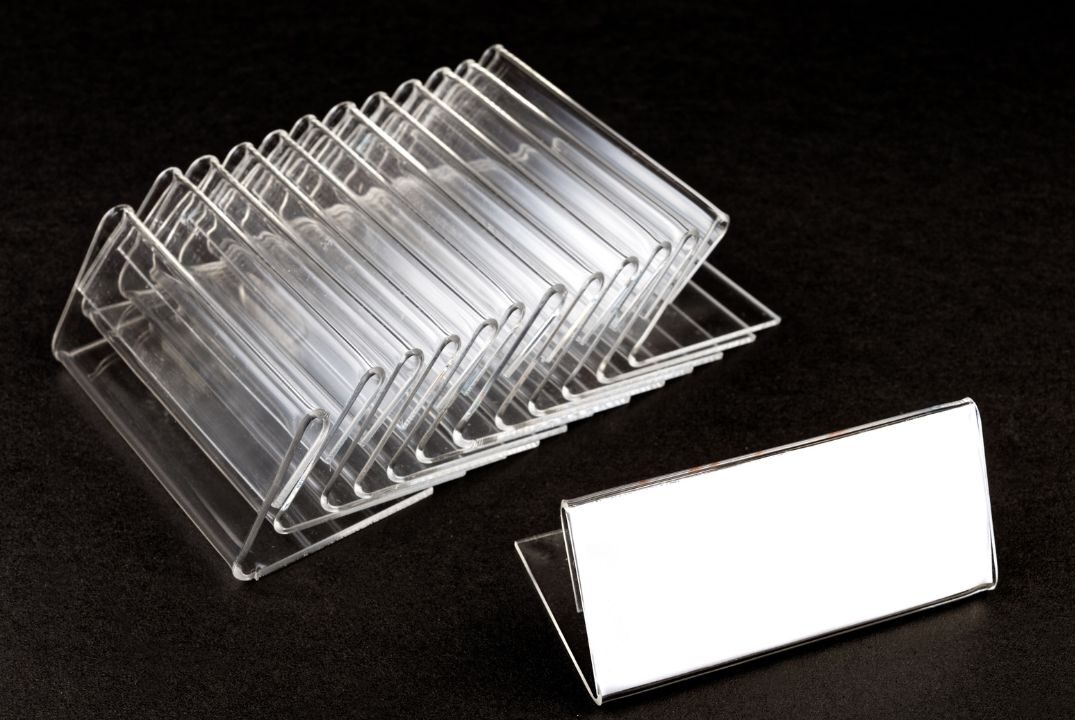
- Rail/shelf-edge strips provide continuous pricing along fixtures; clip-in frames enable quick updates without tools; table talkers showcase pricing for folded displays
- Digital upgrade: ESLs with e-paper/LCD displays sync wirelessly via a cloud platform for instant price changes across all locations (VusionGroup, 2023)
Direct answer: Clip-in label holders and ESLs deliver the clearest pricing with 3-5 foot read range. Color-coded over-bar flags clarify sizing instantly without visual clutter, critical for high-traffic stores where shoppers make split-second decisions.
Material Durability And Brand Aesthetics: Quick Comparison
| Material | Clarity | Durability | Cost | Best For | Recyclability |
| PET | High | High scratch resistance | Medium | ESL fixings, premium reusable holders | ♻️ #1 Highly recyclable |
| PP | Moderate | High flex/impact resistance | Low | Hanger clips, swing tickets, bulk use | ♻️ #5 Recyclable |
| Acrylic (PMMA) | Excellent | Moderate (can scratch) | Medium-High | Premium displays, custom branded fixtures | ♻️ #7 Specialized facilities |
| Bio-plastics | Moderate-High | Low-Moderate | High | Eco-conscious retail, temporary campaigns | Compostable (commercial facilities) |
Finish Guidance:
- Matte finish reduces glare under LED lighting and hides fingerprints in high-traffic areas; gloss finish adds premium feel for luxury brands
- Clear holders showcase products without distraction; color-coded opaque aids quick visual sorting (use color-blind safe blue/orange combinations, not red/green)
Premium materials reflect the professional image that differentiates successful retailers from competitors using generic solutions. Customizable merchandising acrylic clips with logo integration create cohesive brand experiences, the tangible difference between looking established versus makeshift.
Displaying Size Systems Without Confusing Shoppers
Inconsistent sizing frustrates shoppers and drives returns. Clear, standardized size label displays reduce decision fatigue and keep customers moving through the purchase cycle.
| Alpha | Women's Numeric | Men's Waist | Kids Age | Key Variance Note |
| XS | 0-2 | 28-29 | 5-6 | Athletic vs. relaxed fits differ |
| S | 4-6 | 30-32 | 7-8 | Most common variance point |
| M | 8-10 | 32-34 | 9-10 | Can span 3 numeric sizes |
| L | 12-14 | 36-38 | 11-12 | Plus L (1X) ≠ straight-size L |
| XL | 16-18 | 40-42 | 13-14 | Extended sizes use separate charts |
International & Clarity Tactics:
- Display both US and EU/UK sizes for international brands and tourist-heavy locations (use 🌐 globe icon for quick recognition)
- Color-code by size range: cool blues (XS-M), warm oranges (L-XL), neutrals for specialty fits; add shape differentiators (circles, squares) for color-blind accessibility
- Deploy icon sets: stick figures for fit types (slim/regular/relaxed), ruler icons for length variations, and visual shortcuts eliminate language barriers
Traditional vs. Digital Price Displays: When To Upgrade
Manual pricing works until it doesn't. The breakpoint arrives when labor costs and error rates exceed digital infrastructure investment, typically at 15+ locations or 5+ weekly price changes per SKU.
| Format | Update Speed | Read Range | Cost/Unit | ROI Notes |
| Swing Tickets | 30-60 sec (manual) | 2-3 feet | $0.05-0.15 | 1-3 reuses; moderate mis-ticket risk |
| Clip-in Holders | 15-30 sec (swap card) | 3-4 feet | $0.50-2.00 | 50+ cycles; professional look |
| ESLs (Digital) | Seconds (cloud sync) | 5+ feet | $20-50 | 1-3 year payback; eliminates errors |
ESLs reduce manual tagging from hours to seconds, freeing staff for customer service (Nova-Day, 2025). Real-time synchronization eliminates pricing discrepancies that erode trust, with adopters seeing 29.5% sales increases (Aiscreen.io, 2025). Quality price sign holders ensure pricing remains visible and professional across all formats.
When Digital Pays Off:
- High promo frequency: 5+ price changes per week per SKU; markdown-heavy categories like seasonal apparel
- Multi-store operations: 15+ locations needing consistent pricing benefit most from centralized management and scaled labor savings
- Compliance-heavy environments: Frequent audits, strict pricing accuracy requirements; RFID integration delivers 95%+ inventory accuracy (Perfect-ID, 2024)
Smart Tech Add-Ons: RFID, QR Codes, And Automation
Technology integration transforms basic price displays into data collection points. The key is matching capability to actual workflow needs, not adding complexity for its own sake.
Use Cases:
- RFID/NFC: Automate cycle counts, enable fitting-room inventory reads, power loss-prevention gates, trigger self-checkout, requires infrastructure investment (readers, middleware, POS integration) but delivers 95%+ accuracy improvements (Perfect-ID, 2024)
- QR codes: Link shoppers to size charts, fit guides, and reviews directly from price tags (not size tags, avoid clutter); ensure 2cm minimum size for reliable smartphone scanning
- Cloud platforms: VUSION Sway-style systems enable remote label updates, location detection, and price automation across all channels, eliminating the manual sync burden (VusionGroup, 2023)
For retailers testing new formats, 7-10 day turnaround on custom holders meets campaign deadlines, and 50-piece minimums make customization accessible for regional chains without forcing bulk commitments that tie up capital.
Top Mistakes To Avoid And Quick Fixes
Small errors compound into lost sales. Most issues stem from prioritizing cost over customer experience, cheap holders crack, poor contrast frustrates shoppers, and inconsistent systems breed confusion.
Common Pitfalls:
- Inconsistent size systems: Standardize on alpha or numeric across entire store; display conversion charts prominently in fitting areas
- Tiny type/low contrast: Use minimum 12pt for price, 10pt for size at 60cm viewing distance; avoid glossy finishes that create glare under LED lighting
- Over-tagging: Limit to one size tag plus one price tag per garment; use fixture-mounted rail systems for grouped items to reduce visual noise
- Fabric damage: Match attachment method to garment weight (soft loops for knits, pins for denim); deploy reflex-backing holders in high-traffic areas to prevent bent tags (Nova-Day, 2025)
- Ignoring accessibility: Maintain 4.5:1 minimum contrast ratio; consider tactile or Braille options for inclusive shopping; offer bilingual labels in diverse markets
Detail-oriented managers notice these issues immediately, cheap, damaged displays reflect poorly on brand credibility and drive customers to competitors with cleaner presentations.
Cost, ROI, And When Premium Systems Beat Disposables
Disposable tickets seem cheap until you calculate labor hours. The crossover point arrives when replacement frequency and update time exceed the amortized cost of durable systems.
| Holder Type | Unit Cost | Reuse Cycles | Avg Update Time | Labor Saved/Month | Payback (weeks) |
| Swing Tickets | $0.10 | 2 | 45 sec | Baseline | N/A |
| Clip-in Reusable | $1.50 | 50+ | 20 sec | $150 (10 stores) | 8-12 weeks |
| ESLs | $35 | Indefinite (5-10 yrs) | 5 sec | $800+ (15 stores) | 52-78 weeks (1-1.5 years) |
When To Invest In Premium:
- Change frequency: 3+ promotional cycles per month justify reusable or digital systems; markdown-heavy categories hit ROI threshold fastest
- Store count: 10+ locations benefit from centralized ESL management; labor savings scale with footprint as regional teams eliminate duplicate manual work
- Long-term thinking: Regional managers at $1M-$50M revenue companies recover investment within 1-3 years (Nova-Day, 2025), the "buy once, use for years" approach that prioritizes durability over cheapest upfront cost
Sustainability Without Sacrificing Usability
Eco-friendly doesn't mean fragile. Modern recycled materials match virgin plastic performance while meeting consumer demand for environmental responsibility, critical for brand-conscious retailers.
Eco-Friendly Practices:
- Recycled content: Specify PCR (post-consumer recycled) percentage targets when ordering; request resin labeling (PET #1, PP #5 have established recycling streams)
- Design for disassembly: Modular holders separate materials at end-of-life for proper recycling; track closed-loop KPIs (percentage returned to supplier, percentage reprocessed into new products)
- Bio-plastics for temporary displays: PLA/PHA work for pop-ups and clearance events; require commercial composting facilities (not home bins), communicate disposal instructions to staff
American-made suppliers often offer take-back programs that support sustainability claims without compromising the quality standards professional merchandisers demand.
Rollout Checklist: Testing And Scaling Tag Standards
Inconsistent execution kills even the best display strategy. Standardized rollout processes ensure every location delivers the same professional presentation that builds brand credibility.
5-Step Deployment:
- Audit current state: Catalog existing holders by SKU, condition, and location; document damage patterns and customer confusion pain points through associate interviews
- Define standards: Select 3-5 holder types maximum to cover all use cases; create SKU schema for ordering consistency; establish color-code index for size differentiation
- Pilot 2-3 stores: Test materials and attachment methods across fixture types; measure time savings per price change and error reduction; gather frontline feedback on usability
- Create SOP documents: Develop visual one-pagers for associates showing placement rules by fixture type (faceout, waterfall, folded table), photos beat text descriptions
- Measure & iterate: Track KPIs (update time, mis-ticket rate, shrink percentage); adjust quarterly based on store feedback and seasonal learnings
Prototype approval processes for custom orders reduce risk for quality-focused decision-makers. Confidence comes from working with experienced manufacturers who understand retail deadlines and deliver consistent results, not vendors who overpromise and underdeliver. For enhanced visual impact, consider how acrylic display solutions can elevate your entire merchandising strategy.
Frequently Asked Questions
Should I display both US and international sizes?
Yes, for international brands, online fulfillment centers, and tourist-heavy locations. Use the globe icon (🌐) to indicate dual sizing without creating visual clutter; international shoppers scan for this symbol.
What's the difference between kids' "24 months" and "2T"?
"24 months" typically runs longer and slimmer for infants; "2T" (toddler) has broader fit for active movement and diaper accommodation. Display both if carrying toddler lines to prevent returns from confused parents.
Where do QR codes go, size tag or price tag?
Price tag for product details and reviews, keeps size tags clean for quick visual sorting. Ensure 2cm minimum size for reliable smartphone scanning. Link to size charts, fit guides, and styling tips to reduce associate interruptions.
Taking Action: Your Next Steps
This quarter, focus on four priorities: Audit current holder condition and identify high-error zones needing immediate upgrade. Pilot ESLs in 1-2 promotion-heavy departments to measure labor savings against manual systems. Standardize to 3-5 holder SKUs specifying PET or PP for durability plus recyclability. Train teams using visual one-pagers on attachment methods by fabric type, emphasizing damage prevention to reduce shrink.
Premium holders eliminate the embarrassment of cracked displays under normal use, deliver the professional appearance that reflects your standards, and provide reliability from suppliers who understand retail deadlines. Quality investments protect brand reputation, the difference between looking established versus makeshift matters to customers making split-second purchase decisions.
Ready to upgrade your tag holder systems? Contact Displays & Holders team to discuss custom solutions, request samples, or get a quote for your retail operation.