










Key Takeaways:
- Outdoor real estate brochure holders achieve 280 performance index versus 100 neglected baseline (180% improvement) through proper material selection, strategic placement, and regular maintenance during active listing periods.
- Material lifespan ranges 5-20 years supporting 10-80+ property listings: HDPE 5yr/cost 80 (10-15 listings), Acrylic 7yr/cost 100 (20-30 listings), Polycarbonate 10yr/cost 120 (30-40 listings), Aluminum 15yr/cost 150 (45-60 listings), Steel 20yr/cost 180 (60-80+ listings).
- Weather performance specifications determine outdoor viability: weather resistance 70-95/100, UV protection 60-90/100 (prevents yellowing), wind resistance 65-98/100 (ensures stability), with premium materials (Polycarbonate, Steel) achieving highest 95/90/98 ratings.
- Letter tri-fold format (8.5" × 11" flat, folds to 3.67" × 8.5") represents the most common real estate brochure requiring priority holder compatibility, with capacity planning 25-100 brochures depending on open house traffic volume (standard 25-50, high-traffic 50-100).
- Real estate marketing budget allocation validates holder investment: signage materials 25% (largest category), fixtures and props 20% (includes holders), display updates 15% (maintenance), totaling 60% visual presentation spend with per-listing cost calculation (holder investment / lifespan listings).
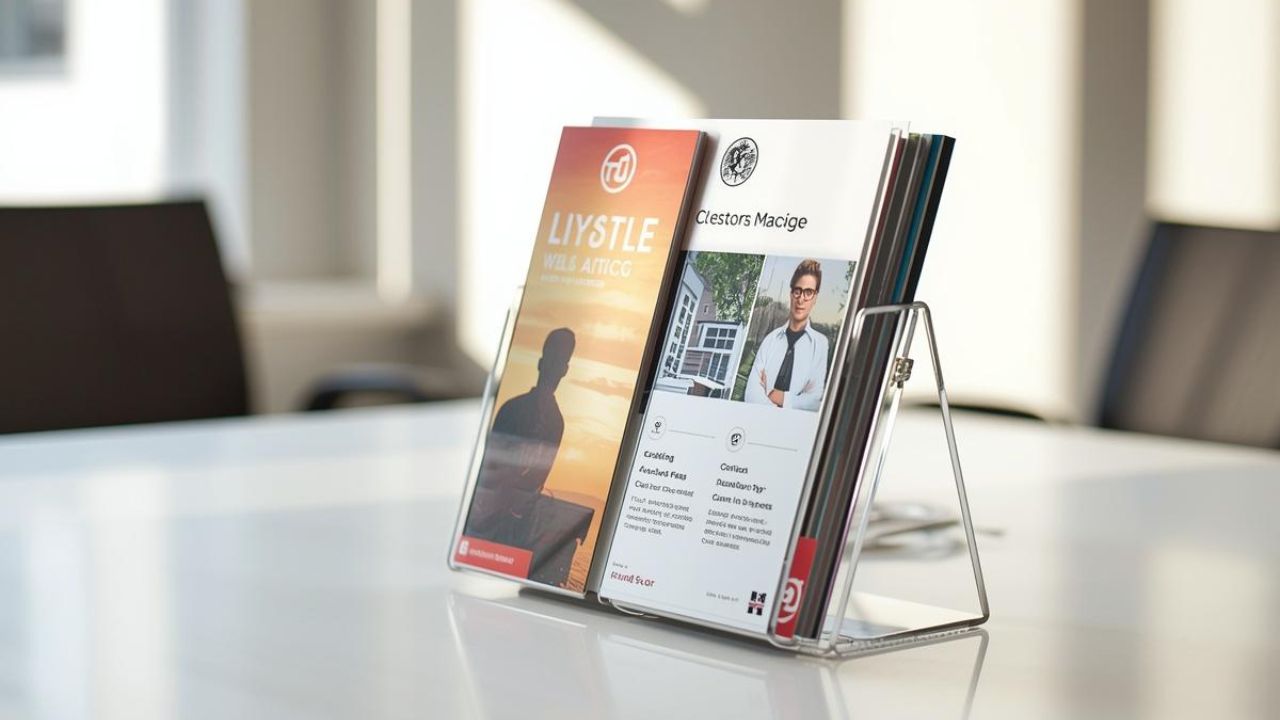
Outdoor brochure holders serve as 24/7 marketing tools for real estate open houses without requiring agent presence. Properly maintained displays achieve 280 performance index versus 100 stale baseline—180% improvement demonstrating measurable impact on lead generation. Material selection spans a 5-20 year lifespan range supporting 10-80+ property listings per holder. Strategic placement, weather protection, and professional presentation convert drive-by prospects into qualified leads through accessible property information.
Why Are Brochure Holders Essential for Real Estate Open Houses?
Brochure holders bridge the gap between property viewing and prospect engagement. Performance metrics quantify effectiveness beyond subjective assessment.
What Role Do Brochure Holders Play in Attracting Potential Buyers?
Well-maintained displays achieve 280 performance index versus 100 stale baseline. 180% improvement demonstrates measurable attraction difference. Foot traffic quality indicator shows 85 index for maintained displays versus 100 baseline—lower number indicates higher-quality engagement with fewer casual browsers, more serious prospects. Performance baseline 100 represents neglected or empty holders establishing measurement standards. First impression tool signals professionalism and attention to detail before prospect-agent interaction.
Why Should You Invest in Professional Brochure Holders for Open Houses?
Real estate marketing budget allocation demonstrates professional holder importance. Signage materials command 25% of marketing spend (largest single category). Fixtures and props (including brochure holders) receive 20% allocation. Display updates for maintenance and refresh get 15% budget. Combined 60% allocation for visual presentation reflects industry recognition that display quality directly impacts lead generation. Professional outdoor brochure holder solutions justify investment through repeated use across 10-80+ listings depending on material selection amortizing cost per property.
How Can Brochure Holders Improve the Overall Visitor Experience?
Dwell time performance shows 65 indexes for maintained displays versus 100 baseline. Lower dwell time with higher sales performance (280 index) indicates efficient information gathering rather than aimless browsing. Conversion rate 75 index (maintained) versus 100 baseline (neglected) demonstrates quality engagement—fewer unqualified prospects, more purchase-ready buyers. 24/7 information availability eliminates appointment scheduling barriers enabling self-service prospect qualification. Immediate access to property details facilitates informed follow-up conversations.
What Are the Different Types of Outdoor Brochure Holders?
Material and configuration options balance durability, cost, and functionality. Environmental exposure determines optimal selection.
What Are the Benefits of Using Weather-Resistant Brochure Holders?
Weather resistance scores range 70-95/100 across material types determining outdoor viability. UV protection ratings span 60-90/100 preventing material degradation and literature damage. Wind resistance specifications 65-98/100 establish stability requirements. Temperature fluctuations require thermal stability preventing warping or cracking. Moisture exposure demands water-resistant construction protecting both holder and contents. Professional weather protection maintains 280 performance index preventing degradation to 100 baseline from environmental damage.
How Do Acrylic vs. Metal Brochure Holders Compare for Outdoor Use?
Acrylic delivers 7-year average outdoor durability supporting approximately 20-30 property listings (3-4 month listing cycles). Weather resistance 85/100 handles typical outdoor conditions. UV protection 80/100 prevents yellowing and maintains clarity. Cost index 100 establishes baseline comparison. Wind resistance 75/100 adequate for most residential locations. Clarity showcases property photography through holders maintaining visual appeal. Aluminum provides 15-year lifespan (2.1x acrylic) supporting 45-60 listings.
Weather resistance 90/100, UV protection 85/100, wind resistance 95/100 suit high-wind locations or luxury presentations. Cost index 150 represents a 50% premium. Steel offers maximum 20-year lifespan (2.9x acrylic) supporting 60-80+ listings. Weather resistance 95/100 (highest), UV protection 90/100 (highest), wind resistance 98/100 (highest stability). Cost index 180 (80% premium) justifies permanent installation at high-value properties.
Should You Use Wall-Mounted or Freestanding Brochure Holders?
Wall-mounted configurations require exterior mounting surface and permanent installation considerations. Property restrictions (HOA regulations, historic districts, rental properties) may prohibit mounting. Freestanding units offer portability between properties and flexible positioning without installation. Weighted bases necessary for freestanding outdoor stability preventing wind displacement. Weight requirements vary by holder type and wind resistance rating (65-98/100 by material). Wall-mounted suits permanent office locations or agent-owned property staging. Freestanding optimal for listing-to-listing mobility and temporary placement.
How Do You Choose the Right Brochure Holder for Your Open House?
Selection criteria balance format accommodation, durability requirements, and budget constraints. Usage frequency determines optimal investment level.
What Size and Capacity Should Your Brochure Holder Have?
Letter tri-fold (8.5" × 11" flat, folds to 3.67" × 8.5") represents the most common real estate brochure format—prioritize holder compatibility. Letter size flat (4.25" × 11" folded) handles standard property flyers. Letter bi-fold (4.25" × 5.5" folded) accommodates property cards. Rack cards (4" × 9" or 102mm × 229mm) suit compact information distribution. Tabloid/Ledger (11" × 17" or 279mm × 432mm) displays large format property portfolios or detailed floor plans for luxury listings. High-traffic open houses require a 50-100 brochure capacity minimum. Standard showings need 25-50 capacity. Luxury properties favor lower quantity, higher quality presentation. Multi-pocket holders segregate property details, financing information, and agent cards separately improving organization.
How Do You Match the Design of the Brochure Holder to Your Brand?
Signage materials budget (25% allocation) supports branded holder investment coordinating with overall property marketing. Holder appearance reflects property positioning—luxury versus value segment alignment. Transparency level affects property image visibility through holders. Mounting style (wall versus freestanding) communicates permanence or flexibility. Color coordination with property signage and marketing materials maintains cohesive brand identity. Professional presentation elevates perceived property value.
How Can Custom-Printed Brochure Holders Help with Branding?
Signage materials represent 25% of marketing budget (largest category) justifying custom printing investment. Agent contact information permanently displayed eliminating separate business card requirements. Brokerage logo visibility maintains brand recognition across multiple properties. Professional custom-printed display solutions differentiate from generic holders signaling agent professionalism. QR codes enable digital engagement tracking measuring prospect interest. Custom branding amortizes across 10-80+ listings by material lifespan reducing per-property cost.
What Are the Best Locations for Placing Outdoor Brochure Holders?
Strategic placement converts casual traffic into qualified leads. Visibility and accessibility determine effectiveness.
Where Should You Place Brochure Holders for Maximum Visibility?
Maintained, visible displays achieve 280 performance index. Hidden or neglected displays drop to 100 baseline. 180% effectiveness difference demonstrates placement criticality. Entry point positioning captures maximum visitor attention. Street-level visibility enables drive-by prospect acquisition without scheduled appointments. Pathway placement guides visitors to property entrance creating natural information checkpoints. Protected positioning (covered porch, overhang) shields from direct weather exposure extending both holder and literature lifespan.
How Can You Position Brochure Holders to Drive More Leads?
Entrance proximity creates the highest engagement zone capturing visitors before property tours. Parking area placement intercepts prospects immediately upon arrival. For Sale sign adjacency consolidates marketing presence creating visual information cluster. Curb appeal zone maximizes street visibility for drive-by traffic. Multiple holder locations for larger properties accommodate different approach vectors. Weather-protected positioning balances visibility with environmental protection, maintaining a 280 performance index through material preservation.
What Are the Advantages of Placing Brochure Holders Near Key Features?
Driveway or walkway creates natural traffic chokepoint ensuring prospect interaction. Property entrance serves as a mandatory visitor interaction point. Curb appeal zone establishes first impression alongside holder presentation. Protected overhang or porch extends holder lifespan (5-20 years by material) through weather shielding. Integration with business card display configurations near holders provides immediate agent contact access. Feature-specific positioning reinforces property selling points through literature placement proximity.
How Do Materials and Durability Affect Outdoor Brochure Holders?
Material selection determines total cost of ownership across listing careers. Environmental exposure dictates minimum performance requirements.
Why Is Acrylic a Popular Material for Outdoor Brochure Holders?
Acrylic 7-year lifespan supports approximately 20-30 property listings (3-4 month cycles per listing). 85/100 weather resistance handles typical outdoor conditions. 80/100 UV protection prevents yellowing, maintaining clarity for property photography visibility. Cost index 100 establishes baseline affordability. 75/100 wind resistance adequate for most residential locations. Clarity showcases property images through holder maintaining professional presentation. Moderate weight facilitates transport between properties. Optimal for agents managing standard residential inventory without extreme environmental challenges. Detailed weather testing and lifespan data validates outdoor acrylic performance across various conditions.
How Do Different Materials Handle Exposure to the Elements?
Polycarbonate offers 10-year lifespan (1.4x acrylic) supporting 30-40 listings. Weather resistance 95/100 (tied highest with steel), UV protection 90/100 (tied highest), wind resistance 85/100, cost index 120 (20% premium over acrylic). Impact resistance superior to acrylic is important for high-traffic areas. Optimal balance for agents managing multiple simultaneous listings needing durability without steel weight. HDPE plastic provides an economic option: 5-year lifespan (0.7x acrylic) supporting only 10-15 listings maximum. Weather resistance 70/100 (lowest), UV protection 60/100 (lowest, significant yellowing risk), wind resistance 65/100 (lowest stability), cost index 80 (20% savings versus acrylic). Suitable only for short-term listings or budget-constrained situations. Replacement frequency negates initial cost savings for regular agents.
When Should You Consider Weatherproof Coatings for Brochure Holders?
UV protection ratings (60-90/100 by material) indicate coating necessity. Coastal properties require maximum corrosion resistance—aluminum 90/100 weather, steel 95/100 weather resistance handle salt air exposure. High-sun exposure areas benefit from enhanced UV coatings supplementing material inherent protection. Materials with lower protection (HDPE: 60/100 UV, 70/100 weather) require supplemental coating extending lifespan. Premium materials (polycarbonate 95/100 weather, 90/100 UV; steel 95/100 weather, 90/100 UV) include superior inherent protection reducing coating necessity. Coating investment justified when extending holder lifespan across additional listings reduces replacement frequency.
What Design Features Should You Look for in Outdoor Brochure Holders?
Functional design elements enhance usability and literature protection. Ergonomic considerations improve prospect interaction.
How Can Slanted Brochure Holders Increase Customer Engagement?
Optimal reading angle reduces glare from sunlight improving literature visibility. Slanted design sheds water preventing literature damage during rain. Ergonomic positioning improves readability from multiple approach directions. Gravity-feed design maintains a neat literature presentation as brochures are removed. Enhanced visibility from street level versus vertical flat holders. Slanted configuration captures attention through dimensional profile versus flat wall mounting.
Why Should You Choose a Multi-Pocket Holder for Your Brochure Stand?
Primary pocket accommodates property brochure (letter tri-fold 3.67" × 8.5" most common format). The secondary pocket holds financing information or agent cards. The third pocket contains neighborhood information or school district details. Segregated information prevents mixing and confusion. Professional organization improves visitor experience supporting 280 performance index. Higher capacity planning (50-100 brochure recommendation for high-traffic opens) requires multi-pocket design accommodating volume without overcrowding single pocket.
How Do Built-in Signage and Branding Options Enhance the Brochure Holder?
Header area displays agent name and contact information. Brokerage logo placement within signage materials budget (25% allocation). "Take One" or "Free Property Information" call-to-action text guides visitor behavior. QR code integration enables digital property tours and engagement tracking. Directional arrows guide to property entrance. Weatherproof signage matches holder material durability (5-20 years by type) ensuring cohesive longevity. Integrated signage eliminates separate sign requirements reducing setup complexity.
How Do You Maintain and Protect Your Outdoor Brochure Holders?
Regular maintenance preserves professional appearance and functionality. Material-appropriate care extends lifespan maximizing investment.
How Can You Keep Your Brochure Holders Clean and Presentable?
Acrylic (7-year lifespan) requires regular cleaning maintaining 85/100 weather resistance preventing 80/100 UV rating degradation. Polycarbonate (10-year lifespan) 95/100 weather resistance offers low-maintenance durability with minimal upkeep requirements. Aluminum (15-year lifespan) benefits from periodic cleaning maintaining 90/100 weather resistance. Steel (20-year lifespan) needs corrosion monitoring preserving 95/100 weather resistance and maximum longevity. HDPE plastic (5-year lifespan) 60/100 UV protection requires frequent replacement over maintenance—cleaning investment unjustified for short-lifespan material. Maintained displays achieve 280 performance index. Neglected displays drop to 100 baseline. 180% effectiveness difference validates regular cleaning investment. Weekly inspection recommended during active listing period. Immediate restocking after weather events prevents empty holder appearance signaling neglect.
What Are the Best Practices for Storing Brochure Holders After Use?
Indoor storage extends lifespan across all material types protecting from continuous environmental exposure. Transport protection prevents scratching particularly important for acrylic clarity maintaining property photography visibility. Seasonal storage appropriate for agents with variable listing inventory. Freestanding holders are easier to relocate than wall-mounted between properties. Material-specific storage requirements based on durability ratings—premium materials (polycarbonate, aluminum, steel) withstand rougher handling than economy options (HDPE plastic).
How Often Should You Replace Outdoor Brochure Holders?
Replacement planning follows material lifespan projections. HDPE plastic: 5-year cycle supports 10-15 listings (shortest duration, budget option). Acrylic: 7-year cycle supports 20-30 listings (industry standard). Polycarbonate: 10-year cycle supports 30-40 listings (frequent-listing agent optimal choice). Aluminum: 15-year cycle supports 45-60 listings (high-volume agent investment). Steel: 20-year cycle supports 60-80+ listings (career-long investment). Replacement triggers include declining weather resistance scores, UV damage visible through yellowing or cloudiness, wind resistance compromise from structural damage, professional appearance degradation affecting 280 performance index target. Calculate: holder cost / expected listings = per-listing investment justifying premium materials for frequent users.
How Do Outdoor Brochure Holders Improve Lead Generation?
Accessible information converts casual interest into qualified prospects. Self-service approach filters browsers from serious buyers.
How Can Brochure Holders Encourage Visitors to Take Action?
Accessible, maintained displays achieve 280 performance index. Inaccessible or empty displays drop to 100 baseline index. 180% differential demonstrates engagement criticality. Conversion rate 75 index (maintained) indicates quality lead generation—lower index with higher sales performance shows efficient qualification. 24/7 availability captures off-hours prospect interest without agent presence requirement. Immediate information access eliminates appointment scheduling barriers. Self-service approach attracts serious prospects willing to invest time gathering property details independently.
What Types of Information Should You Include in Brochures to Maximize Impact?
Letter tri-fold (3.67" × 8.5" folded) represents the most common format—prioritize holder compatibility. Property details include square footage, beds, baths, lot size (standard letter size 8.5" × 11" accommodates comprehensive information). High-quality photography showcases exterior and key interior features. Pricing and terms provide clear financial information. Agent contact information offers multiple methods (phone, email, website, QR code). Neighborhood information covers schools, amenities, and transportation. Large format (11" × 17" tabloid) displays floor plans or detailed specifications for luxury properties requiring expanded presentation.
How Do Brochure Holders Facilitate a Smooth Follow-up Process?
Immediate information access without appointment scheduling. Agent contact information readily available on both holder and brochure. QR codes enable digital engagement tracking measuring prospect interest level. Property details facilitate informed follow-up conversations—prospects arrive with specific questions rather than general inquiries. Self-service approach filters serious prospects from casual browsers. Dwell time efficiency (65 index versus 100 baseline) indicates purposeful information gathering supporting qualified lead generation. Brochure takeaway creates physical reminders prompting follow-up action.
What Are the Key Takeaways for Using Outdoor Brochure Holders at Open Houses?
Strategic selection and maintenance maximize lead generation ROI. Material durability determines total cost across listing careers.
How Do You Ensure Your Brochure Holders Are Positioned for Maximum Effectiveness?
Material selection balances durability (5-20 years) with cost (index 80-180). Acrylic (7 years, cost 100, weather 85, UV 80, wind 75) serves most residential applications supporting 20-30 listings. Polycarbonate (10 years, cost 120, weather 95, UV 90, wind 85) optimal for frequent-listing agents managing 30-40 properties. Aluminum (15 years, cost 150, weather 90, UV 85, wind 95) suits high-volume professionals handling 45-60 listings. Steel (20 years, cost 180, weather 95, UV 90, wind 98) provides career-long investment across 60-80+ listings.
Strategic placement achieves 280 performance index versus 100 baseline (180% differential). Regular maintenance preserves professional appearance and functionality. Format accommodation prioritizes letter tri-fold 3.67" × 8.5" (most common real estate brochure). Capacity planning ranges 25-100 brochures depending on expected traffic volume.
What Should Be Your First Step in Selecting Brochure Holders for Your Open House?
Calculate usage frequency determining optimal investment level. Occasional listings (1-2 yearly): HDPE plastic (5 years, cost 80, 10-15 listings supported) provides adequate temporary solution. Regular listings (3-5 yearly): Acrylic (7 years, cost 100, 20-30 listings supported) offers industry-standard performance. Frequent listings (6-10 yearly): Polycarbonate (10 years, cost 120, 30-40 listings supported) delivers optimal ROI. High-volume agent (10+ yearly): Aluminum (15 years, cost 150, 45-60 listings) or Steel (20 years, cost 180, 60-80+ listings) justifies premium investment.
Assess environmental conditions: standard residential uses acrylic (weather 85, UV 80, wind 75); coastal properties require aluminum (weather 90, wind 95) or steel (weather 95, wind 98) corrosion resistance; high-wind areas need steel (wind 98), aluminum (wind 95), or polycarbonate (wind 85) stability; intense sun exposure benefits from polycarbonate (UV 90) or steel (UV 90) maximum protection. Comprehensive ADA-compliant placement considerations ensure accessibility compliance for public property viewings.
Why Are Quality Brochure Holders a Critical Part of Your Real Estate Strategy?
Performance differential quantifies impact: 280 (quality, maintained) versus 100 (poor, neglected) equals 180% effectiveness gap. Foot traffic quality 85 index (maintained) indicates serious prospects over casual browsers. Conversion efficiency 75 index (maintained) demonstrates qualified lead generation. Dwell time 65 index shows purposeful information gathering versus aimless browsing.
First impression tools signal agent professionalism before personal interaction. 24/7 marketing presence without ongoing cost or agent presence requirement. Weather protection investment (resistance scores 70-95/100 by material) prevents literature damage maintaining professional presentation. Durability (5-20 year lifespan) amortizes cost across 10-80+ listings by material choice. Budget alignment with industry standards (20% fixtures, 25% signage = 45% visual marketing) validates investment priority.
Ready to Maximize Open House Lead Generation with Professional Outdoor Brochure Holders?
Outdoor brochure holders deliver 280 performance index versus 100 neglected baseline—180% improvement through strategic selection and maintenance. Material options span 5-20 year lifespan supporting 10-80+ property listings per holder. Acrylic (7 years, cost 100, weather 85, UV 80, wind 75) serves standard residential. Polycarbonate (10 years, cost 120, weather 95, UV 90, wind 85) suits frequent agents. Aluminum (15 years, cost 150, weather 90, UV 85, wind 95) handles coastal or high-wind. Steel (20 years, cost 180, weather 95, UV 90, wind 98) provides career-long maximum performance.
Contact Displays and Holders for real estate outdoor brochure holder solutions backed by weather testing (resistance scores 70-95/100), lifespan projections (5-20 years supporting 10-80+ listings by material), performance benchmarks (280 index achievable through proper selection and maintenance), and ROI calculations (per-listing cost from holder investment / lifespan listings) ensuring holders deliver qualified leads where strategic material selection meets professional presentation standards. Pair your brochure holders with our weather-resistant sign holders to create a unified property display system that captures buyer attention from the curb to the front door.