










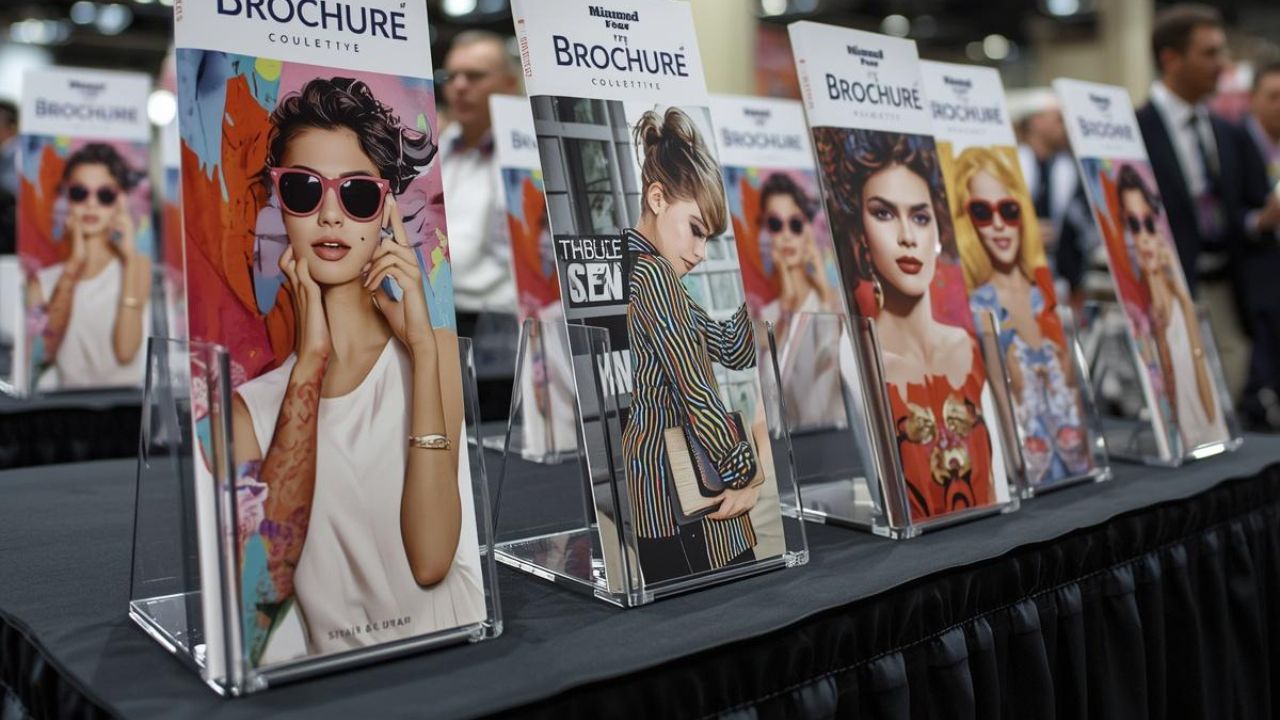
Multi-pocket brochure holders serve as essential fixtures for organizing printed materials across diverse business environments. These systems enable companies to present multiple information sources simultaneously while conserving space. Businesses in retail, healthcare, travel, and professional services rely on multi-pocket configurations to streamline information distribution and improve customer access. Strategic placement directly influences consumer engagement, brand perception, and purchasing behavior.
Key Takeaways
- Multi-pocket holders are preferred by 28% of consumers for displaying diverse literature types efficiently
- Visibility and accessibility rank as the top priority for 28% of buyers when selecting display solutions
- Healthcare facilities use multi-pocket systems to organize patient information and reduce perceived wait times
- The commercial display market is projected to grow from USD 53.65 billion in 2024 to USD 78.48 billion by 2030
- Slatwall-compatible holders integrate with existing retail fixtures without requiring installation tools
What Are Multi-Pocket Brochure Holders and Their Core Features?
Multi-pocket brochure holders are display fixtures designed to organize multiple types of printed literature simultaneously. These units feature tiered or side-by-side configurations accommodating various brochure sizes and quantities. The primary function is maximizing information distribution within a limited space while maintaining an organized presentation. Most designs incorporate transparent materials such as clear acrylic pockets, allowing customers to view contents without handling.
Standard features include adjustable pocket depths, reinforced edges preventing warping, and modular configurations. Available holder styles and sizes offer customizable pocket quantities from two to twelve or more sections. Designs accommodate standard dimensions, including tri-fold formats, single-sheet flyers, and booklet publications. Professional units incorporate drainage channels, preventing moisture accumulation in outdoor or high-humidity applications.
How Do Multi-Pocket Holders Maximize Literature Display?
Single-pocket holders accommodate one brochure type, while multi-pocket holders organize various literature types within unified systems. Multi-pocket configurations reduce physical footprint requirements by consolidating multiple information sources. Customers compare offerings without moving between separate displays.
Vertical stacking positions literature at graduated eye levels, facilitating scanning and selection. Pocket separation prevents mixing, maintaining an organized presentation during high-traffic periods. Transparent construction enables quick identification without unnecessary removal, supporting self-service information distribution while reducing staff intervention.
What Materials and Designs Are Commonly Used?
Slatwall brochure holders are made from injection-molded styrene and slip onto mounted panels without tools or permanent installation. This provides durability and flexibility for retailers regularly reconfiguring layouts. Clear acrylic represents premium material, offering superior clarity and professional appearance for corporate lobbies and high-end retail. Acrylic resists yellowing and maintains optical clarity longer than styrene under continuous lighting, giving it temperature and wavelength stability across demanding environments.
Polycarbonate construction serves applications requiring impact resistance in high-traffic areas. Some manufacturers offer colored plastics coordinating with brand guidelines. Wire frame designs with plastic inserts provide economical alternatives for temporary displays. Metal components feature powder-coated finishes resisting corrosion in outdoor environments.
How Do Multi-Pocket Holders Differ From Other Types?
Single-pocket holders range from $15 to $45, depending on material and mounting options. Multi-pocket holders span $40 to $450 based on pocket quantity, material grade, and customization. Wall-mounted systems cost $250 to $600, reflecting installation hardware and larger capacity. Floor-standing units range from $200 to $500.
Multi-pocket holders can appear cluttered if not organized logically. Price differences reflect manufacturing complexity, with multi-pocket units requiring precise component alignment. Versatile business card displays follow similar structures but typically cost less due to smaller dimensions.
Why Are Multi-Pocket Brochure Holders Important for Consumer Engagement?
Multi-pocket holders facilitate self-directed customer education by presenting organized information at decision-critical moments. Strategic placement near product displays enables customers to access detailed specifications independently, reducing perceived sales pressure while maintaining information availability. Organized literature signals professionalism, influencing brand perception during facility impressions.
Research indicates accessible promotional materials increase browsing time and correlate with higher conversion rates. Multi-pocket configurations accommodate diverse information needs within single fixtures, supporting customers at different purchase consideration stages.
How Do Visibility and Accessibility Influence Consumer Interaction?
Visibility and accessibility were ranked as priorities by 28% of consumers evaluating literature display effectiveness. Eye-level placement and transparent construction enable quick identification without physical contact or staff assistance. Proper visibility reduces friction in information-gathering, particularly for time-constrained customers. Accessibility factors include pocket depth, opening width, and extraction angle.
Acrylic brochure holders positioned within natural sight lines capture attention during waiting periods or browsing pauses. Vertical arrangements distribute materials across multiple viewing angles. Poor visibility creates information barriers, reducing pickup rates. Multi-pocket systems address this by organizing materials in graduated tiers, preventing rear pocket obscuration.
What Role Does Durability Play in Holder Selection?
Durability ranked as a priority for 22% of consumers, reflecting long-term value concerns. High-traffic environments expose holders to repeated contact, temperature fluctuations, and cleaning chemicals degrading inferior materials. Material failure manifests as cracking, clouding, warping, or structural collapse, necessitating premature replacement. Premium materials withstand years of use while maintaining clarity.
Injection-molded construction provides uniform wall thickness, reducing weak points. UV-stabilized formulations prevent yellowing and embrittlement in sunlight. Reinforced mounting points distribute stress loads, preventing bracket failures. Durability extends to pocket edges where thin profiles are vulnerable to chipping.
How Does Design Impact Brand Communication?
Design quality communicates brand positioning before customers engage with literature or staff. Well-maintained holders suggest professional standards transferring to product expectations. Damaged or poorly organized displays create negative impressions, undermining marketing messages. Color coordination between holders and brand guidelines reinforces visual identity.
Sign holders and frames complement brochure displays, providing coordinated information distribution systems. Custom engraving, sign making, and logo imprinting transform generic holders into branded elements. Design choices signal target market alignment, with minimalist acrylic appealing to premium segments while colored plastics suit casual retail.
How Are Consumer Preferences Shaping Multi-Pocket Brochure Holder Use?
Consumer preference data reveals distinct patterns correlating with space availability, literature volume, and operational priorities. The 28% preference rate for multi-pocket configurations reflects growing emphasis on space optimization. This coincides with retail consolidation, reducing available footage for displays. Businesses select fixtures maximizing information density without compromising browsing experience.
Generational differences influence design preferences, with older demographics showing stronger engagement with physical displays. Market research indicates 32% of Gen X consumers actively use promotional materials during purchase decisions. Multi-pocket systems serve this demographic while maintaining appeal for Millennials, representing 28% of in-store engagement.
Which Industries Prefer Multi-Pocket Holders and Why?
Multi-pocket holders are preferred by 28% of consumers across surveyed industries for space efficiency and organizational capacity. Wall-mounted holders attract 22% preference among space-constrained businesses, including medical offices and professional firms. Single-pocket holders retain 15% preference for focused campaigns requiring prominent positioning.
Travel agencies deploy multi-tier displays for destination and tour package comparison. Healthcare facilities organize patient education by condition, treatment type, and insurance category. Retail environments present product lines, financing options, and warranty information near purchase points. Educational institutions position multi-pocket holders with program brochures in admissions offices, and exhibitors at trade shows rely on them to organize product literature at busy booths.
How Do Space Constraints Affect Holder Choice?
Limited counter space drives preference for wall-mounted and vertical multi-pocket configurations utilizing unused walls. Businesses in leased spaces favor freestanding units, avoiding permanent installations. Counter depth limitations eliminate floor-standing options in narrow corridors requiring unobstructed passage. Multi-pocket vertical designs address constraints by concentrating literature capacity into minimal footprints.
Space considerations extend to visual space and customer circulation patterns, affecting placement effectiveness. Overcrowded displays compete with merchandising and signage, reducing visibility and pickup rates. Strategic placement balances accessibility against intrusion into traffic flows. Modular multi-pocket systems allow capacity adjustment without complete replacement.
What Price and Quality Factors Influence Purchase Decisions?
Price ranked as a priority for 18% of consumers selecting brochure holder solutions. Material quality influenced 15% of decisions, reflecting durability, appearance, and maintenance concerns. These factors interact differently across segments, with enterprises prioritizing total ownership cost while small businesses emphasize initial price.
Bulk purchasing programs offering 17% or greater savings influence multi-location procurement. Custom engraving adds $15 to $45 per unit, depending on complexity and volume. Premium acrylic commands 40% to 60% premiums over styrene but delivers superior clarity and longevity.
What Are the Key Industry Applications of Multi-Pocket Brochure Holders?
Industry applications reflect specific information distribution requirements and customer engagement patterns unique to each sector. Healthcare, travel, retail, financial services, and hospitality represent the largest adopters. Each sector leverages distinctive features, including pocket quantity, literature size accommodation, and mounting configurations optimized for workflows.
Deployment strategies vary by dwell time, with extended waiting supporting larger collections. Quick-service environments require simplified displays with prominent positioning and minimal pockets. Professional sectors emphasize sophisticated designs communicating expertise.
How Are They Utilized in Healthcare Settings?
Healthcare facilities use multi-pocket holders for patient information organization across conditions, treatments, insurance options, and wellness programs. Waiting room placement enables patient self-education during delays, improving satisfaction and reducing perceived wait times. The organization follows logical categories matching patient information needs.
Multi-pocket systems accommodate extensive literature volumes for diverse patient populations. Wall-mounted configurations preserve counter space while maintaining accessibility for patients with mobility limitations. Infection control protocols favor smooth, non-porous materials withstanding frequent disinfection.
What Role Do They Play in Travel and Tourism?
Travel agencies use multi-tier displays for destination and tour packages requiring visual comparison. Geographic organization by continent or region helps customers navigate options efficiently. Seasonal rotation accommodates demand patterns without complete replacement. Transparent pockets ensure full visual impact during browsing.
Tourism centers deploy floor-standing multi-pocket units near entrances for self-service access to attraction details and maps. High-capacity configurations accommodate multiple tourism partners while maintaining organization. Weather-resistant materials support outdoor placement at rest stops.
How Do Retail Environments Benefit From Multi-Pocket Holders?
Interactive POS displays resulted in 20% sales increases for featured products. Multi-pocket holders near decision points provide specification sheets, warranty information, and financing options, reducing purchase barriers. Product comparison literature enables independent feature evaluation, increasing confidence.
A snack brand case study documented 20% sales increase using interactive POS displays with multi-pocket literature holders containing nutritional information and recipes. Custom displays amplify this effect, incorporating brand-specific colors and messaging. Retail applications benefit from modular displays adapting to changing assortments throughout merchandising cycles.
How Do Retailers Integrate Multi-Pocket Holders With Other Display Systems?
Integration strategies maximize space utilization by combining literature displays with existing fixture infrastructure. Slatwall compatibility enables brochure holder incorporation into comprehensive display walls without dedicating separate space. Coordinated material specifications ensure visual consistency between literature holders, acrylic accessories, product displays, and signage.
Successful integration accounts for customer circulation patterns, sight lines, and information consumption sequences. Literature displayed adjacent to featured products provides contextual information supporting decisions. Combining wall-mounted and countertop units creates access points serving customers at different engagement stages.
What Is the Function of Slatwall-Compatible Holders?
Slatwall-compatible holders require existing slatwall infrastructure but integrate seamlessly with retail fixture systems. Prices range from $18 to $60, depending on pocket quantity and materials. Tool-free installation enables rapid reconfiguration as priorities shift seasonally. Compatibility with standard spacing ensures consistent positioning across installations.
Vertical arrangement maximizes literature capacity within constrained horizontal space on slatwall panels. Lightweight construction prevents excessive loading, compromising wall panel integrity.
How Are Wall-Mounted and Floor-Standing Holders Used in Tandem?
Wall-mounted holders save counter space, while floor-standing units require floor space but offer superior visibility in open areas. Wall-mounted installations occupy fixed positions, limiting relocation flexibility. Floor-standing units face potential obstruction in narrow aisles.
Combined deployment positions wall-mounted holders in confined spaces while reserving floor-standing units for entrance areas. Tandem usage creates access points throughout facilities without concentrating literature in single locations. Wall-mounted holders near service counters support transactional needs while floor-standing displays at entrances provide welcome information. Height differences create visual interest and accommodate varied formats.
What Are the Best Practices for Display Configuration and Maintenance?
Define literature display objectives before selecting specifications, ensuring alignment between capabilities and goals. Analyze available space and foot traffic to identify optimal placement maximizing visibility without obstructing movement. Select holder types matching the literature volume to avoid overcrowding or excessive empty pockets.
Regularly restock brochures and update materials, maintaining current information. Establish cleaning schedules, preserving optical clarity, and removing dust. Monitor pickup rates by pocket position, optimizing content placement based on customer preferences. Rotate seasonal materials promptly, maintaining relevance.
How Do Geographic and Demographic Factors Affect Multi-Pocket Brochure Holder Adoption?
Geographic distribution patterns reveal concentration in urban commercial centers with dense retail activity. Regional economic conditions influence investment in physical display infrastructure. Climate considerations affect material selections, with humid regions requiring moisture-resistant specifications and sunny locations demanding UV-stabilized formulations.
Demographic factors, including age, income, and education, correlate with literature engagement rates, justifying multi-pocket holder investments. Affluent markets support premium acrylic installations, communicating sophistication. Educational attainment influences literature complexity, affecting pocket quantity requirements. Population density drives space optimization priorities, favoring multi-pocket vertical configurations.
Which Regions Exhibit the Highest Growth in Usage?
The global commercial display market was valued at USD 53.65 billion in 2024 and is projected to reach USD 78.48 billion by 2030. This expansion reflects a CAGR of 6.7% from 2025 to 2030. The POS display market was valued at USD 12.53 billion in 2024. North America holds 32.28% market share in 2024, driven by mature retail infrastructure.
Asia Pacific demonstrates the fastest regional growth due to retail expansion and rising consumer spending. Infrastructure development in secondary cities creates demand for comprehensive display solutions, including multi-pocket systems. European markets emphasize design sophistication and material sustainability.
How Do Generational Preferences Influence Display Strategies?
Millennials and Gen Z are projected to fuel 60% of retail sales growth by 2030. Millennial adoption rates of 28% for in-store displays indicate continued relevance despite digital preferences. Gen X demonstrates 32% adoption rates, representing the highest engagement for traditional formats. These patterns suggest multi-generational approaches combining physical and digital elements optimize information distribution effectiveness.
Younger consumers value the authentic information that well-organized literature displays provide. Physical materials offer credibility advantages over digital content perceived as commercially biased. Literature pickup enables continued engagement through take-home materials supporting extended decisions.
What Are the Differences Between Urban and Rural Adoption?
Urban areas account for 97.1% of tech-adopting firms, while rural areas represent only 2.9%. This disparity extends to advanced retail displays, including sophisticated multi-pocket systems. Rural areas show significantly lower adoption rates due to smaller customer volumes and limited supplier access.
Rural businesses prioritize functional durability over design sophistication, given longer replacement cycles. Shipping logistics and installation service availability influence rural adoption, favoring simpler systems. Urban retailers benefit from vendor competition, reducing prices and expanding customization.
Who Are the Leading Manufacturers and What Are Their Competitive Advantages?
The manufacturer landscape combines specialized display companies with diversified retail fixture suppliers. Established manufacturers leverage economies of scale, offering competitive pricing while maintaining quality. Domestic manufacturers emphasize rapid fulfillment and responsive service, differentiating against imports.
Competitive positioning reflects manufacturing capabilities, material sourcing, customization flexibility, and distribution reach. Premium suppliers emphasize design consultation and engineering support. Value-oriented manufacturers focus on standardized products with simplified ordering. Market leaders maintain extensive inventory supporting same-day shipping for urgent needs.
What Product Ranges Do Major Brands Offer?
Displays and Holders operates as a US manufacturer since 1986, offering same-day shipping on in-stock items ordered before 2 PM PST. Custom Creative Plastics specializes in clear acrylic holders with custom engraving. Econoco leads in injection-molded styrene slatwall brochure holders for retail fixture compatibility. Renzel USA provides colorful three-tier countertop models for hospitality and tourism.
Product ranges span single-pocket economy units through multi-pocket professional systems with capacities exceeding twelve compartments, including the multi-pocket photo display for image-led presentations. Materials and finishes include styrene, acrylic, polycarbonate, and metal in a range of colors. Mounting configurations encompass countertop, wall-mounted, floor-standing, and slatwall-compatible designs. Customization extends to pocket dimensions, engraving, logo printing, and color matching.
How Do Pricing and Customization Options Vary Among Suppliers?
Pricing reflects material costs, manufacturing complexity, and order volume, creating significant variation. Standard acrylic single-pocket holders begin at $15 while premium multi-pocket systems reach $450. Customization adds $15 to $45 per unit for engraving, depending on complexity and quantity. Bulk pricing reduces per-unit costs by 10% to 25% for orders exceeding 50 units.
Custom minimum orders range from 50 units at specialized manufacturers to 500 or more at mass-production facilities. Lead times vary from same-day shipping for stock items to 4-6 weeks for custom fabrication. Payment terms differ by supplier, with established manufacturers offering net-30 terms while smaller vendors require prepayment.
What Are Bulk Purchasing and Wholesale Trends?
Brochure Holders 4U offers up to 17% savings on bulk orders, reflecting industry-standard volume discounts. Literature holders in bundles qualify for wholesale pricing, which typically begins at 25-unit minimums with graduated discounts at 50, 100, and 250-unit thresholds. Enterprise procurement programs negotiate custom pricing based on annual volume commitments.
E-commerce platforms have increased price transparency and expanded small business access to wholesale pricing. Marketplace aggregators combine inventory from multiple manufacturers, offering selection advantages. Direct manufacturer relationships provide superior technical support and customization flexibility. Group purchasing organizations negotiate collective pricing for independent retailers.
Multi-Pocket Brochure Holders as Strategic Tools for Effective Literature Display Across Industries
Multi-pocket brochure holders deliver measurable improvements in information distribution efficiency while supporting space-saving solutions addressing retail consolidation pressures. Industry applications across healthcare, travel, and retail demonstrate versatility extending beyond basic presentation to influence customer engagement and purchasing behavior.
Material advancements, manufacturing precision, and design innovation continue to expand capabilities while reducing total ownership cost through enhanced durability. Strategic deployment following best practices maximizes display investment returns through optimized placement, regular maintenance, and alignment with customer information consumption patterns.
Organizations serving multiple locations or managing extensive literature portfolios gain a particular advantage from standardized multi-pocket systems, ensuring consistent brand presentation. Generational preferences and geographic variations require thoughtful adaptation to local market characteristics. The convergence of physical and digital information channels creates opportunities for integrated approaches leveraging literature displays as tangible touchpoints within omnichannel experiences. Displays & Holders has supported businesses across diverse sectors since 1986 with manufacturing expertise and comprehensive products addressing evolving requirements.
Order Multi-Pocket Brochure Holders From Displays & Holders
Pick the holder styles and sizes that fit your space, and let our team handle the rest. Displays & Holders has manufactured clear acrylic multi-pocket brochure and literature holders in Anaheim, California, since 1986. In-stock items ship the same day on orders placed before 2 PM PST, and our custom shop matches pocket dimensions, materials, finishes, and branding to your exact specifications. Contact us to request a quote today and put a professional, organized literature display to work for your business.