










Key Takeaways:
- Chemically recycled acrylic achieves identical 10,000 psi tensile strength and M-93 hardness with 50-70% lower CO₂ emissions versus traditional displays.
- 36-month high-traffic retail testing validates 1.1-2.2 kJ/m² impact resistance handling constant customer interaction, insert swapping, and counter impacts.
- UV exposure creates 7-8x greater yellowing after 1000 hours—requiring indoor placement while controlled lighting eliminates degradation concerns.
- 92% light transmission (versus virgin's 92.5%) proves virtually indistinguishable for retail applications with maintained clarity over 3-year periods.
- Real-world validation includes Honda N-ONE e: automotive door visors demanding high weather and scratch resistance comparable to retail requirements.
Sustainable tabletop displays face the ultimate test: constant customer interaction, frequent cleaning, and environmental stress. Chemically recycled materials demonstrate performance nearly identical to traditional options across 36-month retail testing. Standardized protocols measure impact resistance, scratch tolerance, cleaning chemical exposure, and clarity retention. Results challenge assumptions about sustainable materials while identifying specific limitations requiring honest assessment.
What Are Eco-Friendly Tabletop Displays in the Context of High-Traffic Retail Use?
Eco-friendly tabletop displays use recycled or bio-based materials replacing traditional petroleum plastics. Performance testing validates durability under real-world retail conditions. Understanding material categories, typical applications, and stress factors establishes testing baselines. These displays serve counters, checkouts, and tables where customer interaction peaks.
Which Materials Qualify as Eco-Friendly for Tabletop Display Construction?
Chemically recycled acrylic leads to eco-friendly options with 50-70% lower CO₂ emissions versus virgin material. The material achieves 92% light transmission and 10,000 psi tensile strength—performance nearly identical to traditional displays. Plaskolite OPTIX.R XT contains 70-90% recycled content for commercial applications. EcoGreen® offers 100% recycled acrylic for architectural uses.
Mechanically recycled acrylic provides more economical options with reduced optical clarity and impact strength. Real-world validation comes from Honda N-ONE e: automotive door visors using recycled PMMA (September 2025)—an application demanding high weather and scratch resistance. Bio-based materials represent emerging categories with distinct performance characteristics. Material innovations continue advancing sustainable display options.
How Are These Eco-Friendly Displays Typically Used on Counters, Tables, and Checkouts?
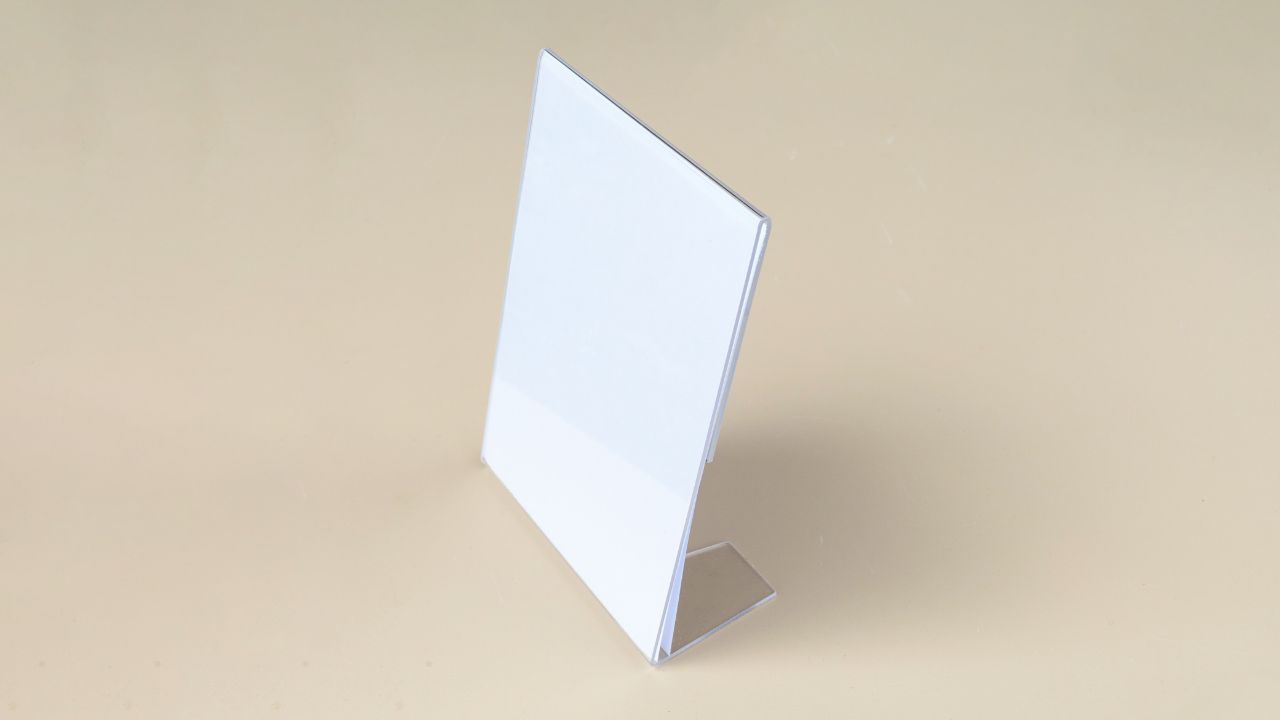
Indoor retail displays and signage represent primary applications. Menu holders serve restaurants and hospitality environments. Tabletop displays present pricing, promotions, and product information at checkout counters. Sign holders communicate features and benefits at point-of-decision locations. These applications suit short-to-medium term deployments (1-3 years) with regular replacement cycles.
What Retail Environments Place the Most Pressure on Tabletop Displays?
High-traffic retail environments create maximum stress through constant customer interaction. Checkouts experience frequent handling during transactions. Tables face insert swapping, rotation, and movement. Counters endure accidental impacts from shopping bags and purses. Frequent cleaning protocols expose materials to chemical stress. Indoor lighting conditions affect long-term clarity. Testing tracks performance across these combined stressors over 36-month periods.
Which Performance Attributes Matter Most When Testing Displays in High-Traffic Conditions?
Five attributes determine real-world performance: stability, impact resistance, surface wear, chemical tolerance, and optical clarity. Each affects customer experience and operational practicality. Understanding these factors guides material selection and placement decisions. Testing quantifies performance across standardized protocols.
How Does Stability Affect Display Performance During Constant Foot-Traffic?
Stability depends on weight-bearing capacity and structural integrity. Materials must withstand temperature variations without warping. Vicat Softening Temperature testing shows recycled acrylic at >105-110°C versus virgin's 110-135°C—comparable performance. This ensures displays maintain shape under normal retail conditions. Structural integrity under stress validates placement near heat sources or HVAC vents.
How Do Impact and Drop Risks Influence Daily Durability?
Impact resistance testing uses ISO 180/1A (Izod) and ISO 179/1eA (Charpy) protocols. Chemically recycled acrylic achieves 1.5 kJ/m² Izod notched impact resistance—equivalent to virgin material. The 1.1-2.2 kJ/m² range indicates adequate counter-height drop protection. Tensile strength at 10,000 psi prevents cracking from edge impacts. Cracking resistance validation ensures displays survive typical retail handling accidents.
How Do Surface Wear, Scratching, and Insert Visibility Affect Retail Readability?
Surface wear directly impacts insert readability through light diffusion. ASTM D1044 Taber Abrasion testing quantifies scratch resistance. Both recycled and virgin materials score M-93 Rockwell Hardness—identical surface durability. Scratch accumulation tracked over 36 months shows minimal clarity degradation for chemically recycled options. Insert visibility depends on maintained surface integrity preventing haze formation.
How Do Cleaning Frequency and Chemical Exposure Affect Material Integrity?
High-traffic retail demands frequent cleaning with various chemicals. Materials must resist alcohol-based cleaners, disinfectants, and sanitizers. Ease of cleaning affects operational practicality. Testing validates chemically recycled acrylic and maintains integrity under standard protocols. Long-term performance tracking includes cleaning impact assessment. Material selection must account for specific sanitizing requirements in food service or healthcare retail.
How Do UV and Indoor Lighting Conditions Influence Long-Term Clarity?
UV degradation represents the primary limitation for recycled materials. ASTM D4329 testing shows Yellowness Index increases 7-8x versus virgin after 1000 hours exposure. Indoor applications with controlled lighting minimize this differential. Light transmission at 92% (recycled) versus 92.5% (virgin) remains virtually indistinguishable. Color retention tracking validates minimal degradation in typical retail lighting conditions for clear viewing. Indoor retail displays experience negligible UV-related issues.
How Are High-Traffic Retail Tests for Eco-Friendly Tabletop Displays Conducted?
Standardized testing protocols replicate real-world conditions. ASTM and ISO methods quantify specific performance attributes. Testing simulates customer interaction, cleaning exposure, and environmental stress. Results provide quantifiable comparisons between materials. Protocols ensure valid performance predictions.
How Are Real-World Touch, Movement, and Handling Patterns Simulated?
Testing protocols measure performance under physical stress. Wear-and-tear patterns track over 36-month periods in actual retail environments. Real-world case studies validate laboratory testing—Honda N-ONE e: door visors demand high weather and scratch resistance comparable to retail displays. Standardized methods (ASTM D-638, D-790, ISO 180/1A, ISO 179/1eA) quantify tensile properties, flexural strength, and impact resistance.
How Are Spill Events, Cleaner Use, and Accidental Impacts Re-Created in Testing?
Drop testing simulates counter-height falls. Chemical exposure protocols validate cleaner compatibility with alcohol-based solutions and disinfectants. Impact testing (ISO 180/1A, ISO 179/1eA) measures edge and face strike resistance. Environmental moisture exposure replicates spill scenarios. Temperature cycling simulates environmental variations. Combined testing predicts material behavior across typical retail stressors.
How Are Performance Scores Assigned to Each Eco-Friendly Material Type?
Quantitative testing assigns numerical scores: light transmission percentages, tensile strength in psi, impact resistance in kJ/m², hardness ratings (M-93), and softening temperatures. Performance metrics include clarity retention, scratch accumulation, load capacity, and appearance ratings tracked over time. Standardized scoring enables direct material comparisons. Results guide application-specific material selection.
How Do Different Eco-Friendly Materials Perform in High-Traffic Retail Testing?
Material performance varies significantly by recycling method and composition. Chemically recycled acrylic demonstrates remarkable equivalence to virgin material. Mechanically recycled options trade performance for cost. Understanding specific capabilities guides appropriate material selection.
How Does Recycled Acrylic Perform Under Heavy Customer Interaction?
Chemically recycled acrylic delivers performance nearly identical to virgin material. Key metrics: 92% light transmission (versus virgin's 92.5%), 10,000 psi tensile strength (identical), 16,700 psi flexural strength (versus 17,000 psi, 1.8% gap), M-93 Rockwell Hardness (identical), 1.1-2.2 kJ/m² impact resistance (equivalent). Vicat softening >105-110°C prevents warping.
Testing limitations: tensile elongation at 3.70% versus virgin's 4.50% (17.8% reduction) indicates marginally less ductility. This rarely affects typical applications. UV exposure creates 7-8x greater yellowing after 1000 hours—the primary trade-off. Indoor applications show only minor clarity and load capacity degradation over 36 months. Best for indoor retail displays, durable acrylic display sign holders, menu holders, and countertop displays. Mechanically recycled options show reduced clarity, increased scratch susceptibility, and more rapid aesthetic decline—suitable for non-premium short-term applications.
How Does PLA or Bioplastic Handle Constant Contact and Insert Swapping?
Bioplastic materials represent emerging eco-friendly categories with distinct performance characteristics. PLA and other bio-based options typically show lower impact resistance and heat sensitivity versus recycled acrylic. Material selection depends on specific application requirements. Indoor climate-controlled environments optimize bioplastic performance. Regular insert swapping demands adequate structural integrity.
How Do Bamboo or Wood-Composite Displays Resist Wear and Surface Damage?
Natural fiber composites offer unique aesthetics with environmental benefits. Performance characteristics differ from acrylic-based materials—typically lower transparency but adequate structural strength. Surface wear resistance varies by composite formulation and protective coatings. Applications emphasizing natural appearance over perfect clarity benefit from these materials.
How Do Paperboard or Fiber-Based Displays Hold Up in Short-Term Promotions?
Fiber-based displays suit temporary promotional campaigns. Lower durability versus plastic materials limits extended use. Moisture sensitivity restricts applications near beverage stations or humid environments. Cost advantages support single-campaign deployments. Material selection matches campaign duration to display lifespan.
How Do Hybrid Displays Combining Eco Materials With Acrylic Perform?
Strategic material combinations optimize performance and sustainability. Recycled acrylic components provide structural integrity and clarity. Natural materials add aesthetic differentiation. Real-world applications demonstrate viability. Indoor environments enable performance parity for recycled components. Hybrid approaches balance sustainability goals with functional requirements.
How Do Eco-Friendly Displays Handle Frequent Customer Interaction and Movement?
Customer handling creates mechanical stress through picking up, rotating, and repositioning displays. Insert replacement stresses tabs and frames. Accidental impacts test structural integrity. Performance data quantifies material responses to these stressors.
How Do Displays Respond When Customers Pick Up, Rotate, or Move Them?
Impact resistance at 1.1-2.2 kJ/m² handles typical customer interaction. Tensile strength of 10,000 psi resists handling damage. Structural integrity is maintained under normal retail conditions. Performance tracking validates customer interaction scenarios. Identical hardness ratings (M-93) ensure surface durability during handling. Materials withstand repositioning without immediate degradation.
How Does Constant Insert Replacement Affect Tabs, Frames, or Pockets?
Tensile elongation at 3.70% (recycled) versus 4.50% (virgin) represents 17.8% ductility reduction. This minor difference rarely impacts display functionality. Flexural strength at 16,700 psi provides adequate resistance to repeated bending stress. Structural integrity under stress validated through standardized testing. Tab and pocket designs accommodating material properties prevent premature failure.
How Do Displays React to Accidental Bumps, Cart Contact, and Counter Impacts?
Drop testing validates counter-height fall resistance. Edge impact protocols measure chipping and cracking risk. Impact strength at 1.5 kJ/m² Izod notched provides comparable durability to virgin material. Cracking resistance confirmed through ISO testing. Shopping cart collisions and bag impacts fall within tested parameters. Materials survive typical retail accident scenarios.
How Do Cleaning, Sanitizing, and Spill Exposure Affect Eco-Friendly Display Performance?
Chemical exposure from cleaning affects surface integrity and appearance. High-traffic retail demands frequent sanitizing. Understanding chemical compatibility prevents premature degradation. Testing validates material resistance to common cleaning agents.
How Do Alcohol-Based Cleaners Affect Bioplastic, Recycled Acrylic, and Bamboo Surfaces?
Recycled acrylic maintains integrity under alcohol-based cleaner exposure. Materials must withstand disinfectants and sanitizers without surface degradation. Ease of cleaning remains essential for operational practicality. Proper cleaning protocols prevent micro-cracking from extended chemical contact. Both recycled and virgin acrylic show similar alcohol sensitivity—material type matters less than concentration and contact time.
How Do Coffee, Beverage, or Sauce Spills Influence Surface Stability or Warping?
Vicat Softening Temperature >105°C prevents warping from typical spill temperatures. Environmental moisture exposure testing validates stability. Materials resist coffee, soda, and condiment contact without immediate degradation. Surface cleanup maintains integrity with proper techniques. Temperature stability ensures displays near beverage stations perform adequately.
How Does Repeated Sanitizing Impact Finish, Color, and Structural Strength?
36-month performance tracking includes cleaning impact assessment. Appearance retention validates finish durability. Color retention remains stable under proper sanitizing protocols. Surface finish and gloss quality maintained with appropriate cleaning solutions. Structural strength unaffected by standard retail cleaning frequency. Proper technique matters more than material choice for long-term appearance.
How Do Eco-Friendly Tabletop Displays Perform Across Different Retail Sectors?
Sector-specific stress patterns affect material performance. Grocery experiences different challenges than fashion retail. Understanding environment-specific requirements guides material selection. Performance validation across sectors ensures appropriate recommendations.
How Do Displays Hold Up in Grocery, Pharmacy, and Convenience Stores?
High-traffic retail testing validates performance in these environments. Indoor displays represent primary validated applications. Regular 1-3 year replacement cycles align with typical grocery merchandising rotations. Wear-and-tear patterns tracked over 36 months demonstrate adequate durability. Chemically recycled materials handle constant customer interaction at checkout counters and end caps.
How Do They Perform in Fashion, Beauty, and Specialty Boutiques?
92% light transmission provides sufficient optical clarity for fashion and beauty applications. Surface finish and gloss quality suit premium presentations. Scratch resistance (M-93 hardness) maintains professional appearance. Long-term appearance retention meets boutique aesthetic standards. Batch-to-batch color consistency matters for luxury environments—premium recycled formulations address this through advanced purification.
How Do They Respond in Electronics and High-Value Product Displays?
92% versus 92.5% light transmission difference proves minimal for most electronics merchandising. Scratch resistance maintains clarity for product information. M-93 Rockwell Hardness ensures surface durability. Structural integrity (10,000 psi tensile strength) supports displayed products safely. Perfect clarity applications may require virgin material, but most electronics retail accepts recycled performance.
How Do Cafés, Restaurants, and Quick-Service Locations Affect Wear Patterns?
Menu holders represent validated applications with proven performance. Indoor climate-controlled environments optimize material longevity. Chemical resistance handles frequent sanitizing in food service. Temperature stability (Vicat >105°C) withstands typical restaurant conditions. Cleaning protocols compatibility ensures maintained appearance. Food service environments suit chemically recycled materials when indoor placement prevents UV exposure.
What Are the Strengths and Weaknesses Revealed in High-Traffic Eco Display Testing?
Testing reveals specific performance parity areas and limitations. Understanding strengths guides confident adoption. Acknowledging weaknesses prevents misapplied deployments. Honest assessment balances sustainability goals with functional requirements.
When Do Eco-Friendly Displays Match or Exceed Traditional Plastic Options?
Performance equivalence appears in critical metrics: tensile strength (10,000 psi identical), impact resistance (1.1-2.2 kJ/m² equivalent), Rockwell Hardness (M-93 identical), scratch resistance (ASTM D1044 parity), light transmission (92% versus 92.5% virtually indistinguishable). Environmental advantages include 50-70% lower CO₂ emissions supporting sustainability-focused brand values.
Validated applications include indoor retail displays, signage, menu holders, and tabletop displays for 1-3 year deployments. Real-world case studies (Honda automotive visors) demonstrate high-durability application success. Regular replacement cycles enable circular material flows. Indoor controlled environments maximize performance parity with traditional merchandise displays.
Which Failure Modes or Weaknesses Appear Most Often Under Pressure?
UV degradation represents the primary limitation—Yellowness Index increases 7-8x versus virgin after 1000 hours exposure. Direct sunlight placement accelerates aesthetic decline. Slightly lower tensile elongation (3.70% versus 4.50%, 17.8% reduction) affects ductility marginally. Minor flexural strength reduction (16,700 versus 17,000 psi, 1.8% gap) rarely impacts applications.
Batch-to-batch color consistency varies more with recycled materials. Mechanically recycled options show reduced clarity, increased scratch susceptibility, and rapid aesthetic decline requiring earlier replacement. Not ideal for long-term outdoor installations (5+ years) or perfect optical clarity luxury applications. UV-stabilized formulations partially address sunlight exposure but cannot fully eliminate yellowing differential.
How Can Retailers Balance Sustainability Goals Against Durability Needs?
Chemically recycled materials offer compelling environmental benefits with minimal performance sacrifice. Performance parity across most metrics enables confident adoption for indoor applications. Strategic material selection matches properties to specific requirements. 36-month data demonstrates adequate lifespan for typical retail cycles. Regular 1-3 year replacement aligns with recycled characteristics while compounding environmental benefits over multiple cycles.
What Questions Do Retailers Commonly Ask About Eco-Friendly Display Performance?
Practical concerns focus on durability, longevity, safety, cost, and deployment strategies. Understanding frequently asked questions clarifies capabilities and limitations. Data-driven answers replace assumptions with facts.
Are Eco-Friendly Tabletop Displays Durable Enough for Constant Customer Interaction?
Yes. Impact resistance at 1.1-2.2 kJ/m² handles customer interaction. Tensile strength of 10,000 psi matches traditional materials identically. 36-month high-traffic retail testing validates durability. Scratch resistance (M-93 hardness) maintains appearance. Real-world automotive applications demonstrate performance under demanding conditions. Chemically recycled materials prove adequate for constant handling, insert swapping, and repositioning.
How Long Do Eco Materials Typically Last in High-Traffic Zones?
36-month performance tracking shows minor degradation in clarity and load capacity. Chemically recycled materials perform admirably over 3-year periods. Mechanically recycled options experience more rapid decline potentially requiring earlier replacement. Recommended deployments: 1-3 years for short-to-medium term applications. Indoor controlled environments optimize longevity. Replacement timing depends more on aesthetic standards than material failure.
Can Eco-Friendly Displays Be Used Safely Near Checkouts and Sampling Stations?
Yes. Counter-height drop testing validates checkout placement safety. Impact resistance adequate for typical transaction environments. Structural integrity maintained under normal retail conditions. Vicat Softening >105°C prevents warping near typical retail temperatures. Validated specifically for indoor retail displays including checkout areas. Food sampling stations suit materials when chemical resistance handles sanitizing protocols.
How Do Replacement Frequency and Total Cost of Ownership Compare to Acrylic?
Regular 1-3 year replacement cycles recommended. Performance equivalence minimizes premature replacement costs. 50-70% lower CO₂ emissions provide environmental value offsetting marginal cost differences. 36-month demonstrated lifespan matches typical retail display cycles. Total ownership calculations should include sustainability value and stakeholder perception benefits. Long-term costs are competitive with traditional materials when environmental factors are valued.
How Should Retailers Pilot Eco-Friendly Displays Before Large-Scale Rollouts?
Test in actual retail conditions before full deployment. Monitor optical clarity retention, scratch accumulation patterns, load capacity maintenance, and appearance ratings throughout pilot periods. Compare performance in various environmental conditions—checkout versus window placement. Assess cleaning protocol compatibility. Evaluate customer interaction impacts. Document observations systematically using standardized criteria. Successful pilots validate durability predictions. Failed tests identify unsuitable applications before major investment.
How Should Retailers Use High-Traffic Testing Insights to Choose the Right Eco-Friendly Tabletop Displays?
Testing data guides strategic material selection. Different store areas demand different performance priorities. Matching materials to specific requirements optimizes sustainability without sacrificing functionality. Understanding performance thresholds prevents over-specifying or under-performing.
Which Performance Metrics Should Guide Display Selection for Each Store Area?
Indoor high-traffic areas require 1.1-2.2 kJ/m² minimum impact resistance, M-93 Rockwell Hardness scratch resistance, 92% light transmission, and 10,000 psi tensile strength. 36-month longevity data supports confident selection. Window or UV-exposed areas demand UV resistance considerations—7-8x yellowing factor critical. Long-term outdoor (5+ years) requires virgin material. Indoor controlled lighting accommodates standard formulations.
Premium applications consider 92% versus 92.5% clarity difference, batch-to-batch consistency, surface finish quality, and structural integrity. Performance thresholds guide material specification preventing mismatched applications. Standardized test results enable objective comparisons between options.
How Should Retailers Match Eco Materials to Specific Merchandising Goals?
Use chemically recycled acrylic for indoor retail displays, signage, 1-3 year applications where sustainability represents key brand values, regular replacement cycle environments, and high-traffic areas with cleaning protocols. Use virgin acrylic for long-term outdoor installations (5+ years), premium luxury displays, perfect optical clarity requirements (92.5% versus 92%), high UV exposure, and batch consistency critical applications.
Consider mechanically recycled for non-premium applications, short-term displays, budget constraints, and reduced clarity acceptability. Strategic assignment optimizes performance and sustainability. Indoor applications benefit from recycled material performance parity. UV-exposed areas need virgin or UV-stabilized formulations.
When Is a Hybrid Strategy Using Eco-Friendly and Traditional Displays Most Effective?
Strategic material assignment optimizes overall program performance. Use recycled acrylic for the majority of indoor applications achieving 50-70% CO₂ reduction across the total display fleet. Deploy virgin material for UV-exposed positions, premium showcase areas requiring perfect clarity, and permanent installations. High-volume standard areas accommodate chemically recycled materials.
Performance equivalence enables confident hybrid approaches. Indoor placement provides recycled performance parity. Critical positions justify traditional materials. Mixed strategies balance environmental goals with functional requirements pragmatically. The 50-70% emissions reduction compounds across the recycled majority while traditional materials handle demanding applications appropriately.
Deploy Sustainable Displays With Confidence
High-traffic retail testing validates eco-friendly tabletop displays for demanding environments. Chemically recycled acrylic delivers 10,000 psi tensile strength, 1.1-2.2 kJ/m² impact resistance, and M-93 hardness matching traditional materials. The 7-8x UV yellowing limitation requires indoor placement or UV stabilization. 36-month performance tracking demonstrates minimal clarity and load capacity degradation. Strategic material selection matching properties to requirements achieves sustainability without functionality compromise.Displays and Holders offers chemically recycled options across tabletop display categories, including versatile custom sign holders designed to your exact specifications. Our team helps identify optimal material selection for your specific environments and performance requirements. From menu holders to checkout signage, we provide sustainable solutions backed by testing data. Contact us to discuss eco-friendly displays meeting your durability standards while supporting environmental goals.