










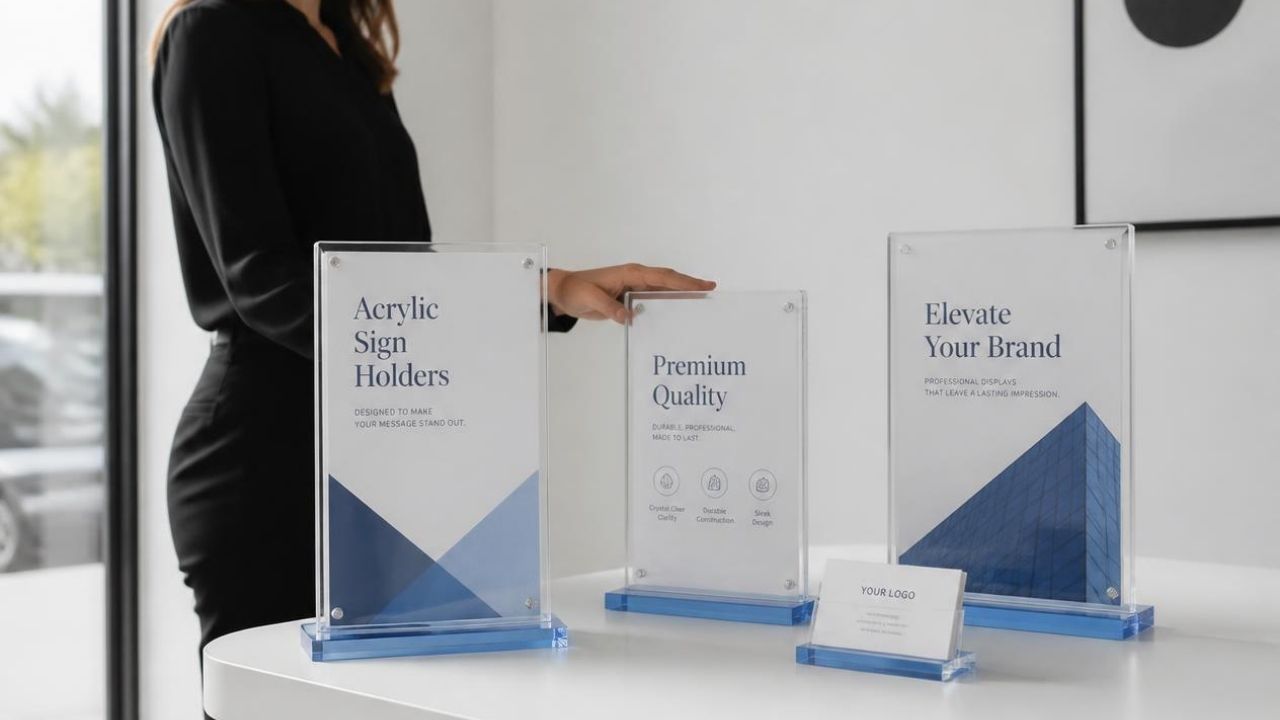
Fall and Q4 seasonal display preparation helps exhibitors organize booth materials before the busiest conference and retail period of the year. Merchandise displays help exhibitors keep featured products, samples, and printed materials visible during busy fall conference traffic. Pair these setups with durable acrylic sign holders to highlight seasonal promotions, pricing tiers, and directional cues that keep attendees moving through your booth with purpose.
This checklist explains how to plan lead times, select display materials, prepare signage and collateral, manage shipping, and keep booth presentations consistent across fall events.
Key Takeaways
- Fall trade show and conference season activities peak in Q4, with exhibitor budgets heavily allocated to booth space and show services.
- Planning lead times for display and collateral finalization range from 6 to 9 months for major seasonal displays.
- Outdoor display materials must withstand significant temperature and UV exposure changes in fall.
- Pre-show marketing and interactive booth elements substantially increase visitor engagement and qualified lead generation.
- Efficient shipping and logistics management is crucial to avoid delays and excessive freight costs during the peak season.
Display Preparation Starts With the Conference Calendar
A useful trade show checklist starts with the fall conference calendar and works backward from each event date. Exhibitors should confirm booth deadlines, campaign timing, collateral needs, and display requirements before production and shipping windows become tight.
When Do Fall Trade Shows Peak and Why?
| Checklist area | What to confirm | Why it matters |
| Booth layout | Product zones, literature placement, and traffic flow. | Keeps staff and visitors oriented during busy periods. |
| Collateral holders | Brochures, sell sheets, QR code signs, and takeaways. | Prevents piles of loose materials and missed handouts. |
| Signage | Directional signs, offer signs, product labels, and brand panels. | Improves readability from the aisle and inside the booth. |
| Shipping plan | Packaging, carrier timing, show-site rules, and backups. | Reduces last-minute freight costs and setup delays. |
| Post-show reuse | Storage, cleaning, insert replacement, and damage checks. | Extends display life across multiple fall events. |
Trade shows peak in the fourth quarter, especially October and November, making Q4 the busiest season for exhibitors. According to CEIR data, the Q4 2024 total index stands at 95.6, just 4.4% below 2019 levels, outperforming Q3, which is 11.2% below 2019.
Q4 sales drive 26.6% of annual US retail revenue, underpinning demand during fall trade shows. Exhibitor direct spend reaches just over $30 billion for 2024, supporting large-scale event booth setup in this period.
How Do Exhibitor Budgets Break Down for Fall Shows?
Exhibitor budgets allocate 23% to booth space, 18% to show services, and 16% to exhibit design and construction. Travel, lodging, and shipping each account for around 11% of total show costs.
Booth space rental varies widely, from $20 to $40 per square foot for regional B2B shows to $80 to $138 per square foot for premium national displays. Total show costs typically amount to about three times the space rental fee.
| Budget category | Share of exhibitor budget |
| Booth space | 23% |
| Show services | 18% |
| Exhibit design and construction | 16% |
| Travel | About 11% |
| Lodging | About 11% |
| Shipping | About 11% |
What Timing Should Exhibitors Follow for Display and Collateral Finalization?
Exhibitors should begin fall and Q4 seasonal display preparation six to nine months before major retail periods. Smaller holiday events require a shorter lead time of three to four months for effective planning.
Creative materials need finalization six to eight weeks before the event, with production starting three to four weeks prior. Pre-show marketing generally begins six to eight weeks before the show for maximum impact.
Display Preparation Requires Early Lead-Time Planning
Early lead-time planning gives exhibitors enough room to approve designs, order holders, print inserts, and prepare backup materials. This matters most during Q4, when retail campaigns and conference deadlines often overlap.
What Are Recommended Lead Times for Ordering Different Display Types?
Brochure holders should be planned before booth setup so handouts stay organized and easy for attendees to take.
Full custom fabricated displays with prototype approval require 12 to 13 weeks lead time before fall trade shows. Custom imprinted stock displays can be ordered with a four-week lead time, while unbranded stock displays require as little as 10 days.
Same-day shipping is available for in-stock orders placed before 2 PM PST. This staged timing enables exhibitors to align production schedules with critical deadlines.
| Display type | Lead time | Notes |
| Full custom fabricated (prototype approval) | 12 to 13 weeks | Covers design approval and production before the show |
| Custom imprinted stock displays | 4 weeks | Adds branding to standard display styles |
| Unbranded stock displays | 10 days | Fastest option using standard sizes |
| In-stock items | Same-day shipping | Orders placed before 2 PM PST |
How Do Shipping Deadlines Affect Display Preparation?
Shipping deadlines significantly influence preparation timelines, with UPS and FedEx Ground shipments needing to be booked at least seven days before target dates. For delivery by December 24, FedEx Ground requires ordering by December 17 for five-day transit.
UPS Ground safe shipping benchmarks occur between December 16 and 18, with expedited services like UPS 2nd Day Air and Next Day Air available closer to the holiday. Missing these deadlines often forces costly air freight shipments.
What Are Common Pitfalls When Planning Last Minute?
Late custom orders placed after early September face compressed prototype and production schedules amid carrier capacity constraints. Such delays often push shipments from economical ground freight to premium air freight.
Common last-minute errors include receiving collateral without matching booth graphics or vice versa, breaking brand consistency. Skipping or rushing pre-show marketing reduces visitor traffic and lead capture potential.
Fall Weather Can Affect Outdoor and Semi-Outdoor Display Materials
Fall weather can change how display materials perform before, during, and after an event. Outdoor and semi-outdoor placements should be reviewed for temperature shifts, sunlight, moisture, wind, and transport conditions.
What Are Typical Climate Changes from August to November Across US Regions?
Average temperatures in US cities vary substantially from August to November, with swings of up to 39°F in Minneapolis and 28°F in Phoenix. For instance, Phoenix temperatures fall from an average high of 105°F in August to 77°F in November.
Humidity levels also fluctuate, with Seattle reaching up to 76% relative humidity by November, while Phoenix remains around 27%. UV exposure decreases markedly in most regions across fall months.
How Do Acrylic and Other Plastics React to Temperature and UV Variation?
Acrylic panels undergo thermal expansion of about 0.065 inches on a 36-inch panel with a 60°F temperature change, requiring slotted fasteners to allow movement. Acrylic's maximum continuous service temperature ranges between 170°F and 190°F.
Polycarbonate offers much higher impact resistance than acrylic, with 20 to 40 times greater strength. UV-stabilized acrylic grades prevent yellowing, especially important in high UV regions like Phoenix or Miami.
What Regional Adjustments Should Buyers Make for Weather Transitions?
Exhibitors in high UV and warm climates such as Phoenix, Miami, Atlanta, and Los Angeles should specify UV-stabilized acrylic grades for outdoor displays. In colder northern cities, polycarbonate is preferred for semi-outdoor applications due to better impact resistance in low temperatures.
Fasteners must allow for thermal expansion to prevent warping or joint separation. Moisture absorption by acrylic is minimal, but keeping surfaces clean prevents mold and mineral deposits in humid regions.
Trade Show Booth Elements Should Support Visitor Engagement and Lead Capture
Wall mount displays can help teams use vertical space when booth floor area is limited or expensive. Pre-show marketing yields 46% more booth visits than relying solely on walk-up traffic. With 76% of attendees pre-planning visits, marketing efforts six to eight weeks prior significantly boost engagement.
Most trade show visitors are decision-makers, with 81% holding buying authority. The critical promotional window occurs two to three weeks before show opening when competition for attention is high.
What Interactive Features Boost Qualified Lead Generation?
Booths featuring interactive elements such as live demos and digital games generate three to five times more qualified leads than static booths. Industry studies indicate that 76% of purchase decisions occur in-store or at displays.
Interactive displays create stronger brand connections and encourage attendees to engage at high levels, increasing the likelihood of lead capture and sales conversions.
Which Booth Investments Yield High ROI and Which Do Not?
Low-cost, high-impact strategies include pre-show emails, product demonstrations, and custom acrylic sign holders. High-cost investments like expansive LED walls or celebrity appearances often yield inconsistent returns.
Basic literature holders and branded swag are expected but do not independently drive visitors to high levels. Strategic investments should balance cost with demonstrated impact on lead generation.
Exhibitors Can Balance Custom and Stock Displays for Fall Events
Full custom retail displays require six to eight weeks of creative development plus three to four weeks of production. Custom-imprinted stock items need approximately five to seven business days.
Stock displays without branding can be acquired within 10 days, providing a quick solution for last-minute trade fair preparation.
How Does Ordering Behavior Affect Display Availability During Peak Season?
More than half of exhibitors plan to reuse existing booths, while nearly half intend to maintain their show schedule. About 28% aim to increase their presence, heightening competition for display resources.
Early ordering supports availability and customization. Late orders risk limited stock and higher costs due to premium shipping or rushed production.
What Is the Role of Acrylic Sign Holders and Brochure Holders?
Acrylic sign holders and brochure holders serve as affordable, effective tools to communicate messaging and promotional details at the booth. They provide quick updates and support interactive visitor experiences.
These products are integral to smooth event booth setup and contribute to brand visibility without major design changes.
Shipping and Logistics Influence Trade Show Display Success
Even strong booth materials can fail if shipping and logistics are handled too late. Exhibitors should treat packaging, delivery timing, show-site rules, and backup pieces as part of the display checklist.
What Are Key Shipping Cutoff Dates for Fall Conference Deadlines?
Sign holder frames protect printed messaging through repeated setup, transport, and teardown across fall events.
The safe ordering deadline for Black Friday custom displays falls around September 5, approximately 12 weeks prior. Mid-November shows require orders by mid-August to avoid rush fees.
FedEx Freight Priority service targets December 22 for one-day delivery, while UPS Next Day Air extends to December 23. Missing these windows can delay critical display arrival.
How Does Freight Cost Impact Exhibit Budgeting?
Drayage fees have risen 20 to 35% since 2019, averaging $100 to $200 or more per hundredweight. For a 20×20 custom exhibit weighing several thousand pounds, drayage costs range from $5,000 to $16,000 per show.
Accounting for shipping at 11% of the total exhibitor budget ensures realistic financial planning. Overlooking freight expenses can jeopardize overall event return on investment.
What Are Recommended Practices To Avoid Shipping Delays and Damage?
Early booking of shipping services avoids carrier capacity constraints and premium air freight costs. Consolidating shipments and using reliable carriers reduces risks of damage and lost materials.
Proper packaging protects acrylic materials from thermal stress and impacts during transit. Coordinating on-site logistics minimizes receiving dock delays and potential handling damage.
Fall Trade Show Display Longevity Depends on Material and Storage Choices
Display longevity depends on how materials are selected, transported, cleaned, and stored between events. A reusable display plan can reduce waste and keep fall conference materials consistent across multiple shows.
How To Address Thermal Expansion and Fastening for Acrylic Panels?
Outdoor and real estate holders may be useful for semi-outdoor check-in areas, property events, or exterior directional signs.
Acrylic's thermal expansion rate necessitates slotted or oversized mounting holes to prevent fastener binding. Without this accommodation, panels can warp or develop stress cracks around rigid fasteners. Allowing movement saves displays from joint separation caused by expansion and contraction during temperature swings common in fall.
How To Protect Displays from UV Degradation and Moisture?
Using UV-stabilized Plexiglas products ensures colorless sheets remain clear for up to 30 years. Colored acrylic components retain colorfastness for 10 years under recommended conditions.
Moisture absorption is negligible, but maintenance prevents surface contamination that might impair appearance. Choosing quality materials supports display longevity during fall events.
What Handling Precautions Are Needed in Cooler Temperatures?
Acrylic becomes brittle below freezing, increasing the risk of cracking during shipping or installation. Handling in temperatures near or below -20°C requires care or polycarbonate alternatives.
Northern exhibitors should plan extra protective measures for displays in November markets with cooler climates to prevent transport and setup damage.
Essential Trade Show Display Checklist for Fall Conference Season
Proper fall and Q4 seasonal display preparation demands adherence to critical deadlines and material selections. Budget allocations must consider booth space, design, travel, and shipping to avoid last-minute costs. Lead times vary by display type, with custom fabrication requiring three months or more.
Accounting for regional climate effects on acrylic and polycarbonate materials prevents damage from thermal expansion and UV exposure. Planning interactive booth features and starting pre-show marketing early increases lead quality and visitor totals. Managing logistics proactively avoids costly freight surcharges and ensures timely setup.
By following this trade show checklist, exhibitors can optimize their event booth setup during the fall conference display surge. Attention to timing and material durability supports consistent brand presentation and visitor engagement throughout the busy Q4 season.
For help selecting suitable acrylic sign holders and brochure holders, Displays & Holders provides resources specific to seasonal display needs.
Prepare Fall Trade Show Displays With Confidence
A clear trade show display plan helps your team arrive with organized materials, visible messaging, and reusable fixtures that support every visitor conversation. Displays & Holders can help you choose brochure holders, sign holders, and product displays that keep booth materials easy to see and easy to replace.
Before shipping windows close, request a quote for the display pieces your fall schedule requires so your booth is ready before the next event date arrives. Add our compact tabletop sign holders to your order to keep event branding, session schedules, and promotional messaging sharp at every table and registration point.
FAQs
Q1. What is the recommended lead time for ordering custom trade show displays for fall events?
A. Custom trade show displays should be planned early enough to allow artwork approval, production, shipping, and setup checks. Timelines vary by display complexity, but teams should avoid waiting until the final weeks before a fall event. Stock holders can support faster needs when the booth uses standard print sizes.
Q2. How does fall weather affect acrylic sign holders used in outdoor displays?
A. Fall weather can expose outdoor displays to temperature shifts, moisture, wind, and direct sun. Acrylic sign holders should be reviewed for placement, mounting method, insert protection, and visibility. Teams should choose display pieces based on the actual booth or event environment rather than assuming indoor materials will work outdoors.
Q3. What percentage of the exhibitor budget is typically spent on booth space?
A. Booth space is often one of the largest trade show expenses, but it is only part of the full event budget. Exhibitors should also plan for display pieces, graphics, shipping, storage, staff travel, and lead capture tools. A clear checklist helps teams avoid spending heavily on space while under-preparing the materials visitors actually see.
Q4. How important is pre-show marketing for trade show visitor engagement?
A. Pre-show marketing can help the right visitors recognize the booth before they arrive. Display materials should reinforce the same offers, product categories, and calls to action used in outreach. When signage and collateral match the campaign, booth staff can start conversations faster and capture cleaner leads.
Q5. What practices help avoid last-minute shipping delays for fall trade shows?
A. Teams should confirm print deadlines, packaging needs, carrier timelines, and show-site delivery rules before the shipping window opens. Backup copies of key inserts and standard-size holders can reduce the impact of damaged or delayed materials. After the event, displays should be cleaned, inspected, and stored so they are ready for the next fall or Q4 show.