










Key Takeaways:
- Recycled acrylic requires 90% less production energy than virgin acrylic while maintaining identical clarity and strength with cost-neutral pricing in some formulations.
- PLA bioplastics reduce carbon footprint up to 75% compared to traditional plastics with greenhouse gas emissions measuring 28 kg CO₂ versus PET containers at 830 kg CO₂.
- Sustainable display materials achieve break-even within 3-5 years when accounting for brand value enhancement, customer loyalty, and avoided waste disposal costs totaling $200+ per unit lifecycle.
- Implementing seven biodegradable holder strategies reduces carbon emissions 243 kg CO₂ per store annually, translating to 24.3 metric tons reduction for 100-store chains.
- Patagonia achieved 38% carbon footprint reduction and 73% customer appreciation through bamboo display adoption despite a 65% cost premium with a projected 4.2-year break-even timeline.
The retail display industry faces mounting pressure to abandon petroleum-based materials. Traditional acrylic brochure holders dominate commercial spaces, but their environmental impact can no longer be ignored. Ten innovative materials now offer viable alternatives, balancing sustainability with performance.
Understanding these materials helps procurement teams make informed decisions. Cost premiums range from -20% to +80% compared to traditional acrylic. The right choice depends on application requirements, budget constraints, and environmental goals.
What Are Acrylic Brochure Holders Used for in Commercial Display Environments?
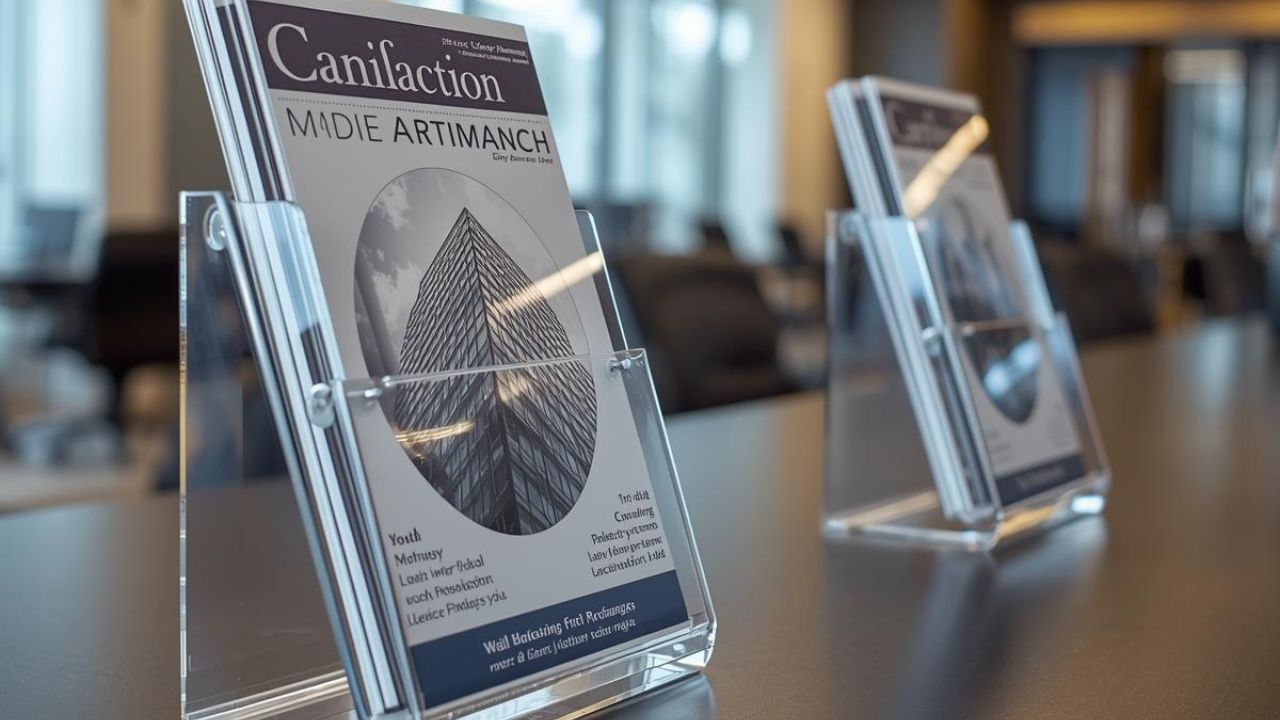
Brochure holders serve as essential information delivery tools in commercial spaces. They organize marketing materials, product specifications, and promotional content at point-of-purchase. Retail stores, hotels, hospitals, and trade shows rely on these displays for customer interaction. The material choice directly impacts brand presentation and environmental footprint.
Why do retail, hospitality, and corporate offices rely on brochure holders for daily customer interaction?
Brochure holders provide 24/7 access to printed information without staff intervention. Customers browse materials at their own pace, reducing employee workload during peak hours. These displays maintain organized presentation standards across multiple locations.
High-traffic environments require durable solutions that withstand constant handling. Traditional acrylic offers clarity and professional appearance. However, sustainability concerns now drive material innovation across the industry.
How do brochure holders support brand presentation and information clarity?
Clear materials allow focus on content while protecting printed materials from damage. Professional displays reinforce brand credibility through consistent visual merchandising. Organized information presentation improves customer experience and reduces perceived clutter.
Material selection communicates brand values. Sustainable alternatives signal environmental commitment to increasingly conscious consumers. This visual cue differentiates brands in competitive markets.
Why Is Sustainability Becoming a Priority in Acrylic Display Manufacturing?
Consumer expectations and regulatory frameworks converge on sustainability requirements. Ninety-three percent of global consumers expect brands to support environmental issues. Procurement teams face direct requests for greener alternatives from marketing departments and executive leadership.
What environmental concerns are businesses raising about traditional acrylic production?
Virgin acrylic (PMMA) derives from fossil fuels through energy-intensive processes. Production generates 3.0 to 4.0 kg CO₂e per kilogram of material. The manufacturing cycle requires significant crude oil processing, contributing to carbon emissions.
Traditional acrylic persists in environments for centuries without degrading. This longevity becomes a liability at end-of-life. Businesses increasingly question the long-term environmental cost of short-term display solutions.
Why are procurement and marketing teams requesting greener display materials?
Corporate sustainability reporting creates accountability for material choices. Companies must document environmental impact across all operations, including merchandising fixtures. Regulatory pressure intensifies with packaging taxes reaching €0.64 per kilogram in some regions.
Consumer behavior drives demand from the bottom up. Brands risking customer alienation by ignoring sustainability fall behind competitors. Marketing teams recognize eco-friendly displays as tangible proof of corporate commitments.
What Challenges Exist With Traditional Acrylic Brochure Holders?
Traditional acrylic creates problems throughout its lifecycle. Manufacturing, use, and disposal each present environmental and financial challenges. Understanding these limitations helps justify investment in sustainable alternatives.
How does conventional acrylic affect waste management and recycling programs?
PMMA recycling requires complex chemical processing (pyrolysis). Energy-intensive recycling often costs more than virgin production. Many facilities reject acrylic, sending it to landfills where it occupies space indefinitely.
Retail point-of-purchase displays generate major commercial waste streams. Temporary fixtures and promotional displays multiply this problem during seasonal campaigns. France's packaging removal tax exemplifies growing regulatory costs for non-recyclable materials.
Why do disposal and replacement cycles matter for high-traffic businesses?
Acrylic displays last 1-3 years in retail environments before scratching, clouding, or chipping compromise appearance. A $50 initial purchase becomes $200+ in total replacement costs over intended lifespan. Frequent replacement cycles multiply both financial and environmental impacts.
End-of-life disposal creates ongoing costs through landfill fees or waste management contracts. These expenses accumulate across multiple locations. Large chains face substantial annual disposal budgets for display fixtures alone.
What Defines an Eco-Friendly Material for Brochure Holders?
Sustainability criteria extend beyond single attributes. Comprehensive evaluation considers material sourcing, manufacturing impact, use-phase durability, and end-of-life options. Verified metrics trump marketing claims.
How do recyclability and post-consumer content define material sustainability?
Post-consumer recycled (PCR) content diverts waste from landfills while reducing virgin material demand. Recycled HDPE and polypropylene show 70% lower cradle-to-gate carbon emissions compared to virgin plastic. Established recycling infrastructure enables closed-loop solutions.
Material verification through certifications prevents greenwashing. FSC certification for wood and bamboo ensures responsible sourcing. Recycled plastic GHG emissions drop 42.8% compared to virgin materials. These measurable improvements justify premium pricing.
Why do durability and reuse outweigh short-term biodegradability claims?
Longer product lifespan reduces overall environmental impact through fewer replacement cycles. Materials engineered for extended use—like recycled acrylic and bamboo—deliver superior total cost of ownership. Durability determines how many units a business purchases over time.
Materials repeatedly recyclable within existing infrastructure provide circular economy benefits. This approach keeps materials productive longer than single-use biodegradable options. Total lifecycle analysis reveals durability as a key sustainability metric.
Which Industries Are Driving Demand for Eco-Friendly Brochure Holders?
Retail and hospitality sectors lead adoption due to high visibility and brand positioning needs. Corporate sustainability goals drive implementation across industries. Real-world case studies demonstrate practical applications and measurable results.
Why are retail and hospitality businesses leading adoption?
Patagonia replaced 100% of acrylic holders with bamboo alternatives across 50 retail locations in 2023-2024. The outdoor apparel retailer partnered with local suppliers to minimize transportation emissions. Initial investment ran 65% higher than traditional replacement cycles.
Results justified the premium. Carbon footprint dropped 38% annually for display emissions. Seventy-three percent of surveyed customers noticed and appreciated sustainable displays. Projected break-even occurs at 4.2 years when factoring brand value enhancement.
Whole Foods Market implemented a tiered strategy across 200 U.S. locations. High-traffic areas received bamboo displays for durability. Seasonal displays used recycled cardboard for flexibility. Permanent fixtures utilized recycled acrylic for balance.
Display costs increased 28% compared to all-acrylic approaches. However, strategic material selection reduced refresh costs by 35%. The grocer achieved 45% reduction in plastic waste while strengthening sustainability leadership positioning.
How do corporate offices, medical facilities, and trade shows influence material standards?
Corporate sustainability reporting requirements drive material selection beyond retail. Medical facilities prioritize low-VOC materials for indoor air quality, protecting patient and staff health. These specifications ripple through supply chains as standard requirements.
Trade shows and temporary installations benefit from biodegradable options that eliminate disposal logistics. Industry certifications like BPI and TÜV Austria for compostable materials become contract requirements. Professional standards evolve as leading organizations establish precedents.
What Eco-Friendly Materials Are Replacing or Improving Acrylic Brochure Holders in 2026?
Material innovation delivers practical alternatives across performance and price spectrums. Each option balances specific advantages against limitations. Understanding these trade-offs enables informed selection for different applications and environments. Recent material innovations showcase this evolution.
How is recycled acrylic changing brochure holder manufacturing?
Recycled PMMA (rPMMA) requires up to 90% less energy in production than virgin acrylic. The material maintains clarity and strength of virgin alternatives while adding +20% cost premium. Some formulations achieve cost-neutral pricing, eliminating the initial price barrier.
Recycled acrylic creates closed-loop solutions for existing acrylic waste. Direct recyclability extends material life through multiple cycles. Slight discoloration or reduced optical quality can occur with mechanical recycling, though chemical recycling maintains virgin-level clarity.
Why is post-consumer recycled (PCR) plastic gaining commercial acceptance?
Major retailers increasingly mandate rPET for all temporary and semi-permanent displays. Recycled PET and HDPE/PP offer wide availability and cost-effectiveness. Clear thermoformed displays use rPET, while opaque robust holders utilize rHDPE/PP.
Recycled HDPE and PP demonstrate 70% lower cradle-to-gate carbon emissions versus virgin plastic. Established recycling streams reduce end-of-life costs and simplify disposal logistics. This infrastructure advantage drives commercial acceptance across industries.
How do bio-based acrylic alternatives reduce fossil-fuel dependency?
Bio-based PE maintains identical properties to fossil PE while reducing carbon footprint. Plant-based feedstocks absorb CO₂ through photosynthesis during growth, creating biogenic carbon sequestration. This process fundamentally alters the carbon equation for raw materials.
Eliminating petroleum dependence insulates retailers from volatile fossil fuel pricing. Supply chain stability improves with renewable resource sourcing. Material performance remains unchanged, removing technical barriers to adoption.
Why is PETG being used as a recyclable clear display material?
PETG offers clarity similar to acrylic while remaining recyclable within existing PET infrastructure. Recycled PETG filament reduces CO₂ emissions by 56%—from 5.85 kg to 2.55 kg per unit compared to virgin PETG. This dramatic reduction demonstrates recycling's impact.
Thermoformed display applications benefit from PETG's processing characteristics. The material combines environmental advantages with familiar manufacturing processes. Recycling infrastructure accessibility makes PETG practical for businesses committed to circular economy principles.
How are plant-based resins entering brochure holder production?
Polylactic Acid (PLA) derives from corn starch or sugarcane, offering transparent rigid properties. Standard manufacturing techniques—injection molding and 3D printing—process PLA without specialized equipment. Cost premium runs +40% over traditional acrylic.
PLA reduces carbon footprint up to 75% compared to traditional plastics. Greenhouse gas emissions measure 28 kg CO₂ versus PET containers at 830 kg CO₂. Commercial composting facilities enable complete biodegradation, though regional availability varies.
Lower heat deflection temperature limits high-heat applications. Despite limitations, sustainability scores reach 90 for carbon footprint and 95 for biodegradability.
What role do reclaimed industrial plastics play in material circularity?
Post-industrial recycled content reduces virgin material consumption while diverting manufacturing waste from landfills. Quality control proves more consistent than post-consumer recycled materials due to known composition. This reliability appeals to manufacturers requiring tight specifications.
Circular economy principles keep materials in productive use through multiple cycles. Reclaimed industrial plastics support this goal while meeting performance requirements. The approach demonstrates how manufacturing efficiency and sustainability align.
Why are low-VOC acrylic formulations important for indoor environments?
Low-VOC materials improve indoor air quality in occupied spaces. Medical facilities, schools, and corporate offices particularly benefit from reduced chemical emissions. Occupational health concerns for retail workers decrease with low-VOC alternatives.
Green building certifications like LEED and WELL increasingly require low-VOC materials. These standards drive specification requirements across commercial construction. Display fixtures must comply to maintain building certification status.
How do mono-material designs improve end-of-life recycling?
Single-material construction simplifies recycling processes by eliminating disassembly requirements. Material separation becomes unnecessary, reducing processing costs and time. Recycling facilities more readily accept mono-material items.
Industry trends favor monomaterial design for both cost and environmental reasons. Contamination of recycling streams decreases when items contain single material types. Higher recycling facility acceptance rates translate to better end-of-life outcomes.
Why are hybrid acrylic-composite materials emerging for strength and clarity?
Blending natural fibers—hemp, wood, bamboo—with bioplastics or recycled polymers creates tailored properties. Enhanced stiffness and unique natural textures emerge from these combinations. Hemp composites add +60% cost premium with high stiffness-to-weight ratio and excellent insulation.
Bamboo composites command +80% cost premium while providing high tensile strength and natural antibacterial properties. Cork composites at +50% premium offer carbon-negative material composition—typically 95% cork with 5% eco-friendly binder.
How are manufacturers reducing material waste through precision fabrication?
Digital integration and modular designs reduce material requirements through optimized layouts. Flat-packable designs optimize shipping density while minimizing packaging waste. Precision cutting technology minimizes scrap material during fabrication.
3D printing enables on-demand production with minimal waste compared to traditional manufacturing. This approach eliminates inventory obsolescence and overproduction. Manufacturers focusing on waste reduction throughout production processes achieve measurable sustainability improvements.
How Do Eco-Friendly Materials Affect Brochure Holder Design and Performance?
Performance trade-offs exist between traditional and sustainable materials. Understanding these differences enables appropriate material selection for specific applications. Comprehensive testing reveals where sustainable alternatives excel and where compromises occur.
Can sustainable materials maintain clarity, rigidity, and professional appearance?
PLA and traditional acrylic perform comparably in clarity and customizability. However, traditional acrylic leads in durability (95 versus 70) and weather resistance (90 versus 60). PLA achieves superior scores in biodegradability (95 versus 10) and carbon footprint (90 versus 20).
The trade-off centers on physical robustness versus environmental responsibility. Bamboo offers excellent strength while sequestering carbon during rapid growth—up to a meter per day. Recycled cardboard provides 100% recyclability and biodegradability at -20% cost reduction, though durability remains low. Material selection depends on application priorities.
How does material choice influence thickness, heat bending, and polishing?
PLA's lower heat deflection temperature limits thermoforming applications compared to traditional acrylic. Bamboo requires sealing to prevent moisture damage and different fabrication techniques—lamination and joining rather than simple cutting.
Hemp composites produce opaque textured appearances unsuitable for clarity applications. Molded paper pulp customizes easily into complex 3D shapes but rough finishes require coating. Manufacturing complexity varies, with eco-friendly materials often requiring specialized machinery.
What Should Buyers Look for When Choosing Sustainable Brochure Holders?
Verification separates genuine sustainability from greenwashing claims. Specific certifications and measurable metrics provide objective evaluation criteria. Due diligence protects brand reputation and ensures environmental goals are met.
How can businesses verify material claims and sourcing transparency?
Demand certified materials including FSC-certified wood and bamboo. Verified post-consumer recycled content certification prevents unsubstantiated claims. Compostable certifications from BPI and TÜV Austria ensure industrial composting compatibility.
Focus shifted from vague "eco-friendly" language to verifiable metrics like 42.8% reduction in environmental impact. Life Cycle Assessment data should be available from suppliers for objective comparison. Transparency prevents greenwashing and supports procurement accountability.
Why does U.S.-based manufacturing matter for sustainability goals?
Local sourcing reduces transportation emissions throughout supply chains. Lighter materials—bioplastics, bamboo, recycled cardboard—decrease fuel consumption and CO₂ during shipping. Partnership with regional manufacturers minimizes overall carbon footprint.
Better supply chain visibility and quality control emerge from proximity. Regional economic support and reduced dependency on global supply chain volatility provide additional benefits. For businesses prioritizing sustainability, contacting local manufacturers ensures alignment with environmental goals.
Are Eco-Friendly Brochure Holders Cost-Effective for Bulk and Repeat Orders?
Initial cost premiums diminish when total lifecycle costs are calculated. Break-even analysis reveals surprising results for businesses thinking long-term. Volume purchasing and strategic implementation timing further improve economics.
How does durability reduce long-term replacement costs?
Break-even typically occurs within 3-5 years when accounting for brand value, customer loyalty, and avoided waste disposal costs. Bamboo and high-quality recycled plastics engineered for longer lifespan reduce replacement frequency. Properly matched materials to environments achieve 80-95% of traditional acrylic durability.
Total Cost of Ownership (TCO) includes durability, end-of-life costs, and monetization of environmental impact. Social Cost of Carbon (SCC) stands at $190 per ton CO₂e according to EPA central estimates. Carbon savings monetization ranges $0.475-$0.665 per kilogram when using PLA versus traditional acrylic.
Why are bulk buyers shifting toward recyclable and reusable materials?
Volume negotiations reduce per-unit costs for sustainable materials significantly. Economies of scale and technological advancements narrow price gaps between virgin and recycled options. Material costs per kilogram vary: virgin acrylic (PMMA) $3.20-$4.00, PLA $2.52-$3.38, biodegradable plastic raw material $2.5-$4.
High-volume production demonstrates cost efficiency. At 10,000 units, injection molding costs approximately $0.78 per piece while 3D printing costs around $5.60 per piece. Recycled materials eliminate initial cost barriers in some formulations, making sustainable choices economically competitive. Sign holders and ad frames benefit from these volume advantages.
What Do These Material Changes Mean for the Future of Acrylic Displays?
Industry evolution accelerates as sustainable options mature. Traditional materials adapt through recycled inputs while entirely new materials emerge. Market forces and regulatory frameworks drive this transformation forward.
Will traditional acrylic adapt through recycled and low-impact inputs?
Industry moves beyond simple recycling toward comprehensive circularity. Materials like rPMMA and bio-based PE can be repeatedly recycled within existing infrastructure. Circular economy focus gains favor for long-term displays requiring extended service life.
Algae-based bioplastics market measured $106.0 million in 2024, projected to reach $146.2 million by 2030. Algae production costs approximately $1,137 per short ton dry weight using PBR methods. These emerging materials demonstrate an innovation pipeline extending beyond current options.
How might sustainability reshape display standards beyond 2026?
Digital signage reduces physical brochure holder requirements, though printed materials remain valuable for certain applications. Trends favor modular, reusable, easily disassembled designs. Materials like Xanita Board (100% repulpable) and bamboo lead modular movement.
Industry characterized by a diverse material palette allows brand-specific sustainability alignment. Future focuses on maximizing recycled content, prioritizing biodegradability, or minimizing carbon footprint based on organizational goals. Standards evolve as leading companies establish new benchmarks.
What Should Businesses Consider Before Updating Brochure Holder Materials?
Strategic implementation maximizes ROI while managing risk. Phased approaches allow learning and adjustment before full-scale commitment. Proper planning ensures environmental benefits are realized and measured.
How can display upgrades align with branding and environmental goals?
Phased implementation beginning with high-visibility areas maximizes brand impact while managing costs. Pilot programs test materials in limited locations before full deployment. Material selection strategies should match application requirements: high-traffic areas use bamboo for durability and premium aesthetic, seasonal displays employ recycled cardboard for flexibility, permanent fixtures utilize recycled acrylic for balance.
Brand guidelines require updating to accommodate natural material variations. Premium positioning frames these variations as authentic natural characteristics enhancing sustainability narratives. Sample testing under actual store lighting conditions prevents disappointment after bulk ordering.
IKEA's pilot program demonstrates this approach. Testing PLA bioplastic literature holders in 25 Scandinavian stores during 2024, they deployed 500 units per location with in-store composting collection points. Cost impact ran 42% premium over traditional acrylic. Durability reached 87% after 18 months versus 95% for acrylic. The program diverted 2,300 kg plastic waste from landfills, justifying expansion to 100 additional stores in 2026.
Why does material selection influence customer perception and trust?
Visible eco-friendly practices build customer loyalty and differentiate brands. Sustainable displays create educational opportunities, using holders as discussion points about environmental commitment. Increased ROI emerges from eco-conscious consumer segments actively seeking responsible brands.
Patagonia's experience proves this impact. Seventy-three percent of surveyed customers noticed and appreciated sustainable displays across 50 retail locations. Positive brand perception from sustainable choices creates competitive advantages. Ignoring sustainability risks customer alienation and market share loss.
Enhanced trust translates to measurable business outcomes. Total annual carbon reduction reaches 243 kg CO₂ per store when implementing all sustainable strategies. For 100-store chains, this equals 24.3 metric tons CO₂ reduction annually—a substantial environmental improvement with corresponding brand value enhancement.
Making the Transition to Sustainable Displays
Material selection for brochure holders affects brand perception, environmental impact, and long-term costs simultaneously. Ten eco-friendly alternatives provide viable paths forward, each balancing different priorities. Costs normalize as performance improves.
Successful implementation requires understanding material properties, verifying sustainability claims, and matching solutions to specific applications. Case studies from Patagonia, IKEA, and Whole Foods demonstrate practical approaches yielding measurable results. Break-even timelines of 3-5 years make sustainable displays economically justifiable.
The future lies in circular economy principles and verified sustainability metrics. Evaluate options based on Total Cost of Ownership rather than initial price alone. Strategic material selection positions brands as sustainability leaders while delivering functional displays. Professional business card displays and literature holders demonstrate that environmental responsibility and commercial effectiveness need not conflict.
Ready to Upgrade Your Display Strategy with Sustainable Solutions?
Displays and Holders specializes in eco-friendly brochure holders and display solutions that meet both performance and sustainability requirements. Our team helps businesses navigate material options, cost considerations, and implementation strategies for successful transitions to greener alternatives.
Contact Displays and Holders today to discuss customized sustainable display solutions for your specific environment. From elegant slanted acrylic sign holders to full-scale merchandising systems, we provide expert guidance on material selection, bulk pricing, and long-term sustainability planning that aligns with your brand values and budget constraints.