










Key Takeaways:
- Recycled acrylic achieves 89-99% of virgin performance with impact strength showing largest gap at 10.7% lower (0.25 vs 0.28 ft-lb/in).
- Optical clarity differs only 1.1% between materials (91% vs 92% light transmission) making recycling viable for most commercial displays.
- Virgin acrylic provides 203°F heat tolerance, 11,030 psi tensile strength, and built-in UV protection ideal for outdoor high-traffic applications.
- Recycled acrylic suits indoor climate-controlled environments offering lower carbon footprint and budget-friendly pricing at 95-99% performance.
- Five durability tests—impact, scratch, clarity, heat, edge integrity—determine material suitability with application matching preventing over-specification.
Material selection determines replacement cycles and total cost of ownership. Recycled acrylic offers sustainability advantages while virgin acrylic provides performance benchmarks. Understanding actual durability differences prevents over-specification and under-performance.
Testing reveals specific performance gaps. Impact strength shows the largest difference at 10.7% lower for recycled material. Optical clarity differs by only 1.1%. Five key durability factors—impact resistance, scratch tolerance, clarity retention, heat exposure, and edge integrity—determine material suitability.
Modern chemical recycling produces recycled acrylic approaching virgin performance. Mechanical recycling creates marginal property degradation acceptable for most applications. Application matching based on actual test data optimizes cost and sustainability outcomes.
Acrylic (PMMA—poly(methyl methacrylate)) dominates display manufacturing due to exceptional clarity, weather resistance, and structural durability. Industry shift toward sustainability drives recycled material adoption. Performance validation through standardized testing enables informed specification decisions balancing environmental goals with operational requirements.
What Are Acrylic Sign Holders, and Why Is Durability a Critical Factor?
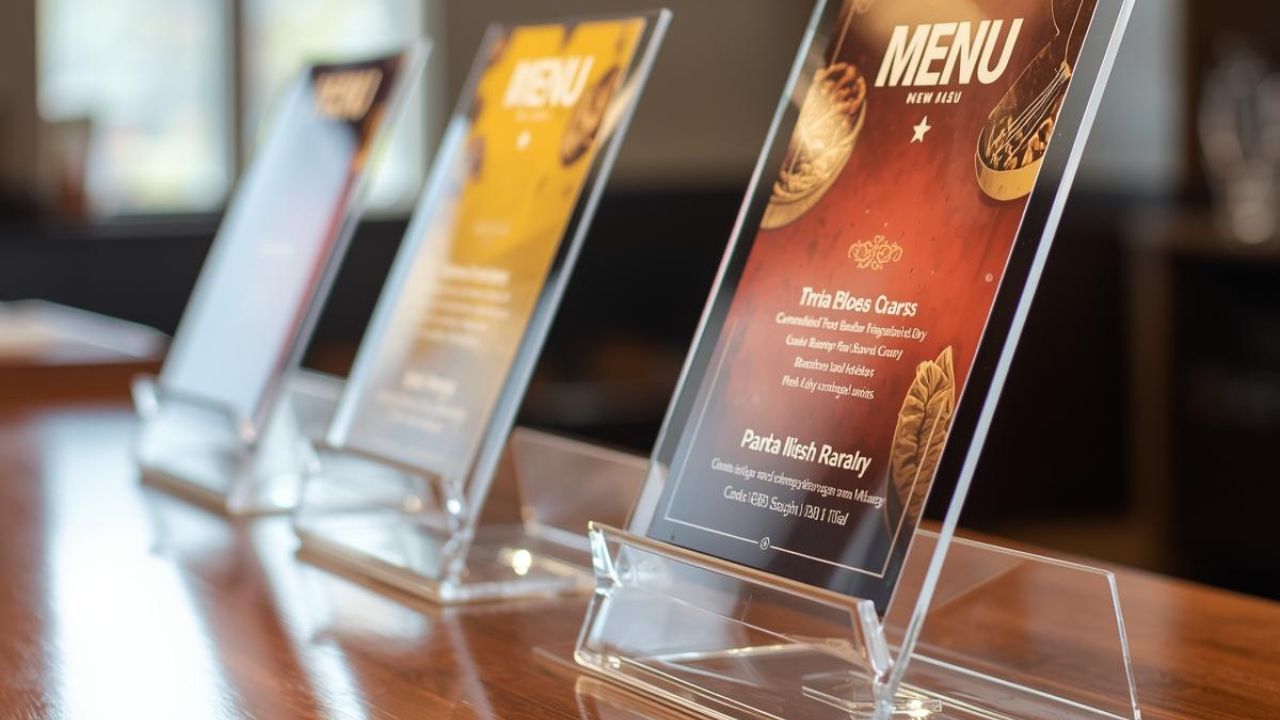
Acrylic sign holders serve as point-of-purchase displays communicating product information and pricing. Material durability directly affects operational costs through replacement frequency. Performance under real-world stress determines long-term value.
How are sign holders handled, cleaned, and repositioned in everyday commercial use?
Sign holders undergo frequent handling during content updates and promotional changes. Cleaning exposes materials to solvents and cleaning agents. Repositioning stresses edges and corners. Customer interaction adds scratching and surface wear.
High-contact retail environments increase wear potential. Commercial settings demand durability under repeated use conditions. Chemical resistance determines performance against cleaning protocols. Daily handling accumulates stress requiring robust material properties.
Why does durability directly affect replacement cycles and operating costs?
Premature failure multiplies operating costs through frequent replacement. Material degradation accelerates replacement timelines increasing waste. Total cost of ownership extends beyond initial purchase price. Replacement cycles impact labor costs for content changeovers.
Unexpected material failure during campaigns creates emergency procurement needs. Long-term durability reduces environmental impact through extended service life. Replacement frequency directly correlates with sustainability performance. Operating costs accumulate through shortened material lifespans.
What Is Virgin Acrylic in Commercial Display Manufacturing?
Virgin acrylic derives from raw petrochemicals through polymerization. Material properties remain consistent due to controlled production processes. Industry benchmark status reflects superior optical clarity and structural reliability.
How is virgin acrylic produced and processed for sign holders?
Virgin acrylic production polymerizes methyl methacrylate from petrochemicals. Two manufacturing forms exist: cast and extruded. Cast acrylic pours liquid monomer into molds creating higher quality with less uniformity. Extruded acrylic uses continuous extrusion yielding consistent lower-grade sheets.
The manufacturing method impacts material properties and recycling options. Chemical composition requires careful processing. Raw material production ensures structural consistency. Controlled manufacturing eliminates contaminants affecting performance.
Why has virgin acrylic long been the durability benchmark for displays?
Virgin acrylic achieves 92% light transmission with exceptional optical clarity. No tint or haze compromises transparency. High built-in UV protection resists yellowing over time by default. Structural consistency provides reliable performance across applications.
Superior chemical resistance handles solvents and cleaning agents effectively. High durability under stress especially in outdoor environments. Resistance to UV rays, discoloration, and cracking establishes performance standards. Heat and chemical exposure tolerance suits demanding applications.
What Is Recycled Acrylic in Commercial Display Manufacturing?
Recycled acrylic reprocesses post-consumer or post-industrial waste into display-grade sheets. Closed-loop recycling diverts material from landfills. Production methods determine final material quality and performance characteristics.
How is recycled acrylic sourced and reprocessed into display-grade sheets?
Chemical recycling breaks down acrylic into methyl methacrylate monomers for regeneration. This method produces properties approaching virgin material quality. Mechanical recycling shreds and melts scrap acrylic into pellets for reuse. Heat exposure during mechanical processing can degrade material quality.
Pyrolysis heats acrylic waste without oxygen recovering monomers. The method remains less widespread due to equipment and safety requirements. Careful processing separates and handles methyl methacrylate. Post-consumer and post-industrial sources provide feedstock for closed-loop recycling supporting circular economy models, similar to considerations for recyclable brochure holders across material types.
Quality varies significantly based on source material purity and processing method selected. Chemical recycling produces highest-grade recycled acrylic suitable for demanding applications. Mechanical recycling offers cost-effective processing for moderate-performance requirements. Source material contamination affects final product quality requiring careful sorting and cleaning protocols before reprocessing begins.
What durability concerns do buyers commonly associate with recycled acrylic?
Recycled material may contain slight haze or tint affecting optical clarity. Minor visual or structural imperfections distinguish it from virgin acrylic. Limited UV resistance tends toward yellowing or degradation without stabilizers. UV treatment becomes necessary for outdoor or sun-exposed applications.
Slightly higher scratch proneness affects high-contact applications. Lower-quality versions may crack or deform under heat. Brittleness after repeated recycling cycles reduces usability. Mechanical recycling limits reprocessing cycles before polymer chain breakdown. Contamination from adhesives or paint affects material purity.
What Does "Durability" Mean for Acrylic Sign Holders in Real-World Use?
Durability encompasses multiple performance factors beyond basic strength. Real-world conditions create complex stress combinations. Material selection requires evaluating specific application demands against actual performance data.
Which durability factors matter most beyond basic material strength?
Optical clarity retention after repeated cleaning and handling determines professional appearance. Scratch resistance under customer interaction maintains surface quality. Impact resistance during drops and accidental handling prevents premature failure. UV resistance prevents yellowing and degradation over time.
Heat tolerance near lighting fixtures and checkout equipment prevents deformation. Edge integrity after bending and repositioning stress maintains structural function. Chemical resistance to cleaning products preserves material properties. Surface sensitivity to high-contact applications affects long-term appearance.
Why do retail conditions differ from controlled lab testing environments?
Real-world exposure includes variable temperature and humidity conditions. Multiple simultaneous stress factors operate versus isolated lab testing. Cleaning frequency and chemical variety exceeds controlled testing protocols. Customer handling patterns prove unpredictable compared to standardized tests.
Outdoor displays face combined UV exposure, temperature fluctuation, and weather. High-traffic environments create wear patterns not replicated in laboratories. Extreme conditions test material limits beyond typical specifications. Controlled testing provides baseline data requiring real-world validation.
How Are Recycled and Virgin Acrylic Sign Holders Tested for Durability?
Five testing categories evaluate material performance under specific stress types. Standardized protocols enable direct comparison between materials. Test results quantify performance differences informing application matching decisions.
How is impact resistance evaluated during drops and daily handling?
Izod Impact Strength testing measures material response to sudden force. Virgin acrylic achieves 0.28 ft-lb/in baseline performance. Recycled acrylic reaches 0.25 ft-lb/in representing 89.3% of virgin performance. The 10.7% difference constitutes the largest performance gap between materials.
Testing simulates dropping and accidental collision scenarios. Both materials demonstrate durability and impact resistance for most display applications. Minor reduction in recycled acrylic generally proves non-limiting for typical uses. Sudden force resistance determines suitability for high-handling environments.
How is scratch and abrasion resistance tested under repeated use?
Surface sensitivity testing evaluates resistance to customer interaction. Scratch resistance remains comparable in high-quality grades of both materials. Lower-grade recycled acrylics show slightly higher scratch proneness. High-contact applications reveal durability differences between materials.
Testing includes repeated surface contact simulating retail environments. Chemical resistance affects scratch performance under cleaning protocols. Virgin's superior chemical composition provides better scratch resistance. Surface quality maintenance determines long-term professional appearance.
How is clarity retention measured after frequent cleaning?
Light transmission measurement determines optical performance degradation. Virgin acrylic maintains 92% light transmission establishing a baseline. Recycled acrylic achieves 91% light transmission—98.9% of virgin performance. Only 1.1% difference exists between materials.
High-quality recycled acrylic maintains clarity nearly identical to virgin. Testing evaluates haze development after repeated cleaning cycles. Both materials suit applications requiring clear visibility. Minimal clarity difference validates recycled use for most commercial displays, including applications requiring crystal-clear viewing.
How is heat exposure tested near lighting and checkout equipment?
Deflection temperature testing measures heat tolerance. Virgin acrylic withstands 203°F before deflection. Recycled acrylic tolerates 194°F representing 95.6% of virgin performance. The 4.4% difference equals 9°F temperature reduction.
Heat tolerance proves critical for displays near lighting fixtures. Lower-quality recycled versions risk deformation under heat exposure. Testing simulates prolonged equipment heat source exposure. Temperature resistance determines placement near heat-generating elements.
How is edge cracking assessed after bending and repositioning?
Tensile modulus testing measures material stiffness and flexibility. Virgin acrylic achieves 490,000 psi baseline. Recycled acrylic reaches 471,000 psi—96.1% of virgin performance. The 3.9% difference represents 19,000 psi reduction.
Edge integrity matters for bent or load-bearing designs. High-grade recycled sheets accept cutting, drilling, and shaping like virgin. Testing evaluates stress resistance during fabrication and repositioning. Material stiffness determines performance in complex geometries.
How Do Recycled Acrylic Sign Holders Perform in Durability Tests?
Recycled acrylic achieves 89-99% of virgin performance across tested categories. Chemical recycling produces higher quality than mechanical methods. Performance remains adequate for most commercial display applications despite measurable reductions.
How does recycled acrylic compare in impact resistance results?
Recycled material achieves 89.3% of virgin impact strength at 0.25 versus 0.28 ft-lb/in. The 10.7% reduction represents the largest performance gap across all categories. Minor decrease remains acceptable for wide application ranges.
Durability proves adequate for most display applications despite lower scores. Performance suits indoor retail environments effectively. Applications not involving extreme impacts work well with recycled material. Impact frequency and severity determine suitability.
How does recycled acrylic perform under scratch and surface wear testing?
Scratch resistance compares favorably to virgin in high-quality grades. Surface sensitivity increases slightly in some formulations. Higher scratch proneness affects high-contact applications. Performance depends on recycled material grade and quality.
Chemical resistance proves adequate for most cleaning agents. Indoor use minimizes surface wear concerns. Quality verification ensures appropriate scratch resistance. Grade selection determines surface durability performance.
How consistently does recycled acrylic maintain optical clarity over time?
Recycled material maintains 91% light transmission—98.9% of virgin's 92%. Only 1.1% difference from virgin clarity exists. Nearly identical optical performance suits premium displays. Slight haze or tint may appear versus virgin's crystal-clear finish.
High-quality recycling maintains impressive transparency. Clarity adequacy serves most commercial applications. Visual performance meets professional standards. Minimal degradation validates widespread use.
How Do Virgin Acrylic Displays Perform in Durability Tests?
Virgin acrylic establishes a 100% baseline across all performance categories. Superior consistency reflects controlled raw material production. Premium performance justifies higher costs for demanding applications.
How does virgin acrylic respond to repeated impacts and drops?
Virgin achieves 0.28 ft-lb/in Izod Impact Strength defining baseline performance. High durability under stress from repeated handling. Excellent impact resistance suits high-traffic environments. Outperforms recycled in extreme conditions.
Structural integrity is maintained after multiple stress events. Ideal for applications with frequent dropping or collision risk. Superior impact tolerance justifies specification for demanding uses. Consistent performance across stress scenarios.
How does virgin acrylic resist scratching and abrasion?
Better chemical resistance performs well with solvent exposure. Maintains surface quality under repeated cleaning. Resists scratching from customer interaction effectively. Suits high-contact applications requiring durable surfaces.
The surface remains clear after extended use. Chemical composition provides superior scratch resistance. Professional appearance persists throughout service life. Minimal surface degradation over time.
How reliably does virgin acrylic retain clarity after long-term use?
Virgin maintains 92% light transmission establishing clarity baseline. Exceptional optical quality without tint. Flawless transparency ideal for premium displays. High built-in UV protection prevents yellowing over time.
Clarity retention superior for long-term outdoor applications. Crystal-clear appearance maintained throughout service life. Resists discoloration and clouding. Optical performance remains consistent.
Where Do Recycled and Virgin Acrylic Show the Biggest Durability Differences?
Performance gaps range from 1.1% to 10.7% across five categories. Impact strength shows the largest difference. Optical clarity demonstrates the smallest gap. Gap magnitude determines application suitability.
Which durability categories show minimal performance gaps?
Light transmission differs only 1.1%—92% versus 91%. Tensile modulus shows 3.9% difference—490,000 versus 471,000 psi. Deflection temperature varies 4.4%—203°F versus 194°F. Scratch resistance comparable in high-quality grades.
Both materials accept cutting, drilling, shaping when high-grade. Chemical recycling enables near-virgin performance levels. Minimal gaps validate recycling for most applications. Performance similarity supports material substitution.
Which stress points highlight the largest differences between materials?
Impact strength shows 10.7% difference—largest performance gap at 0.28 versus 0.25 ft-lb/in. Tensile strength differs 4.8%—11,030 versus 10,500 psi. UV resistance varies significantly—virgin includes robust stabilizers by default while recycling requires verification.
Virgin outperforms in extreme conditions or high-traffic environments. Heat deformation risk is higher in lower-quality recycled grades. Virgin maintains more consistent performance across all stress categories. Outdoor durability favors virgin due to built-in UV protection.
When Is Recycled Acrylic Durable Enough for Commercial Sign Holders?
Indoor climate-controlled environments maximize recycled performance. Moderate traffic levels suit material capabilities. Sustainability and affordability goals align with recycled advantages.
Which retail and office environments align best with recycled acrylic performance?
Indoor climate-controlled settings prevent heat-related issues. Retail fixtures avoiding extreme conditions perform well. Office settings with moderate traffic levels appropriate. Applications prioritizing sustainability and affordability benefit.
Short-to-medium term displays and promotional materials suitable. Indoor use minimizes UV exposure concerns. Environments without extreme temperature fluctuations are ideal. Settings with controlled customer interaction patterns work effectively.
How does selecting proper thickness improve recycled acrylic durability?
High-grade recycled sheets approach virgin performance levels. Thicker sheets provide additional impact resistance compensating for lower material strength. Proper thickness selection offsets a 10.7% impact strength deficit.
Specification matching to application prevents premature failure. Quality verification ensures UV-stabilized formulations for appropriate uses. Thickness adjustments maintain structural requirements. Material grade selection critical for demanding applications.
When Is Virgin Acrylic the Better Durability Choice?
Outdoor environments and high-traffic areas demand maximum performance. Long-term permanent fixtures justify premium material costs. Extreme conditions require superior material consistency, similar considerations affecting business card displays in demanding environments.
Which high-traffic or long-term displays demand maximum material strength?
Outdoor environments require UV resistance and weather durability. High-traffic retail areas with frequent customer contact. Long-term permanent fixtures needing extended service life. Applications with heat or chemical exposure.
Premium displays require flawless optical clarity. Extreme conditions where 10.7% impact strength difference proves critical. Environments with variable temperature and humidity. Settings requiring maximum structural consistency and reliability.
Why do certain bent or load-bearing designs favor virgin acrylic?
Virgin's higher tensile modulus—490,000 versus 471,000 psi—provides superior stiffness. Better performance under bending stress during fabrication. Edge integrity maintained under load-bearing applications. Structural consistency crucial for complex geometries.
Heat tolerance—203°F versus 194°F—important for bent designs near lighting. Fabrication processes expose material limitations in recycled grades. Precision projects benefit from virgin's thickness and quality consistency. Complex designs require maximum material reliability.
How Should Buyers Apply Durability Test Results When Choosing Sign Holders?
Test data informs strategic material selection balancing performance, cost, and sustainability. Application matching prevents over-specification wasting budget. Understanding actual performance differences optimizes outcomes.
How should durability, sustainability goals, and cost be evaluated together?
Recycled acrylic typically costs less than virgin material. Virgin carries premium pricing due to production process and raw materials. Recycling generates lower carbon footprint and energy usage. Recycled supports closed-loop recycling and circular economy initiatives.
Virgin production involves petrochemicals with higher environmental impact. Virgin is not easily recyclable at consumer level. Cost-effective recycled suits bulk display use and temporary setups. Total cost of ownership includes replacement frequency and environmental benefits.
What decision criteria help buyers avoid over- or under-specifying materials?
Choose virgin acrylic for premium clarity, outdoor durability, heat and chemical exposure. Choose recycled for sustainability, affordability, indoor use. Match material to environment—indoor versus outdoor, high-traffic versus moderate. Consider service life requirements—permanent versus temporary displays.
Evaluate stress factors: impact frequency, UV exposure, temperature ranges. When tested for strength, flexibility, hardness, thermal expansion—recycled scores similarly to virgin. Both materials prove durable and impact-resistant for appropriate applications. Verify UV stabilization for outdoor recycled applications.
Confirm chemical resistance for specific cleaning protocols. Specify high-grade recycled sheets for demanding applications. Match thickness to application stress requirements. Performance trade-offs include 10.7% lower impact strength acceptable for most retail displays. The 1.1% clarity difference proves negligible for commercial applications. The 4.8% tensile strength reduction remains manageable with proper design.
Understanding Material Performance for Strategic Selection
Durability testing reveals specific performance gaps between recycled and virgin acrylic. Impact strength shows the largest difference at 10.7% while optical clarity differs by only 1.1%. Five durability factors—impact resistance, scratch tolerance, clarity retention, heat exposure, and edge integrity—determine material suitability for specific applications.
Virgin acrylic establishes performance baselines: 92% light transmission, 0.28 ft-lb/in impact strength, 11,030 psi tensile strength, 203°F deflection temperature, 490,000 psi tensile modulus. Recycled acrylic achieves 89-99% of these values across categories. Chemical recycling produces higher quality approaching virgin performance while mechanical recycling creates acceptable degradation for most uses.
Application matching based on actual test data optimizes cost and sustainability. Indoor climate-controlled environments with moderate traffic suit recycled acrylic effectively. Outdoor high-traffic permanent fixtures demanding maximum durability justify virgin specification. Thickness selection and material grade verification prevent premature failures.
Cost-benefit analysis weighs sustainability advantages against performance requirements. Recycled offers lower carbon footprint, budget-friendly pricing, and circular economy support. Virgin provides superior consistency, built-in UV protection, and maximum durability. Total cost of ownership includes replacement frequency, environmental impact, and operational requirements.
Strategic specification prevents both over-specification wasting budget and under-specification causing premature replacement. The 10.7% impact strength difference matters for extreme conditions but proves acceptable for typical retail displays. The 1.1% clarity difference remains negligible for professional presentation standards. Understanding these specific performance gaps enables informed material selection.
Real-world performance validation confirms laboratory testing accuracy. Recycled acrylic serves effectively in controlled environments where sustainability goals align with moderate performance requirements. Virgin acrylic justification rests on extreme condition exposure, permanent fixture status, or premium clarity demands. Material costs reflect performance capabilities—virgin commands premium pricing while recycled offers budget-conscious sustainability.
Professional Display Material Consultation
Displays and Holders specializes in acrylic sign holder solutions matching durability requirements with sustainability goals. Our team provides material selection guidance based on actual performance testing preventing costly misspecification. We understand balancing environmental commitments with operational demands.Contact Displays and Holders today for expert consultation on recycled versus virgin acrylic selection. Whether you need a long-lasting tabletop sign holder or large-scale retail fixtures, we offer application analysis, performance validation, and cost-benefit evaluation supporting informed procurement decisions. Our comprehensive approach includes durability assessment, environmental impact analysis, and lifecycle cost projections ensuring optimal material specification. Get in touch to discuss how material testing data can improve your display holder selection strategy while advancing sustainability objectives.