











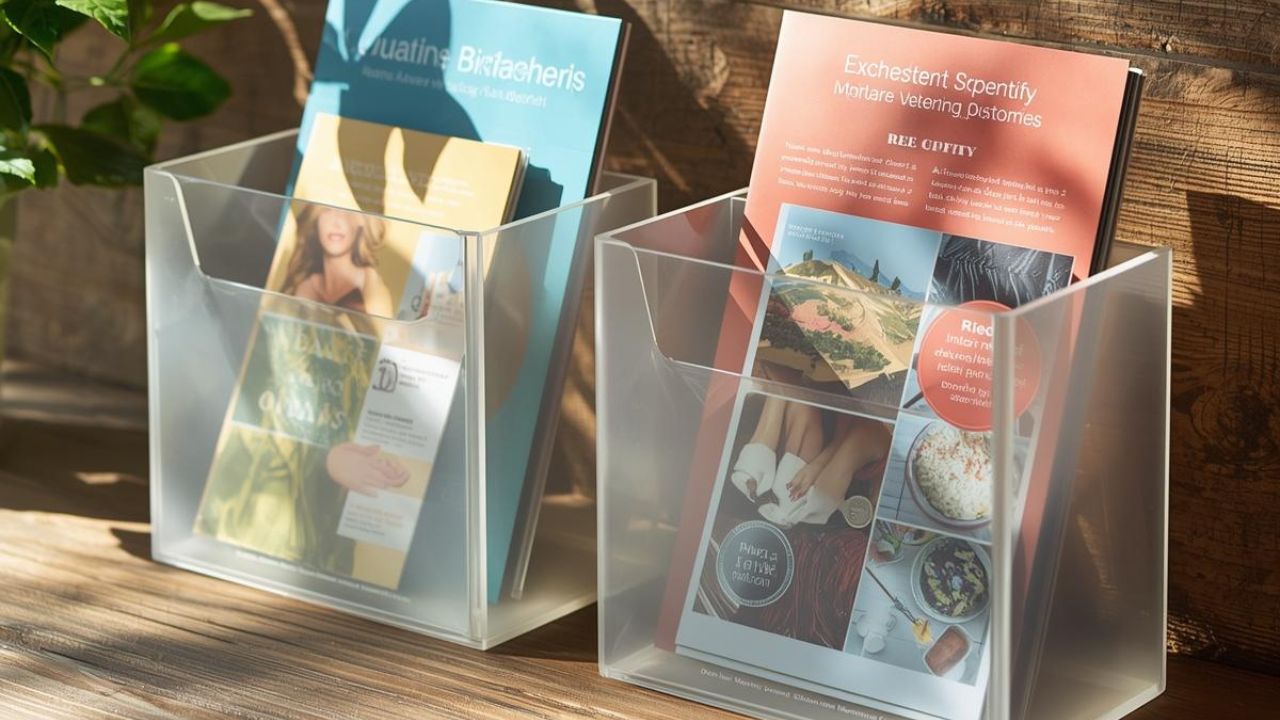
Key Takeaways:
- Biodegradable literature holders reduce carbon emissions 243 kg per store annually, totaling 24.3 metric tons for 100-store retail chains.
- Bioplastics achieve 7.60-73.75% lower carbon emissions than petroleum-based plastics with up to 80% greenhouse gas reduction.
- IKEA's 25-store pilot diverted 2,300 kg waste with 87% durability after 18 months at 42% cost premium over traditional acrylic.
- Biodegradable materials cost $2.5-$4.0/kg versus conventional plastic at $1.2-$1.5/kg with a 3-5 year break-even timeline.
- Industrial composting facilities essential for proper disposal—improper landfilling eliminates environmental benefits despite biodegradable properties.
Small changes multiply across retail chains. Literature holders represent one such opportunity. Switching from petroleum-based plastics to biodegradable alternatives reduces carbon emissions by 243 kg per store annually. For 100-store chains, that equals 24.3 metric tons of CO₂ reduction.
Seven distinct mechanisms drive this reduction. Each addresses different lifecycle stages—from raw material sourcing through end-of-life disposal. Understanding these mechanisms enables strategic implementation maximizing environmental and financial benefits.
The retail sector accounts for significant global emissions. In-store fixtures contribute to this footprint through manufacturing, shipping, and disposal. Biodegradable literature holders offer measurable carbon reductions without compromising functionality. Data from IKEA and Patagonia demonstrate practical viability.
Consumer expectations accelerate sustainability adoption. Ninety-three percent of global consumers expect brands to support environmental initiatives. Visible commitments through fixture selection communicate corporate values directly. Material choices previously overlooked now receive scrutiny in comprehensive sustainability audits.
What Are Literature Holders, and Why Do Stores Use Them So Widely?
Literature holders deliver essential customer information without staff intervention. These fixtures appear in retail, hospitality, and service environments supporting self-service browsing. High-volume deployment across locations creates substantial environmental impact opportunities.
How are literature holders used in retail, hospitality, and service-based stores?
Literature holders serve as point-of-purchase displays for brochures, promotional materials, and product information. Retail stores use them for product catalogs and pricing details. Hotels display local attractions and service menus. Medical offices organize patient education materials.
Self-service information delivery reduces staff workload during peak hours. Customers access materials at their own pace. Professional presentation maintains brand standards across multiple locations.
Why do brochure and flyer displays get replaced frequently in customer-facing areas?
Retail POP displays and temporary fixtures represent major commercial waste sources. Short-term promotional campaigns require frequent content updates. Literature holders for seasonal promotions often get discarded after brief use.
Conventional acrylic holders break or damage in high-traffic environments. Scratching, clouding, and chipping compromise appearance. Replacement cycles accelerate in busy locations. Each replacement multiplies manufacturing and transportation emissions.
What Does "Carbon Footprint" Mean in the Context of Store Fixtures?
Carbon footprint measures total greenhouse gas emissions across a product's lifecycle. For store fixtures, this includes manufacturing energy, transportation fuel, and disposal impacts. Small fixtures multiply environmental effects through high-volume deployment.
How do small fixtures like literature holders contribute to overall store emissions?
Individual literature holders generate modest emissions. However, retailers deploy thousands of units annually across multiple locations. Aggregate impact becomes substantial. A 100-store chain using biodegradable holders prevents 24.3 metric tons of CO₂ emissions yearly.
Product lifecycle encompasses raw material extraction, manufacturing, logistics, and end-of-life disposal. Each stage contributes carbon emissions. Fixture selection determines total environmental impact.
Why do manufacturing, shipping, and disposal matter for fixture-related carbon output?
Manufacturing requires energy-intensive processes. Conventional plastics derive from fossil fuels through petroleum refining and polymerization. These processes release significant carbon emissions. Transportation from manufacturer to distribution center to retail stores generates additional CO₂.
Disposal through landfilling or incineration releases more carbon. Traditional acrylic persists in landfills for centuries. Incineration produces CO₂ and other pollutants. Lifecycle assessment reveals carbon impact at every stage, justifying comprehensive material evaluation.
What Makes a Literature Holder Biodegradable in Practical Retail Terms?
Biodegradable holders decompose into natural elements under specific conditions. Material composition and processing infrastructure determine actual environmental benefits. Certification ensures genuine biodegradability versus greenwashing claims.
What materials are commonly used in biodegradable literature holders today?
Polylactic Acid (PLA) derives from corn starch, sugarcane, or cellulose. Starch-based polymers utilize renewable plant resources. These bio-based feedstocks absorb CO₂ from the atmosphere through photosynthesis—biogenic carbon sequestration.
High-grade PLA or PHA (Polyhydroxyalkanoates) offer durability and clarity matching traditional acrylic. Certified compostable materials carry BPI (Biodegradable Products Institute) or TÜV Austria certification. These certifications guarantee breakdown in industrial facilities under controlled conditions.
Material selection influences performance characteristics. PLA provides good clarity with glossy finish suitable for retail presentation. PHA offers superior durability in varying conditions. Some formulations blend materials optimizing strength and biodegradability. Agricultural feedstock sourcing affects regional availability and pricing. Corn-based PLA dominates North American markets while sugarcane-derived options prevail in tropical regions.
How does biodegradability differ from recyclability for store displays?
Biodegradable materials break down into organic matter, water, and CO₂ within months in industrial composting facilities. Conventional acrylic persists in landfills for hundreds of years. Industrial composting requires specific conditions—high heat and microbial activity unavailable in standard landfills.
Recyclability involves reprocessing materials into new products. Biodegradability involves complete decomposition. Circular economy principles keep materials at highest utility. Composting returns nutrients to soil rather than accumulating waste.
Why Are Retailers Reconsidering Traditional Plastic Literature Holders?
Environmental impact and consumer expectations drive material reevaluation. Traditional plastics carry substantial carbon footprints and persistence concerns. Regulatory pressure through taxes and bans accelerates transition timelines, affecting displays similar to high-quality sign holders and ad frames across retail environments.
How do fossil-based plastics affect long-term environmental impact?
Conventional plastics derive from petroleum through energy-intensive refining. Traditional acrylic production generates 3.0-4.0 kg CO₂e per kilogram of material. Fossil fuel dependency contributes directly to global CO₂ emissions. Non-biodegradable nature means environmental persistence for centuries.
Landfilling or incineration releases additional carbon. Waste accumulation creates environmental burden. Each production cycle requires virgin material extraction perpetuating fossil fuel consumption.
Why do high breakage and disposal rates increase a store's footprint over time?
Frequent replacement cycles multiply manufacturing and transportation emissions. Each replacement requires new virgin material extraction and production. High-traffic retail environments accelerate damage requiring premature replacement.
Disposal fees and landfill taxes create ongoing costs. Volume of non-degradable plastic waste accumulates across multiple store locations. Commercial waste streams become environmentally and financially burdensome.
What Are the 7 Ways Biodegradable Literature Holders Reduce a Store's Carbon Footprint?
Seven mechanisms reduce emissions across the product lifecycle. Combined impact reaches 243 kg CO₂ per store annually. For 100-store chains, annual reduction totals 24.3 metric tons. Each mechanism addresses specific lifecycle stages maximizing cumulative benefits.
Largest reductions come from material sourcing and plastic pollution elimination. Using biodegradable materials contributes 45 kg CO₂/year—the single biggest impact. Reducing plastic pollution adds 42 kg CO₂/year. Lower production emissions save 38 kg CO₂/year. These three mechanisms alone account for over half the total reduction.
Remaining mechanisms address transportation, waste management, circular economy participation, and petrochemical elimination. Each contributes 23-35 kg CO₂/year. Strategic implementation combining all seven mechanisms delivers maximum environmental benefit while maintaining operational functionality.
How does using plant-based or biodegradable materials reduce fossil fuel dependency?
Bio-based feedstocks—corn starch, sugarcane, cellulose—replace petroleum-derived materials. Plant growth absorbs CO₂ through photosynthesis creating biogenic carbon sequestration. Bioplastics demonstrate 7.60% to 73.75% lower carbon emissions compared to conventional petroleum-based plastics.
Starch-based bioplastics show up to 80% reduction in greenhouse gas emissions. Every biodegradable holder represents direct substitution for fossil fuel-derived products. Eliminating fossil fuel industry reliance reduces connection to major CO₂ contributors. Using biodegradable materials provides 45 kg CO₂/year reduction per store—the largest single impact.
Why can lighter-weight biodegradable holders lower transportation emissions?
Many bioplastics and alternative materials—bamboo, recycled cardboard—weigh less than traditional acrylic or metal fixtures. Lighter materials translate directly to lower fuel consumption during shipping. Reduced CO₂ emissions occur throughout transportation from manufacturer to distribution center to retail stores.
Sustainable design encourages modular and flat-packable configurations optimizing shipping density. Reduced transportation emissions contribute 32 kg CO₂/year savings per store. Optimized logistics significantly reduce supply chain carbon footprint.
How does reduced material processing lower manufacturing-related carbon output?
Bioplastic production processes prove less energy-intensive than traditional plastic manufacturing. Starch-based bioplastics show up to 60% reduction in non-renewable energy use during production. Polymerization and refining of crude oil for conventional plastics demand high energy.
Green manufacturing practices—renewable energy facilities, optimized processes—amplify carbon savings. Lower overall embodied energy characterizes final products. Lower production emissions account for 38 kg CO₂/year savings per store. Production facility choice and energy sources significantly impact manufacturing carbon output.
Why can shorter supply chains reduce shipping and logistics emissions?
Local sourcing partnerships reduce transportation-related carbon emissions. Regional manufacturers minimize supply chain footprint. Shorter distances from production to retail locations decrease fuel consumption.
Strategic sourcing reduces dependence on long-distance shipping. Supply chain proximity lowers transportation carbon footprint. Local partnerships support minimizing logistics-related emissions strategies.
How does improved end-of-life disposal reduce landfill-related emissions?
Industrial composting breaks down materials into organic matter within months versus centuries in landfills. Composting diverts waste from landfills reducing methane emissions. The process creates a valuable compost closing loop for retail waste.
Reducing the need for virgin materials supports circular economy participation. Conventional acrylic incineration releases CO₂ and pollutants. Enhanced waste management contributes 28 kg CO₂/year reduction per store. Reducing plastic pollution provides 42 kg CO₂/year reduction per store through waste diversion.
Why can right-sized biodegradable holders reduce material waste during production?
Optimized design reduces excess material use during manufacturing. Minimalist and monomaterial design simplifies production reducing waste. Single material type versus mixed materials streamlines fabrication.
Reduced scrap and offcuts during cutting and forming processes lower the carbon footprint per unit. Efficient material utilization maximizes environmental benefits. Design standardization enables consistent sizing reducing material overages.
How can standardizing biodegradable holders reduce emergency reorders and rush shipping?
Modular, reusable designs extend functional lifespan across multiple campaigns. Standardized sizes enable predictable inventory management. Reduced emergency reorders eliminate rush shipping premium emissions.
Reconfigurable holders adapt to different campaigns without replacement. Consistent supply reduces expedited logistics needs. Strategic planning and standardization prevent high-carbon emergency fulfillment.
When Do Biodegradable Literature Holders Fail to Reduce Carbon Footprint?
Material selection must match application requirements. Durability limitations and disposal infrastructure gaps undermine environmental benefits. Understanding failure scenarios prevents costly misapplication.
Two primary failure modes eliminate carbon savings. Premature material failure increases replacement frequency negating production efficiencies. Improper disposal sends biodegradable materials to landfills where they persist like conventional plastics. Both scenarios waste financial investment while failing sustainability objectives.
Careful application matching prevents these failures. Indoor climate-controlled environments maximize material performance. Short-to-medium term displays suit biodegradable options best. Permanent high-traffic fixtures may require traditional materials despite environmental drawbacks. Comprehensive planning ensures environmental benefits materialize.
When does low durability cause higher replacement-related emissions?
IKEA testing showed 87% of PLA holders remained functional after 18 months versus 95% for traditional acrylic. Frequent replacement due to premature failure multiplies manufacturing and shipping emissions. Short service life negates carbon savings from bio-based materials.
Each replacement cycle adds production energy, transportation, and disposal impact. Improper material selection for high-stress applications increases replacement frequency. Total lifecycle emissions can exceed traditional materials if replacement rate climbs too high.
How can improper disposal eliminate expected environmental benefits?
Industrial composting facilities aren't universally available across all markets. PLA requires specific conditions—high heat, microbial activity—and won't break down in standard landfills. Improper disposal to regular trash sends biodegradable materials to landfills where decomposition doesn't occur.
Without proper infrastructure partnership, materials persist like conventional plastics. Clear end-of-life protocol proves essential for realizing environmental benefits. Staff training and customer education ensure correct disposal. Greenwashing risk emerges when materials aren't actually composted despite biodegradable properties.
How Should Stores Decide If Biodegradable Literature Holders Are the Right Choice?
Application requirements determine material suitability. Traffic levels, usage duration, and environmental conditions influence performance. Strategic evaluation prevents premature failures undermining sustainability goals.
How should traffic level, usage duration, and placement be evaluated together?
High-traffic environments may exceed biodegradable material durability requiring frequent replacement. Indoor climate-controlled spaces maximize biodegradable material performance. Short-to-medium term promotional displays prove ideal for biodegradable options.
Placement near heat sources or windows may cause degradation. Traffic level determines acceptable durability trade-offs between 87% and 95% functionality. Usage duration affects whether composting infrastructure investment proves justified.
What questions should buyers ask about lifespan and disposal conditions?
Verify certification through BPI (Biodegradable Products Institute) or TÜV Austria for compostable materials. Confirm local industrial composting facility availability and partnership capability. Assess expected service life under actual store conditions.
Determine disposal protocol including staff collection, separation, and facility delivery. Evaluate whether durability meets application requirements for light-duty versus heavy-duty use. Understand material limitations regarding heat resistance, moisture exposure, and impact strength. Confirm supplier provides clear disposal instructions and end-of-life support.
How Can Stores Measure Carbon Footprint Reduction After Switching Holders?
Tracking specific metrics demonstrates environmental impact. Data validates sustainability investments and identifies improvement opportunities. Comprehensive measurement supports corporate reporting requirements, complementing considerations for other display elements like LED-enhanced acrylic stands in overall sustainability portfolios.
Quantifiable metrics prove essential for stakeholder communication. Investors increasingly evaluate ESG (Environmental, Social, Governance) performance. Customers reward documented sustainability commitments. Regulatory compliance often requires emission reporting. Measurement transforms sustainability claims into verifiable achievements demonstrating tangible progress toward environmental goals.
What replacement and reorder data should be tracked over time?
Track waste diversion rate—percentage of total waste diverted from landfill to composting. Monitor embodied carbon reduction as CO₂ equivalent saved per display unit. Measure virgin material consumption reduction from bio-based feedstock substitution.
Document end-of-life costs comparing landfill fees versus composting fees. Survey customer perception scores regarding brand sustainability view. Record replacement frequency as number of holder replacements per location annually. Track reorder quantities and timing patterns. Document disposal method showing percentage sent to composting versus landfill.
How can stores compare total lifecycle impact instead of unit cost alone?
Calculate total cost of ownership including disposal, replacement frequency, and regulatory compliance. Biodegradable plastics cost 20-30% more than traditional plastics initially. Raw material cost for conventional plastic runs $1.2-$1.5 per kilogram. Biodegradable plastic raw material ranges $2.5-$4.0 per kilogram.
Account for reduced end-of-life costs through lower or eliminated landfill fees. Factor brand value premium from enhanced reputation and customer loyalty. Consider proactive compliance with future plastic bans and taxes avoiding costly retrofits. Lifecycle assessment reveals true environmental and financial impact beyond unit price.
What Are the Next Practical Steps for Stores Reducing Display-Related Emissions?
Implementation strategy determines success. Phased approaches manage costs while demonstrating results. Proper infrastructure partnerships realize environmental benefits.
How can retailers prioritize display upgrades with the highest impact?
Begin with high-visibility areas maximizing brand impact while managing costs. Test materials in limited locations before full deployment. IKEA piloted 25 stores before expanding to 100 additional locations. Phased implementation controls budget while demonstrating measurable results.
Target short-term promotional displays where biodegradable options excel. Focus on indoor climate-controlled locations where materials perform best. Prioritize high-volume, frequently-replaced displays for maximum cumulative impact. Break-even timeline reaches 3-5 years accounting for brand value and avoided disposal costs.
Ninety-three percent of global consumers expect brands to support environmental issues. Positive brand perception emerges from visible eco-friendly fixtures. Patagonia's case study showed 73% of customers noticed and appreciated sustainable displays.
Why does aligning material choice with reorder programs improve sustainability results?
Establish clear end-of-life protocol through documented processes for staff collection and separation. Partner with industrial composting facilities for proper material processing. Staff and customer education proves essential—training on disposal procedures, clear in-store signage communicating compostability.
Modular, reconfigurable holders enable reuse for multiple campaigns extending lifespan. Standardized designs create consistent reorder patterns reducing rush shipping. Strategic material selection by environment reserves biodegradable options for appropriate applications.
Volume purchasing agreements with suppliers reduce per-unit costs and ensure supply consistency. Monomaterial design simplifies end-of-life processing since mixed materials complicate composting. Consistent supply chains prevent emergency orders requiring high-carbon expedited shipping.
Understanding Total Carbon Impact of Display Material Choices
Carbon footprint reduction from biodegradable literature holders reaches 243 kg CO₂ per store annually. Seven mechanisms drive this reduction across material sourcing, manufacturing, transportation, and disposal stages. For multi-location retailers, aggregate impact proves substantial—24.3 metric tons for 100-store chains.
Successful implementation requires matching materials to applications. High-traffic permanent fixtures may justify traditional materials despite environmental drawbacks. Short-term promotional displays in climate-controlled environments maximize biodegradable benefits. Durability trade-offs—87% versus 95% functionality after 18 months—prove acceptable for appropriate use cases.
Infrastructure partnerships determine whether environmental benefits materialize. Industrial composting facilities provide proper processing conditions. Without these partnerships, biodegradable materials persist in landfills like conventional plastics. Clear disposal protocols, staff training, and customer education complete the sustainability loop.
IKEA's 25-store pilot demonstrated practical viability. Deploying 500 PLA holders per location with in-store composting collection points, they diverted 2,300 kg of plastic waste from landfills. Cost premium reached 42% over traditional acrylic with 87% durability after 18 months. Results justified expansion to 100 additional stores validating scalability.
Implementation included comprehensive staff training on proper disposal procedures. In-store signage educated customers about compostable materials. Partnership with industrial composting facilities ensured proper processing. Collection protocols documented separation procedures maintaining composting stream purity. The program demonstrated the importance of complete infrastructure planning beyond simple material substitution.
Patagonia achieved 38% carbon footprint reduction across 50 locations replacing acrylic with bamboo holders. Initial investment ran 65% higher than traditional replacement cycles. However, 73% of surveyed customers noticed sustainable displays. Projected break-even at 4.2 years factored brand value enhancement.
Cost considerations balance against environmental and brand benefits. Biodegradable plastics cost 20-30% more initially—$2.5-$4.0 per kilogram versus $1.2-$1.5 for conventional plastic. Total cost of ownership accounts for reduced disposal fees, regulatory compliance advantages, and brand value premiums. The price gap narrows as production scales and technology advances.
Measurement proves essential for validating impact. Track waste diversion rates, embodied carbon reduction, virgin material consumption, disposal costs, and customer perception scores. Operational metrics include replacement frequency, reorder patterns, and disposal method percentages. Comprehensive data supports corporate sustainability reporting and identifies optimization opportunities.
Strategic Implementation for Carbon Footprint Reduction
Displays and Holders specializes in sustainable literature holder solutions matching environmental goals with practical performance requirements. Our team provides material selection guidance preventing costly misapplication while maximizing carbon reduction benefits. We understand balancing sustainability commitments with operational realities.
Contact Displays and Holders today for expert consultation on biodegradable literature holder implementation. We offer pilot program planning, composting infrastructure connections, and carbon footprint measurement support. Our comprehensive approach includes lifecycle cost analysis, durability projections, and end-of-life management strategies supporting informed procurement decisions. For retailers exploring complementary sustainable options, our business card displays demonstrate material versatility across applications. Get in touch to discuss how biodegradable holders can reduce your store's carbon footprint while maintaining professional presentation standards.