










Key Takeaways:
- PLA bioplastic reduces carbon footprint 75% generating 0.5-1.2 kg CO₂e per kilogram versus traditional acrylic at 3.0-4.0 kg CO₂e with raw material costs $2.52-$3.38 per kilogram.
- IKEA tested 500 PLA holders per store across 25 locations achieving 87% durability after 18 months versus 95% for acrylic with 42% cost premium diverting 2,300 kg waste from landfills.
- Heat sensitivity at 60°C glass transition temperature restricts PLA to indoor climate-controlled environments eliminating outdoor displays and window applications receiving direct sunlight exposure.
- High-volume injection molding costs $0.78 per piece at 10,000 units requiring $10,000 tooling investment versus 3D printing at $5.60 per piece making low-volume runs 1-50 units cost-effective.
- Five practical PLA display options include countertop sign holders, brochure holders, product risers, table tents, and temporary stands serving light-to-medium duty applications with break-even timelines reaching 3-5 years.
Polylactic Acid (PLA) bioplastic offers retailers a renewable alternative to petroleum-based display materials. Derived from corn starch, sugarcane, or cassava, PLA addresses sustainability mandates while maintaining professional presentation standards. However, material limitations require strategic deployment.
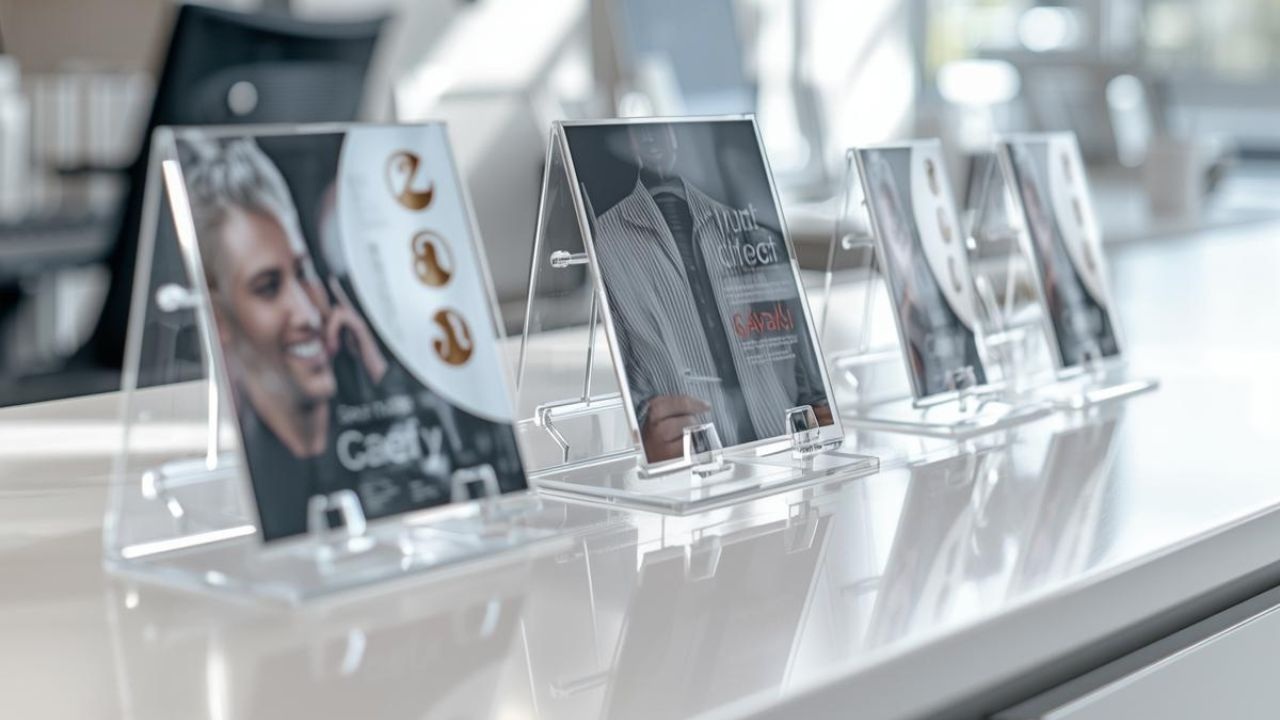
Understanding PLA's strengths and weaknesses prevents costly misapplication. The material excels in specific retail contexts—countertop displays, short-term promotions, climate-controlled environments. Heat sensitivity and durability constraints eliminate PLA from outdoor or permanent fixture applications. Five distinct display holder options demonstrate practical uses.
Cost premiums reach 42% over traditional acrylic, yet carbon footprint drops 75%. Break-even occurs within 3-5 years when factoring waste diversion and brand value. Strategic implementation maximizes environmental benefits while managing budget impact.
The retail industry faces mounting pressure to reduce plastic waste. Ninety-three percent of consumers expect brands to support environmental initiatives. Traditional acrylic displays persist in landfills for centuries. PLA offers industrial composting capabilities returning materials to useful forms within months. This circular economy potential drives adoption despite higher upfront costs and performance trade-offs.
What Are Display Holders Used for in Retail Merchandising Environments?
Display holders communicate product information, pricing, and promotional messages at point-of-purchase. These fixtures organize visual merchandising without requiring staff intervention. Small-format holders drive significant plastic consumption through high-volume deployment.
Why do retailers rely on display holders for product messaging and signage?
Premium sign holders and shelf talkers display price tags and promotional messages directly on counters and shelving. These components enable consistent brand presentation across multiple locations. Staff shortages increase reliance on self-service information delivery.
Small, high-volume, single-use plastic components represent substantial environmental impact opportunities. Retailers deploy thousands of units annually. Material substitution at this scale creates measurable sustainability improvements.
How do merchandising displays affect customer interaction at the point of sale?
Product risers and tiered stands elevate merchandise for visibility, influencing purchase decisions. Custom-shaped trays securely hold products for professional presentation. Window displays and floor stands create promotional focal points drawing customer attention.
Display holders enable organized product arrangement without staff presence. Customers browse materials at their own pace. Professional fixtures reinforce brand credibility through visual consistency.
What Is PLA Bioplastic in the Context of Display Manufacturing?
PLA stands for Polylactic Acid, a thermoplastic polymer from renewable plant sources. Material properties differ significantly from traditional acrylic, requiring application-specific deployment. Carbon footprint advantages justify cost premiums for appropriate uses.
What does PLA stand for, and how is it produced?
PLA stands for Polylactic Acid. Production involves fermenting plant starches—typically corn, sugarcane, or cassava—into lactic acid, then polymerizing into plastic resin. This bio-based origin eliminates fossil fuel dependency.
Source plants absorb CO₂ during growth, creating lower lifecycle emissions. PLA carbon footprint measures 0.5-1.2 kg CO₂e per kilogram. Traditional acrylic (PMMA) generates 3.0-4.0 kg CO₂e per kilogram—making PLA 75% cleaner.
The fermentation process converts plant sugars into lactic acid monomers. Polymerization links these monomers into long polymer chains creating thermoplastic material. Standard plastic processing equipment handles PLA without requiring specialized machinery. This compatibility with existing manufacturing infrastructure reduces adoption barriers for display producers.
Why is PLA being introduced as an alternative to traditional acrylic?
Carbon savings monetization reaches $0.475-$0.665 per kilogram using EPA's $190/ton social cost of carbon. PLA containers show greenhouse gas emissions of approximately 28 kg CO₂ versus PET containers at 830 kg CO₂. This dramatic reduction addresses corporate sustainability mandates.
Industrial composting breaks down PLA under specific conditions—high heat and humidity—returning material to natural elements within months. Traditional acrylic persists for centuries. Renewable sourcing and end-of-life advantages drive retail adoption despite higher costs.
Why Are Retailers Exploring PLA Bioplastic Display Holders Now?
Sustainability goals and regulatory pressure converge on material selection decisions. Consumer expectations and packaging taxes create financial incentives for bio-based alternatives. Short-term campaigns benefit most from PLA's circular economy potential.
How are sustainability goals influencing retail fixture decisions?
Ninety-three percent of global consumers expect brands to support environmental issues. Brands receive measurable positive feedback from eco-conscious consumers after sustainable display adoption. Enhanced brand reputation translates to customer loyalty and market differentiation.
Regulatory pressure intensifies through taxes like France's €0.64 per kilogram charge on certain bioplastics. Proactive compliance avoids costly retrofits when mandates expand. Visible sustainability efforts communicate corporate values directly to customers.
Corporate sustainability reporting requirements create accountability for material choices across all operations. ESG (Environmental, Social, Governance) metrics increasingly influence investor decisions and stakeholder perceptions. Display fixtures previously overlooked in sustainability audits now receive scrutiny. Documented material sourcing and end-of-life management demonstrate comprehensive environmental commitment beyond surface-level initiatives.
Why do short-term and seasonal campaigns drive interest in PLA?
On-demand 3D printing minimizes material waste compared to traditional subtractive manufacturing. Displays can be shredded and re-printed for subsequent campaigns, establishing circular economy models. Temporary installations lasting weeks or months maximize PLA's sustainability advantages.
Industrial composting returns material to useful forms rather than accumulating in landfills. Short replacement cycles justify composting infrastructure investment. Seasonal promotions requiring frequent design changes benefit from PLA's customizability and end-of-life options.
How Does PLA Bioplastic Compare to Acrylic in Retail Display Use?
Performance trade-offs exist between sustainability and durability. PLA offers comparable clarity with significant environmental advantages. Heat sensitivity and impact resistance limitations restrict applications to specific retail contexts.
How does PLA differ from acrylic in clarity and surface finish?
PLA provides good clarity with glossy, aesthetic finish suitable for professional retail presentation. Material remains slightly less transparent than high-grade acrylics premium glass-like appearance. Both materials process through standard manufacturing techniques—injection molding and 3D printing.
PLA transparency and rigidity match acrylic for most countertop applications. Surface finish quality supports brand presentation requirements. Visual differences become negligible in typical retail lighting conditions.
What durability and heat-resistance limits should retailers understand?
PLA glass transition temperature reaches approximately 60°C, causing warping in direct sunlight or hot environments. Traditional acrylic maintains structural integrity across broader temperature ranges. This heat sensitivity eliminates PLA from window displays and outdoor applications.
Good tensile strength supports light-to-medium duty displays. Impact resistance falls below PETG or polycarbonate levels. Load-bearing applications require high-strength PLA formulations (PLA+ or composite PLA) with increased infill density. Traditional plastics like ABS or Nylon outperform PLA for heavy-duty needs.
Where Does PLA Perform Best—and Worst—in Retail Environments?
Environmental conditions determine PLA suitability. Indoor climate-controlled spaces maximize material performance. Outdoor exposure, high humidity, and elevated temperatures cause premature failure. Application matching prevents costly mistakes.
Why is PLA best suited for countertop and low-impact displays?
Indoor climate-controlled environments prevent heat-related warping. Countertop displays for light-to-medium weight products remain within the PLA's strength capabilities. Point-of-sale fixtures holding cosmetics, accessories, or specialty foods perform well.
Sign holders and shelf talkers holding paper or cardboard suit PLA's strength profile. Customizability through 3D printing enables exact dimensional matching to products. Low-load applications benefit from sustainability credentials without requiring acrylic's superior durability.
When does PLA become impractical for long-term or high-traffic use?
Outdoor environments and high-humidity locations accelerate PLA degradation. Window displays receiving direct sunlight experience warping from heat exposure. Permanent fixtures requiring multi-year service life justify traditional materials' superior durability.
High-traffic locations demanding excellent impact resistance exceed PLA's capabilities. Load-bearing applications need internal structural reinforcement adding complexity and cost. Traditional acrylic 95% functionality after 18 months surpasses PLA's 87% based on IKEA testing across 25 stores.
What Are the 5 Most Practical PLA Bioplastic Display Holder Options for Retail Merchandising?
Five distinct applications demonstrate PLA's practical retail uses. Each option addresses specific merchandising requirements while leveraging material advantages. Understanding application-specific benefits prevents misuse while maximizing sustainability impact, similar to considerations for brochure holders across different materials.
Why are PLA countertop sign holders effective for eco-focused promotions?
Small clear or colored holders display price tags and promotional messages with moderate customizability. 3D printing enables custom clip designs incorporating unique branding elements. Standard sizes remain cost-competitive with traditional plastic holders in high volumes.
Direct replacement of high-volume single-use plastic components creates aggregate environmental improvements. Adequate strength for holding paper materials meets functional requirements. Eco-conscious customers notice and appreciate visible sustainability commitments.
Shelf talkers and price card holders represent ideal PLA applications. Light weight loads eliminate stress concerns. Indoor positioning prevents heat exposure issues. Frequent promotional updates justify composting infrastructure investment through regular replacement cycles. Custom branding integration differentiates retailer commitment versus generic messaging. Color-matching capabilities support seasonal campaigns and brand-specific promotions without compromising environmental benefits.
How do PLA brochure holders support lightweight retail literature displays?
Good clarity and aesthetic finish maintain professional presentation standards. Industrial composting requires partnership with local commercial facilities providing proper processing conditions. Staff and customer education ensures correct disposal through clear in-store signage.
IKEA tested PLA bioplastic literature holders across 25 Scandinavian stores during 2024. Each location deployed 500 units with in-store composting collection points. Results showed 42% cost premium over traditional acrylic with 87% remaining functional after 18 months versus 95% for acrylic. The program diverted 2,300 kg of plastic waste from landfills, justifying expansion to 100 additional stores in 2026.
Why are PLA product risers useful for small, lightweight merchandise?
3D-printed custom countertop displays elevate cosmetics, electronics accessories, and specialty foods at point-of-sale. Unmatched customizability allows rapid design iteration tailored to exact product dimensions. Complex shapes and integrated logos differentiate branded presentations.
Sufficient strength supports light-to-medium weight products when proper infill density and wall thickness are specified. On-demand production minimizes material waste versus traditional manufacturing. Recycled PLA filament further enhances sustainability profile. Cost-effectiveness emerges for low-volume runs (1-50 units) where injection molding tooling costs prove prohibitive.
Product-specific geometry ensures secure positioning preventing shifting during customer handling. Integrated cable management channels accommodate electronic product displays. Multi-tiered configurations maximize counter space efficiency. Variable height options create visual interest drawing customer attention. Rapid prototyping cycles enable seasonal design updates without significant financial commitment. Design files stored digitally allow on-demand reproduction eliminating warehousing requirements for seasonal merchandise changeovers.
How do PLA table tents fit short-run retail and in-store campaigns?
Small display formats communicate temporary promotional messaging for limited-duration campaigns. Rapid prototyping enables quick turnaround meeting tight marketing deadlines. Complex geometries possible through 3D printing create distinctive presentations impossible with traditional methods.
High cost per unit at mass production volumes restricts applications to specialty campaigns. Low-volume runs (1-50 units) justify premium pricing where traditional tooling investment cannot be recovered. Customization capabilities outweigh per-unit costs for limited-run promotions.
Why are PLA display stands best reserved for temporary merchandising needs?
Large-format 3D-printed window and floor displays serve temporary installations and seasonal campaigns. Extremely high customizability enables unique sculptural designs impossible or prohibitively expensive with traditional fabrication. Rapid creative campaign rollouts differentiate brand presentations.
Internal structural reinforcement (metal frames or high-density infill) provides necessary stability. Low heat resistance creates major limitations for window displays receiving direct sunlight. Recycled or locally sourced PLA pellets reduce material costs. Printing time and material volume increase final unit costs above simple alternatives, justifying use only for one-off or short-run artistic displays.
How Do Cost and Availability Affect PLA Display Holder Adoption?
Material costs and production methods determine economic viability. Volume requirements influence manufacturing approach selection. Understanding cost structures prevents budget overruns while enabling informed material decisions.
Why does PLA often carry a higher per-unit cost than acrylic?
PLA raw material ranges $2.52-$3.38 per kilogram versus virgin acrylic at $3.20-$4.00 per kilogram. Biodegradable plastic raw materials generally cost $2.50-$4.00 per kilogram compared to conventional plastics at $1.20-$1.50 per kilogram. Finished PLA displays carry +40% premium over traditional acrylic.
High unit costs for low-volume 3D printing reach $5.60 per piece at 10,000 units. High-volume injection molding achieves approximately $0.78 per piece at same quantities but requires $10,000 tooling investment. Custom 3D-printed versions exceed mass-produced acrylic costs significantly.
Processing complexity contributes to cost premiums beyond raw material pricing. PLA requires precise temperature control during manufacturing, preventing degradation. Storage conditions matter—moisture absorption affects material properties requiring climate-controlled warehousing. Supply chain immaturity compared to traditional plastics limits economies of scale. Growing market adoption continues narrowing price gaps as production volumes increase and processing efficiencies improve.
How do lower minimum quantities influence PLA purchasing decisions?
3D printing proves cost-effective for low-volume runs (1-50 units) avoiding injection molding's prohibitive tooling costs. Economically unfeasible production runs under 1,000 units favor additive manufacturing approaches. Thermoforming offers middle ground with lower tooling costs than injection molding for medium-to-high volumes.
Lower minimums enable pilot testing before full-scale deployment. IKEA's 25-store pilot validated performance before expanding to 100 additional locations. Testing limited quantities manages risk while gathering real-world performance data across actual retail conditions.
What Trade-Offs Should Retailers Evaluate Before Choosing PLA Displays?
Lifespan expectations and usage duration determine material suitability. Environmental benefits require proper end-of-life infrastructure. Balancing sustainability goals against performance requirements prevents misapplication.
How should lifespan and replacement frequency be weighed?
Properly matched materials to environments achieve 80-95% of traditional acrylic durability. PLA's 87% functionality after 18 months versus acrylic's 95% represents acceptable trade-off for appropriate applications. Break-even typically occurs within 3-5 years accounting for brand value and avoided disposal costs.
Reduced end-of-life costs through composting versus landfill fees improve total cost of ownership. Inspection and replacement schedules tailored to material properties prevent premature failures. Replacement frequency calculations must include disposal method costs and environmental impact monetization.
Why does usage duration matter more than material labeling alone?
Short-term promotional displays maximize PLA sustainability advantages through rapid replacement cycles. Permanent fixtures requiring multi-year service justify traditional materials' superior longevity. Composting infrastructure investment makes economic sense only when replacement frequency supports utilization.
Improper disposal negates biodegradable properties—PLA requires industrial facilities and will not break down in standard landfills or home composts. Clear end-of-life protocols realize environmental benefits. Staff training and customer education ensure proper disposal completing sustainability loops.
How Can Retailers Decide If PLA Bioplastic Displays Fit Their Merchandising Strategy?
Strategic evaluation prevents costly misapplication. Sustainability goals, usage requirements, and performance needs must align. Decision frameworks based on measurable criteria support informed material selection, considering potential for hybrid display solutions combining materials strategically.
How should sustainability goals, usage length, and performance be balanced?
Carbon footprint reduction reaches 7.60-73.75% lower emissions for bioplastics depending on application. Greenhouse gas emissions drop up to 80% for starch-based bioplastics. Non-renewable energy use decreases up to 60% versus conventional plastics.
Trade-offs exist: eutrophication potential increases up to 400% compared to petrochemical plastics. Land use rises 0.3-1.3 square meters per kilogram of bioplastic. Brand value premium and increased market share offset environmental impact trade-offs. Customer perception improves measurably with visible eco-friendly fixtures.
Lifecycle assessment reveals complexities beyond simple carbon metrics. Agricultural inputs including water, fertilizer, and pesticides factor into total environmental impact calculations. Transportation distances from farming regions to processing facilities influence net sustainability. Regional availability of industrial composting infrastructure determines whether end-of-life benefits materialize fully.
Performance requirements must align with material capabilities. Countertop applications in climate-controlled retail environments maximize PLA advantages. High-traffic areas requiring superior impact resistance favor traditional materials despite environmental trade-offs. Strategic material matching optimizes overall sustainability profile across complete fixture portfolios rather than forcing single-material solutions.
What decision criteria help retailers avoid misusing PLA display holders?
Use PLA for indoor, climate-controlled spaces with short-to-medium term needs. Avoid outdoor displays, high-heat environments, and permanent high-traffic fixtures. Temperature exposure, humidity levels, and expected service life determine suitability. Light-to-medium weight product requirements only.
Phased implementation beginning with high-visibility areas maximizes brand impact while managing costs. Pilot programs testing materials in limited locations (25 stores recommended based on IKEA) validate performance before full deployment. Early supplier engagement 6-12 months before implementation secures favorable pricing and delivery schedules.
Establish composting partnerships with local commercial facilities providing proper processing infrastructure. Staff and customer education with clear in-store signage ensures correct disposal. Track waste diversion rate, embodied carbon reduction, and virgin material consumption demonstrating measurable impact.
Cost-benefit analysis weighs 42% initial premium against 87% versus 95% durability trade-off. Waste diversion averaging 92 kg per store justifies investment for sustainability-focused retailers. Break-even timeline of 3-5 years accounts for brand enhancement and regulatory compliance benefits.
Risk mitigation maintains approved alternatives for material substitution when PLA proves unsuitable. Performance guarantees and replacement provisions negotiated with suppliers protect against premature failures. Lead times extending 2-4 weeks initially normalize as supplier relationships mature. Design standardization enables modularity across multiple sustainable materials. Local sourcing reduces transportation emissions while improving supply chain reliability.
Understanding PLA's Place in Sustainable Retail Merchandising
PLA bioplastic offers measurable environmental advantages for specific retail applications. Carbon footprint reductions reaching 75% address corporate sustainability mandates. Industrial composting capabilities support circular economy goals when proper infrastructure exists.
Material limitations require strategic deployment. Heat sensitivity restricts applications to indoor, climate-controlled environments. Lower impact resistance versus traditional acrylic limits load-bearing capabilities. Durability trade-offs prove acceptable for short-to-medium term displays but eliminate PLA from permanent fixture applications.
Cost premiums of 42% over traditional acrylic create initial budget pressure. Break-even timelines of 3-5 years justify investment when accounting for waste diversion, brand value enhancement, and regulatory compliance benefits. IKEA's successful 25-store pilot validating 87% functionality after 18 months demonstrates practical viability with acceptable performance trade-offs.
Five distinct display holder options—countertop sign holders, brochure holders, product risers, table tents, and temporary display stands—address specific merchandising requirements. Each application leverages PLA's customizability and sustainability credentials while respecting material limitations. Strategic material matching to usage requirements maximizes environmental benefits without compromising retail presentation standards.
Implementation success requires composting infrastructure partnerships, staff education, and clear disposal protocols. Pilot testing validates performance before full-scale deployment. Measurable sustainability metrics—waste diversion, carbon reduction, virgin material consumption—demonstrate tangible impact supporting continued investment.
Strategic PLA Display Implementation Support
Displays and Holders specializes in sustainable retail merchandising solutions including PLA bioplastic display holders matched to specific applications. Our team provides material selection guidance preventing costly misapplication while maximizing environmental benefits. We understand the balance between sustainability goals and performance requirements.
Contact Displays and Holders today for expert consultation on PLA bioplastic display implementation. We offer pilot program planning, composting infrastructure connections, and performance validation testing. Our comprehensive approach includes cost-benefit analysis, durability projections, and end-of-life management strategies supporting informed procurement decisions. For retailers exploring complementary solutions, our sustainable tabletop sign holders and business card displays demonstrate material versatility across applications. Get in touch to discuss how PLA bioplastic displays can advance your sustainability strategy while maintaining professional retail presentation standards.