










Key Takeaways:
- Chemically recycled acrylic achieves 92% light transmission versus premium virgin's 92.5%—a 0.5% difference falling below human detection thresholds in restaurant environments.
- M-93 Rockwell Hardness identical for both materials ensuring equivalent scratch resistance and clarity retention throughout 36-month testing periods.
- UV exposure creates 7-8x greater yellowing for recycling after 1000 hours—requiring indoor placement while controlled lighting eliminates degradation concerns completely.
- Blind guest comparisons show recycled and premium menu holders rated identically for readability with the 0.5% clarity gap proving imperceptible during actual use.
- 50-70% lower CO₂ emissions for chemically recycled material provides measurable sustainability benefits while maintaining virtually indistinguishable optical performance for indoor restaurant applications.
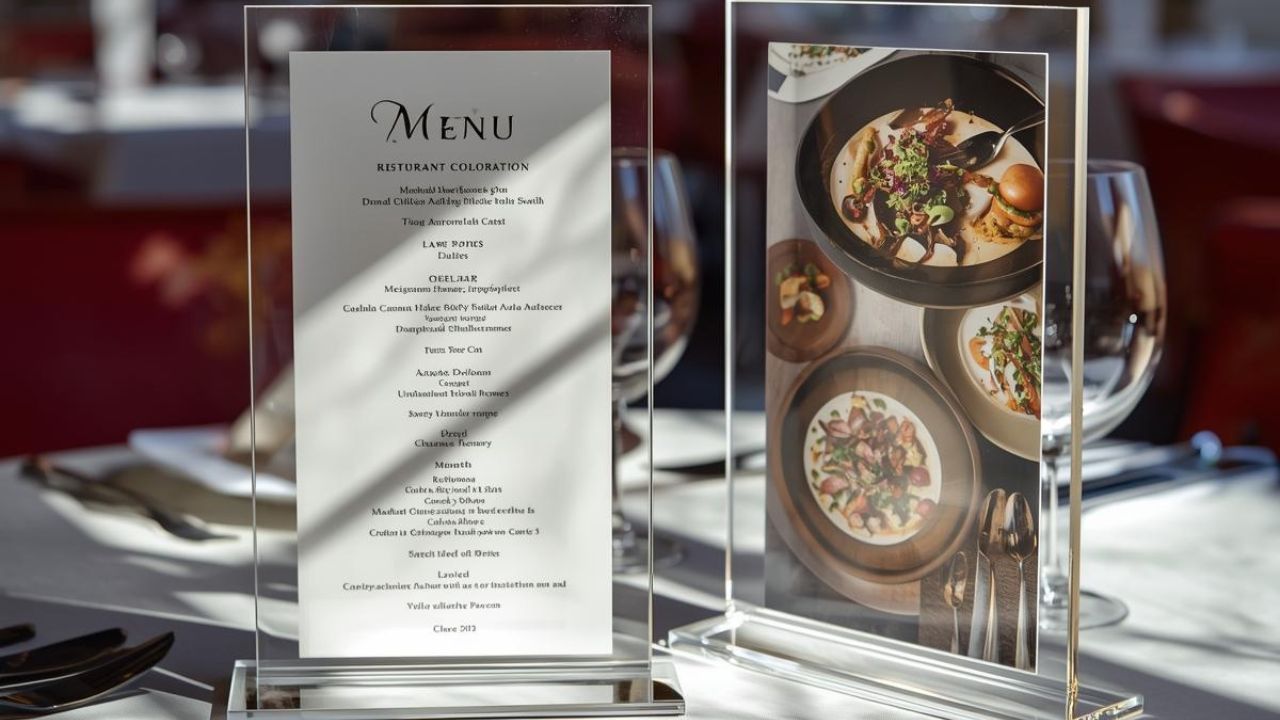
Chemically recycled acrylic achieves 92% light transmission versus premium virgin's 92.5%—a 0.5% difference virtually indistinguishable in restaurant environments. This clarity comparison uses standardized testing (ASTM D1044, D4329) validating optical performance for products like crystal-clear acrylic sign holders and menu displays. Real-world applications including Honda N-ONE e: automotive visors demonstrate recycled material viability for demanding clarity requirements. Understanding specific trade-offs guides material selection balancing sustainability with presentation standards.
What Does "Clarity" Mean When Comparing Recycled Acrylic vs. Premium Acrylic Menu Holders?
Clarity encompasses light transmission, surface finish, and color consistency. Premium displays demand glass-like appearance with flawless optical quality. Defining clarity attributes establishes comparison baselines for restaurant menu holders.
How Is Optical Clarity Defined for Restaurant and Retail Menu Displays?
Optical clarity combines light transmission percentages, surface smoothness, and absence of haze or distortion. Menu holders require an unobstructed content view maintaining professional presentation standards throughout daily use. Crystal-clear appearance ensures guests read menus easily under various lighting conditions—from dim ambient lighting to bright spotlights. Premium applications prioritize glass-like aesthetics enhancing displayed content visibility while signaling quality positioning.
The measurement focuses on how effectively material transmits light without scattering or absorption. Perfect clarity means zero visual interference between viewer and content. Restaurant operators evaluate clarity through direct observation under actual service conditions. Technical specifications translate to practical readability affecting guest experience and ordering efficiency.
Which Visual Attributes Matter Most for Guest Readability and Presentation Quality?
Light transmission determines how much content shows through clearly without dimming or color shift. Surface finish affects gloss and professional appearance—polished surfaces reflect light differently than matte finishes. Haze measurements quantify clarity degradation from surface imperfections accumulating during use. Batch-to-batch color consistency ensures uniform presentation across multiple holders, preventing mismatched appearance. Edge transparency contributes to overall premium perception when holders display from multiple viewing angles.
These attributes combine creating overall perceived quality affecting guest experience and venue impression. Minor defects in any attribute can undermine presentation standards. Material selection must prioritize attributes matching specific operational requirements and brand positioning. Understanding which attributes matter most for particular applications guides appropriate material specification.
How Do Operators Typically Evaluate "Premium" Display Quality?
Perfect optical clarity at 92.5% light transmission defines premium standards. Flawless surfaces without microscopic defects signal luxury positioning. Consistent appearance across all holders maintains brand standards. Glass-like transparency provides maximum content visibility. Premium evaluation emphasizes perfection over adequate performance—zero tolerance for visible imperfections affecting presentation.
How Does the Base Material of Recycled Acrylic Affect Transparency and Light Transmission?
Material processing method determines final optical properties. Chemical recycling maintains clarity while mechanical recycling reduces transparency. Understanding polymer purity, contaminants, and processing impacts guides quality expectations.
How Does the Polymer Purity of Recycled Acrylic Influence Overall Clarity?
Chemical recycling breaks material into the original monomer (r-MMA) for re-polymerization maintaining polymer chain integrity. This produces performance nearly identical to virgin material through complete molecular restructuring. Mechanical recycling melts and reforms acrylic causing thermal degradation reducing clarity through incomplete molecular bonds and contamination integration. Premium recycled brands invest in advanced purification and r-MMA processing minimizing contaminants that affect optical properties. Sorting and purification technologies separate high-grade recycled from lower-quality options before processing.
Contaminants in recycling streams create microscopic defects affecting finish quality and light transmission. Chemical recycling achieves near-virgin purity through depolymerization eliminating most impurities at molecular level. Stringent quality control from reputable manufacturers ensures consistent clarity batch after batch. Material selection requires specifying chemical recycling for crystal-clear viewing quality. Operators should verify recycling methods with suppliers before procurement. The processing method distinction matters more than "recycled" versus "virgin" labels for predicting actual optical performance. Chemical recycling essentially resets material to a virgin-equivalent state while mechanical recycling accumulates degradation with each processing cycle.
How Do Color Tint, Grayness, or Yellowing Appear in Recycled Acrylic Sheets?
After 1000 hours of accelerated weathering (ASTM D4329), recycled acrylic's Yellowness Index increases 7-8x versus virgin—the primary optical limitation. Some formulations yellow more rapidly under UV exposure. Indoor applications with controlled lighting show less pronounced yellowing. UV-stabilized recycled formulations address outdoor requirements partially. Color retention tracking validates indoor performance.
Batch-to-batch color variations occur more frequently with recycled materials. Indoor restaurant environments minimize yellowing concerns. Direct sunlight accelerates color shift dramatically. Material selection must account for UV exposure levels at placement locations.
How Do Micro-Particles and Regrind Content Impact Menu Visibility?
Microscopic defects from contaminants detract from shine and finish. Surface imperfections scatter light creating subtle haze. Advanced purification minimizes micro-particles in premium recycled grades. Mechanically recycled shows increased defect risk due to thermal processing. Chemical recycling produces cleaner material with fewer visibility-affecting particles. Reputable suppliers specify contaminant levels ensuring clarity standards.
How Does Premium Virgin Acrylic Achieve Higher Clarity Standards?
Virgin acrylic's consistent molecular structure delivers predictable optical performance. Manufacturing controls eliminate variables affecting clarity. Understanding virgin material advantages explains premium positioning.
How Do Manufacturing Controls Reduce Haze and Distortion in Virgin Acrylic?
Petroleum-based manufacturing creates uniform polymer chains ensuring consistent optical properties. Virgin material delivers predictable results across every batch. Perfect molecular consistency prevents defects affecting clarity. Manufacturing controls maintain exacting standards throughout production. This consistency makes virgin material the control group for all comparative testing.
How Do Light Transmission Rates Compare Between Virgin and Recycled Acrylic?
Virgin acrylic achieves 92.5% light transmission. Chemically recycled reaches approximately 92%—a 0.5% difference. This gap remains virtually indistinguishable in typical menu holder applications. Both materials provide sufficient clarity for content visibility. Crystal-clear appearance maintained by chemically recycled options matches practical restaurant needs. The minimal transmission difference rarely affects guest readability or perceived quality.
How Do Edge Transparency and Surface Smoothness Influence Premium Appearance?
Surface finish and gloss quality determine perceived premium positioning. Virgin material ensures completely unobstructed views with glass-like appearance. Consistent surface uniformity across production batches eliminates variation. Perfect edge transparency signals luxury quality. Surface smoothness affects light diffusion—smoother surfaces maintain better clarity. Premium applications demand zero visible imperfections justifying virgin material specification.
How Is Clarity Tested in a Side-by-Side Comparison of Recycled and Premium Acrylic?
Standardized testing protocols quantify optical differences. Controlled comparisons use ASTM methods measuring transmission, haze, and yellowing. Testing simulates real restaurant lighting validating practical performance.
How Are Light Transmission, Haze, and Distortion Measured in Controlled Tests?
ASTM D4329 UV weathering testing measures yellowing over 1000 hours exposure. ASTM D1044 Taber Abrasion quantifies surface clarity degradation. Light transmission measurements track exact clarity percentages. Yellowness Index numerically quantifies color shift. Surface gloss assessment detects hazing development. Standardized protocols enable direct material comparisons with objective data eliminating subjective evaluation.
How Are Menus, Font Sizes, and Graphics Used to Reveal Clarity Differences?
Real menu content testing validates laboratory measurements. Various font sizes reveal clarity impacts on readability. High-resolution graphics printing shows detail visibility differences. Color-heavy designs expose color consistency variations. Menu visibility depends on maintained surface clarity throughout the holder lifespan. Content testing confirms 0.5% transmission difference remains imperceptible for typical designs.
How Do Test Conditions Change Results Under Various Lighting Environments?
Indoor controlled lighting minimizes clarity differences between materials. Fluorescent or LED restaurant lighting creates negligible UV exposure. Direct sunlight maximizes visibility of optical variations. Environmental lighting significantly affects perceived clarity. Testing includes ambient, spotlight, and natural light scenarios. Results show indoor applications favor both materials equally while outdoor placement reveals virgin material advantages.
How Do Fabrication Methods Affect the Clarity of Both Material Types?
Processing techniques influence final optical quality. Heat bending, laser cutting, and assembly methods affect surface finish. Understanding fabrication impacts prevents clarity degradation during manufacturing.
How Do Laser Cutting and Heat Bending Influence Surface Quality?
Vicat Softening Temperature ranges 105-110°C (recycled) versus 110-135°C (virgin)—both adequate for typical fabrication. Thermal processing affects surface finish when temperatures approach softening points. Heat bending requires careful control to prevent surface degradation. Both materials withstand standard fabrication temperatures without clarity loss. Processing methods must account for thermal characteristics maintaining optical properties.
How Do Edge Finishing Styles Change Perceived Clarity?
Edge transparency contributes to overall appearance quality. Polished edges enhance premium perception. Finishing processes influence optical clarity at holder perimeters. Edge quality affects light transmission at material boundaries. Professional finishing maintains clarity standards across all viewing angles. Poor edge finishing creates localized haze regardless of base material quality.
How Do Assembly Methods Cause Glue Marks, Fogging, or Panel Distortion?
Structural integrity (10,000 psi tensile strength for both materials) prevents assembly distortion. Improper adhesive application creates visible defects. Vicat softening ensures no warping during assembly. Material properties affect defect risk—both chemically recycled and virgin resist assembly-related clarity issues when properly fabricated. Assembly technique matters more than material type for preventing optical defects.
How Do Recycled and Premium Acrylic Menu Holders Perform in Real Restaurant Environments?
Restaurant conditions test optical performance under actual use. Lighting, handling, and environmental factors affect maintained clarity. Real-world validation determines practical material differences.
How Do Ambient Lighting, Direct Sunlight, and Spotlights Impact Readability?
Indoor climate-controlled restaurants optimize recycled material performance through UV exposure elimination. Menu holders serve validated applications in hospitality environments where lighting remains consistent. Controlled lighting eliminates optical performance differences making the 0.5% transmission gap imperceptible. Direct sunlight creates maximum clarity differential—UV exposure accelerates yellowing 7-8x for recycled versus virgin after 1000 hours. Window tables receiving afternoon sun pose greatest risk for visible degradation. Spotlights reveal surface imperfections in any material highlighting scratches or haze development.
Indoor placement provides complete performance parity between materials. Window-facing positions require careful assessment of actual sun exposure duration and intensity. UV-stabilized formulations or virgin material necessary for permanent window display. South-facing windows in sunny climates create worst-case scenarios. Northern exposure or shaded windows reduce but don't eliminate UV concerns. Seasonal variation affects degradation rates—summer months accelerate yellowing versus winter. Strategic placement matching material capabilities to lighting conditions maximizes both clarity and sustainability.
How Do Fingerprints, Cleaning Frequency, and Staff Handling Affect Day-to-Day Clarity?
Rockwell Hardness M-93 rating identical for both materials ensures equivalent surface resistance. Frequent handling doesn't degrade clarity differently between materials. Cleaning ease affects operational practicality—both withstand standard protocols. Surface contact resistance validated through testing shows no material advantage. Proper maintenance matters more than material choice for sustained clarity.
How Does Humidity, Heat, or Outdoor Placement Affect Long-Term Optical Quality?
Vicat Softening >105°C prevents warping in typical restaurant temperatures. Indoor environmental stability validated for both materials. Outdoor applications face UV degradation—recycled yellows 7-8x faster after 1000 hours exposure. Long-term outdoor installations (5+ years) unsuitable for recycled material. Indoor controlled environments maximize clarity retention equally. Humidity affects neither material's optical properties significantly.
How Does Durability Influence Clarity Retention Over Time?
Surface durability determines how long clarity persists. Scratch resistance prevents haze development. Chemical exposure affects transparency. Long-term performance validates material selection.
How Does Scratch Resistance Differ Between Recycled and Virgin Acrylic?
ASTM D1044 Taber Abrasion testing shows equivalent scratch resistance for chemically recycled and virgin materials. M-93 Rockwell Hardness identical for both ensuring equal surface durability under normal handling. Surface hardness directly affects maintained clarity—both materials resist scratching equally preventing haze development. Mechanically recycled shows increased scratch susceptibility compromising clarity faster due to thermal degradation weakening surface properties. Chemically recycled matches virgin durability maintaining optical quality throughout typical 1-3 year replacement cycles.
Scratch accumulation creates haze reducing light transmission over time as surface imperfections diffuse light. Daily handling by staff and guests gradually wears surfaces. The identical hardness rating means wear rates match between chemically recycled and virgin materials. Proper handling procedures matter more than material choice for scratch prevention. Menu holders near checkout areas experience higher contact frequency requiring more frequent inspection. Regular replacement before significant scratching maintains professional appearance regardless of material type.
How Quickly Does Haze Develop Under High-Traffic Use?
36-month performance tracking validates long-term clarity retention. Chemically recycled shows only minor optical degradation over three years. Mechanically recycled experiences more rapid aesthetic decline. High-traffic restaurant use is monitored throughout testing periods. Scratch accumulation gradually without sudden clarity loss. Chemically recycled maintains acceptable transparency matching typical restaurant holder replacement cycles.
How Do Cleaning Chemicals and Abrasion Affect Long-Term Transparency?
Materials must withstand alcohol-based cleaners and disinfectants without degradation. Chemically recycled maintains integrity under standard restaurant cleaning protocols. Cleaning frequency impacts both materials equally given identical M-93 hardness. Surface clarity preservation depends on proper maintenance technique. 36-month tracking includes cleaning impact assessment showing no material advantage. Harsh chemicals affect any acrylic—material type less important than cleaning method.
How Noticeable Are Clarity Differences to Restaurant Guests?
Guest perception determines practical material differences. Blind comparisons reveal detection thresholds. Understanding perceptibility guides material selection based on actual visibility rather than technical specifications.
How Do Guests Rate Readability in Blind Comparisons?
92% versus 92.5% light transmission difference proves virtually indistinguishable. The 0.5% gap falls below typical human detection thresholds. Menu content visibility equivalent in standard restaurant lighting. Crystal-clear appearance maintained by both materials. Guests rate readability identically without knowing material type. Practical readability matches technical measurements—no perceptible difference for typical sign holders and menu displays.
How Much Clarity Variation Can Guests Detect Without Being Told?
The detection threshold exceeds 0.5% transmission difference significantly. The 92% clarity ensures unobstructed views. Slight optical differences imperceptible in real restaurant environments. Glass-like appearance achievable with chemically recycled material. Guests cannot reliably identify material type through visual inspection alone. Clarity variations must exceed several percentage points before detection occurs. The minimal gap between materials remains invisible to typical guests.
How Does Display Clarity Influence Perceived Quality of the Venue?
Optical clarity and aesthetic appeal affect overall venue perception. Surface finish and gloss quality signal professionalism. Flawless presentation enhances premium brand positioning. Crystal-clear displays contribute to positive venue impressions. However, 0.5% clarity difference is insufficient to alter venue perception. Both materials meet clarity thresholds supporting professional presentation. Premium perception depends more on overall design than minor material optical variations.
What Advantages and Limitations Does Recycled Acrylic Have in Clarity-Critical Settings?
Understanding specific strengths and weaknesses guides appropriate material deployment. Recycled acrylic performs adequately in most applications with limitations in specific scenarios. Honest assessment balances environmental benefits against optical requirements.
When Does Recycled Acrylic Perform Well Enough for Standard Menu Display Needs?
92% light transmission provides sufficient clarity for menu displays. M-93 Rockwell Hardness matches virgin surface quality. Identical 10,000 psi tensile strength ensures structural integrity. Indoor applications show virtually indistinguishable appearance from premium material. Menu holders in restaurants and hospitality specifically validated. Short-to-medium term applications (1-3 years) align with replacement cycles.
Environmental benefits include 50-70% lower CO₂ emissions versus virgin production. Regular replacement enables circular material flows. Real-world validation includes Honda N-ONE e: automotive visors demanding optical clarity (September 2025). Plaskolite OPTIX.R XT contains 70-90% recycled content for commercial displays. EcoGreen® uses 100% recycled acrylic for architectural applications. These cases demonstrate adequate clarity for demanding applications.
When Do Visibility and Optical Consistency Favor Premium Acrylic?
Perfect 92.5% light transmission provides maximum clarity. Superior batch-to-batch color consistency eliminates variation. UV resistance 7-8x better prevents yellowing. Flawless optical quality without microscopic defects. Consistent molecular structure delivers predictable results in every order. Long-term outdoor installations (5+ years) require virgin material. Premium luxury restaurants and displays justify specification. Perfect optical clarity and non-negotiable settings need virgin material. High UV exposure environments accelerate recycled yellowing. Applications demanding batch consistency across large deployments favor virgin material.
How Should Operators Weigh Sustainability vs. Clarity Requirements?
Chemically recycled offers compelling environmental benefits with minimal clarity sacrifice. The 0.5% light transmission difference (92% versus 92.5%) acceptable for most restaurant applications. Performance nearly identical for indoor controlled environments. Strategic material selection matches properties to specific placement and brand positioning. Regular 1-3 year replacement cycles align with recycled characteristics. 50-70% CO₂ reduction provides measurable sustainability benefits. Indoor lighting eliminates UV degradation concerns. Honest assessment reveals recycled adequacy for the majority of menu holder applications.
What Should Buyers Consider When Choosing Between Recycled and Premium Acrylic Menu Holders?
Material selection requires evaluating specific operational conditions. Sample testing reveals real-world performance differences. Menu design, lighting, and brand positioning influence optimal material choice.
How Should Operators Compare Sample Units Before Large-Scale Rollouts?
Test in actual restaurant conditions before full deployment. Monitor optical clarity under specific lighting configurations. Compare batch-to-batch consistency across multiple sample orders. Assess cleaning protocol compatibility with operational practices. Evaluate UV exposure effects if window-facing placement is planned. ASTM D1044 and D4329 testing standards enable objective comparison. Sample evaluation prevents large-scale specification errors. Real-world testing reveals practical clarity differences better than technical specifications alone.
How Do Different Menu Designs (Glossy, Matte, Color-Heavy) Impact Clarity Results?
Surface finish interacts with material clarity affecting overall appearance. Light transmission affects content visibility differently across design types. Color-heavy graphics reveal batch consistency variations more noticeably. Glossy menus emphasize surface defects. Matte designs hide minor imperfections. Menu content type influences whether 0.5% clarity difference matters practically. Simple text designs forgive minor clarity variations. Complex graphics require maximum transparency. Design complexity should guide material selection alongside environmental considerations.
How Should Restaurants Match Material Type to Lighting, Concept, and Brand Image?
Indoor standard restaurants suit chemically recycled material—92% transmission sufficient with controlled lighting. Short-to-medium replacement (1-3 years) typical for brochure holders and menu displays. Environmental messaging appeals to sustainability-focused customers. Premium luxury concepts may justify virgin material—92.5% clarity signals flawless positioning. Batch-to-batch consistency critical for upscale brand standards. Long-term appearance retention paramount for permanent installations.
Window-facing or outdoor placement requires UV resistance—virgin material's 7-8x advantage necessary. UV-stabilized recycled formulations partially address sunlight but cannot eliminate yellowing differential. Direct sun accelerates aesthetic decline for recycled options. Strategic considerations balance indoor performance parity against outdoor limitations. Material selection reflects operational needs and brand values. The 50-70% CO₂ reduction supports sustainability messaging while maintaining professional presentation standards.
Choose Menu Holders Matching Your Clarity Standards
Recycled acrylic menu holders achieve 92% light transmission—just 0.5% below premium virgin material. The virtually indistinguishable difference suits standard restaurant applications with 50-70% lower environmental impact. M-93 Rockwell Hardness and 10,000 psi tensile strength match premium durability. Indoor placement eliminates UV yellowing concerns. The 7-8x outdoor degradation limitation requires honest assessment for window-facing positions. 36-month testing validates clarity retention for typical replacement cycles.Displays and Holders provides both chemically recycled and premium virgin acrylic menu holders, including elegant slanted acrylic sign holders ideal for tabletop promotions. Our team helps evaluate which material suits your specific lighting conditions, brand positioning, and sustainability goals. Sample units enable real-world comparison before large deployments. Contact us to discuss clarity requirements and material selection for your restaurant or retail environment.