











Key Takeaways:
- Dual formula calculation - Horizontal capacity = Floor(Wall Length / (Holder Width + 2-4" spacing)) × Vertical capacity = Floor(Wall Height / (Holder Height + 1-3" spacing)), with complete worked example 120" wall, 9" holder, 3" spacing = 10×3=30 positions
- Performance metrics justification - Well-maintained displays 280 index vs 100 empty baseline (180% improvement), foot traffic quality 85, dwell time 65, conversion rate 75 demonstrating measurable ROI
- Traffic-based capacity adjustments - Low traffic 60-70%, medium 70-85%, high 85-100% utilization with example 30 calculated × 75% medium = 22-23 actual holders recommended
- Mounting and spacing standards - Primary viewing 48"-60", accessible 36"-60", ADA 36"-48", horizontal spacing 2-4", vertical 1-3", corner clearances 2-4", fixture clearances 6-12"
- Five-step process - (1) Goal determination (variety vs pickup), (2) Format standardization (9" width tri-fold 3.67"×8.5", 2" depth), (3) Target allocation (high 3 pockets, medium 2, low 1), (4) Applied capacity (horizontal × vertical × traffic %), (5) Template validation
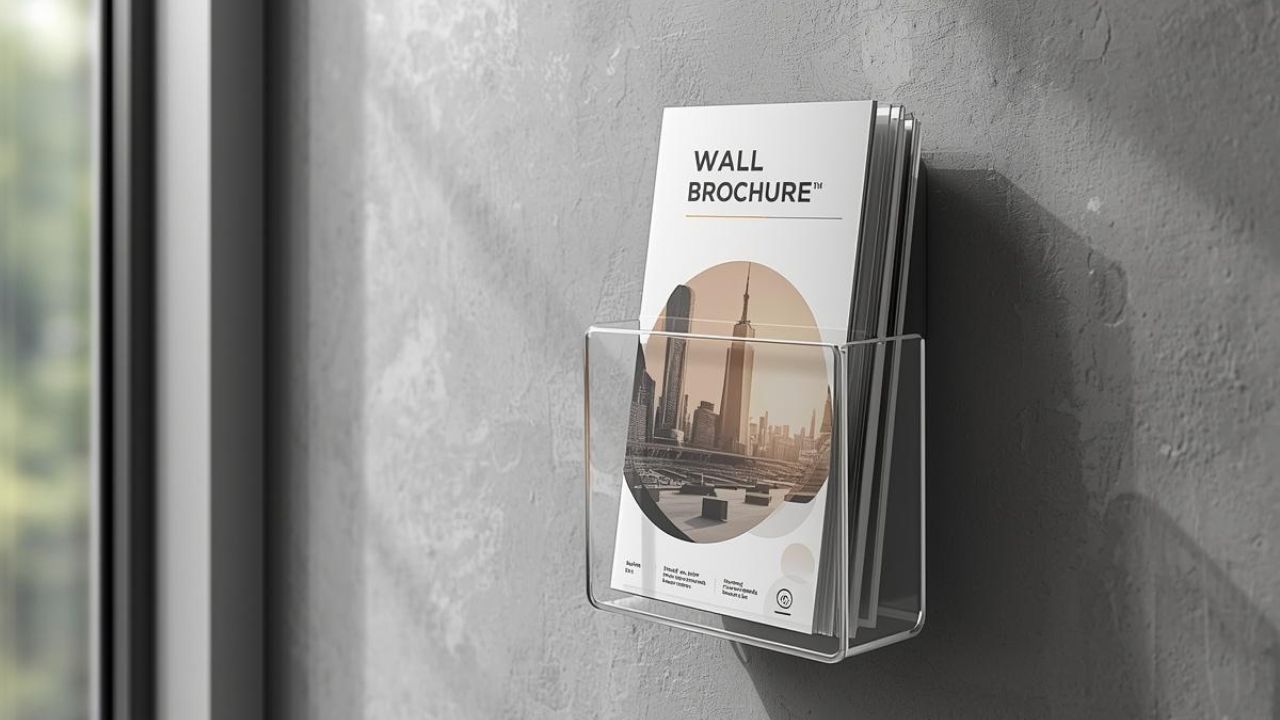
Wall brochure holder quantity planning balances information accessibility with visual clarity. Proper calculation prevents two critical failures: too few pockets causing frequent depletion (performance drop from 280 index to 100 baseline), too many holders creating decision fatigue (foot traffic degradation toward 100 baseline). Core capacity formula: Floor(Wall Length / (Holder Width + 2-4" spacing)) × Floor(Wall Height / (Holder Height + 1-3" spacing)) with traffic adjustments (low 60-70%, medium 70-85%, high 85-100%).
Letter tri-fold format (3.67" × 8.5" folded) establishes a baseline requiring 9" width holder standard. Stack capacity calculation: pocket depth ÷ single insert thickness × 1.15 expansion allowance determines refill frequency (daily 20-30 capacity, weekly 50-100, monthly 100+). Mounting height range 36" to 60" from floor ensures accessibility. Strategic quantity planning achieves 280 performance index through maintained availability versus 100 neglected baseline.
Why Does Brochure Holder Quantity Planning Matter for Customer Flow and Conversions?
Quantity planning directly impacts engagement metrics and lead generation effectiveness. Calculation errors waste investment through either depleted displays or overcrowded walls.
How does "too few pockets" reduce pickup rate and increase empty displays?
Insufficient pocket quantity causes performance collapse from 280 index (well-stocked) to 100 baseline (empty). Daily refill requirement (20-30 capacity minimum) prevents stock-outs in high-traffic areas. Weekly refill requirement (50-100 capacity) accommodates moderate traffic without frequent intervention. Empty holders signal neglect reducing credibility and conversion rate from optimal 75 index to 100 baseline indicating lost qualified prospects. Stack capacity per pocket calculation: 2" depth ÷ 0.05" insert thickness = 40 inserts supporting approximately 2 days between refills at 20 pickups daily.
How does "too many holders" create clutter and decision fatigue?
Excessive display density reduces foot traffic quality from curated 85 index to cluttered 100 baseline. Decision paralysis from 10+ simultaneous options decreases conversion effectiveness. Dwell time drops: efficient 65 index (curated) versus overwhelming 100 baseline showing aimless wandering rather than purposeful browsing. Wall capacity formula prevents overcrowding: Floor(Wall Length / (Holder Width + 2-4" spacing)) establishes maximum holders per row. Traffic-based utilization (medium 70-85% of calculated maximum) prevents both appearance gaps and visual chaos. Professional wall mount display systems balance capacity with accessibility preventing overcrowding while maintaining information availability.
What's the difference between "display quantity" and "inventory on hand"?
Display quantity represents visible customer-facing pockets (calculated wall capacity). Inventory on hand encompasses total brochure stock including backup supply—typically 3-10× display quantity depending on refill frequency. Daily refill deployment requires a 3-5× inventory multiplier. Weekly refill requires a 7-10× multiplier. Monthly refill requires a 20-30× multiplier maintaining a consistent 280 performance index. Example: 23 display pockets × 40 inserts per pocket = 920 display capacity requiring 2,760-4,600 total inventory for weekly refill schedule (3-5× multiplier) preventing depletion between restocking cycles.
What Information Do You Need Before You Calculate How Many Wall Holders to Install?
Accurate measurement and format planning prevent costly specification errors. Three critical inputs determine calculation accuracy.
What wall measurements and usable mounting areas should you capture first?
Wall length (L) measured in inches establishes a horizontal capacity foundation. Wall height (H) measured in inches determines vertical capacity potential. Usable mounting height range 36" to 60" from floor optimizes comfortable reach accessibility. Obstructions mapping (electrical outlets, light switches, thermostats, adjacent fixtures) reduces usable area. Corner clearances 2-4 inches from edges prevent problematic placement. Example foundation: 120" wall length × 24" usable height (36"-60" range) provides calculation baseline before holder dimensions applied.
What brochure formats, pocket sizes, and orientations are you planning for?
Letter tri-fold (3.67" × 8.5" folded) represents the most common format requiring 9" width holder priority. Letter bi-fold (4.25" × 5.5" folded) and rack card (4" × 9") fit the same 9" standard. Tabloid/Ledger (5.5" × 17" folded) requires 12" width holder separate accommodation. A4 tri-fold (3.94" × 8.27" folded) and Slim DL (4.13" × 8.27") serve international requirements. Vertical orientation (portrait) 9" width × 12" height accommodates tri-fold standard. Pocket depth range 1" to 3" determines stack capacity: 2" depth ÷ 0.05" thickness = 40 inserts per pocket. Multi-pocket holders (2-4 pockets per unit) reduce individual mounting count.
What traffic patterns and dwell time should influence your quantity estimate?
Low traffic areas utilize 60-70% of calculated wall capacity preventing empty appearance while maintaining curation. Medium traffic areas utilize 70-85% balancing availability with aesthetics. High traffic areas utilize 85-100% maximizing information access. Dwell time efficiency indicator: 65 index shows purposeful browsing versus aimless wandering. Example application: 30 calculated capacity × 75% medium traffic adjustment = 22-23 actual holders recommended. Peak hour traffic analysis determines refill frequency requirements (hourly, daily, weekly) affecting minimum capacity per pocket specification.
How Do You Decide How Many Different Brochures Should Be Displayed at Once?
Curation strategy balances comprehensive information with focused messaging. Performance data guides quantity decisions.
Should you display every option or curate to your top offers?
Curated displays (5-7 options) achieve 280 performance index through focused messaging. Overcrowded displays (10+ options) drop to 100 baseline performance from decision fatigue. 180% effectiveness improvement validates strategic curation versus comprehensive display approach. Focus on the top 20% of materials generating 80% of engagement applying Pareto principle. Foot traffic quality improves: 85 index (curated) indicating serious prospects over 100 baseline casual browsers. Conversion efficiency: 75 index demonstrates qualified lead generation from focused options rather than diluted messaging across excessive variety.
How do you group brochures by category so people find what they need faster?
Primary categories limit to 3-5 major groupings preventing cognitive overload. Sub-categories maintain 2-3 options per primary category preserving hierarchy clarity. Visual separation: 2-4 inches horizontal spacing between category groups. Vertical organization: 1-3 inches spacing between rows within the same category. Example grouping: Services (3 options), Products (4 options), Events (2 options) = 9 total distinct materials. Category capacity allocation distributes calculated capacity proportionally by category importance maintaining logical organization.
When does it make sense to rotate seasonal materials instead of expanding the display?
Seasonal rotation maintains 280 performance index through fresh content without capacity increase beyond calculated wall maximum. Expansion beyond capacity (overcrowding) reduces performance to 100 baseline through visual chaos. Budget allocation for display updates (15%) supports rotation strategy without infrastructure expansion cost. Rotation frequency aligns with seasonal cycles: quarterly (4× yearly), monthly (12× yearly), weekly (52× yearly) depending on content change requirements. Wall capacity limitation prevents expansion: rotation optimizes existing 22-23 calculated holders rather than adding more clutter.
How Many Pockets Do You Need Per Brochure to Avoid Running Out Between Refills?
Pickup volume estimation and refill scheduling determine minimum pocket allocation per brochure. Calculation prevents depletion performance drop.
How do you estimate daily pickup volume per brochure?
High-demand materials experience 20-50 pickups per day requiring 2-3 pocket allocation. Medium-demand materials experience 5-20 pickups per day requiring 1-2 pocket allocation. Low-demand materials experience 1-5 pickups per day requiring single pocket allocation. Traffic volume correlation: high traffic 85-100% capacity utilization, medium 70-85%, low 60-70%. Stack capacity per pocket: 2" depth ÷ 0.05" thickness = 40 inserts. Daily depletion calculation: 40 inserts ÷ 20 pickups per day = 2 days between required refills establishing minimum pocket count.
How do you calculate a safe "days-between-refill" buffer?
Buffer formula: (desired days between refills × daily pickup rate) = minimum capacity requirement. Daily refill schedule: 20-30 capacity minimum per pocket (0.5-1 day buffer). Weekly refill schedule: 50-100 capacity per pocket (5-7 day buffer). Monthly refill schedule: 100+ capacity per pocket (20-30 day buffer). Example calculation: 7 day target × 10 pickups/day = 70 insert minimum capacity. Pocket quantity determination: 70 required capacity ÷ 40 per pocket capacity = 2 pockets minimum per brochure maintaining availability without daily intervention.
What stack capacity factors change how many pockets you need (paper weight, thickness, fold)?
Paper stock weight affects thickness: 80lb text (thinner) versus 100lb cover (thicker) altering stack height. Single insert thickness range: 1/32" (thin) to 1/4" (thick cover stock). Pocket depth capacity variation: 1" depth holds 20-30 thin inserts or 4-8 thick inserts. Fold complexity: tri-fold (3.67" width) versus bi-fold (4.25" width) affects lateral accommodation. Expansion allowance: add 10-20% to calculated capacity accommodating humidity expansion. Example: 2" pocket depth ÷ 0.05" insert thickness × 1.15 expansion = 46 insert effective capacity determining days-between-refill calculation accuracy.
How Do Wall Dimensions Translate into a Real Pocket Count?
Mathematical formulas convert physical wall measurements into actual holder capacity. Spacing and clearances reduce theoretical maximum.
How do you calculate pockets per row based on pocket width and spacing?
Horizontal Capacity Formula: Floor(Wall Length / (Holder Width + Horizontal Spacing)). Holder width typical: 9" for tri-fold vertical orientation, 12" for bi-fold horizontal orientation. Horizontal spacing recommendation: 2-4 inches between holders preventing visual crowding. Example calculation: 120" wall length ÷ (9" holder width + 3" spacing) = 120 ÷ 12 = 10 holders per row. Multi-pocket adjustment: 10 single-pocket holders = 5 two-pocket holders = 3-4 three-pocket holders optimizing space. Edge clearance: subtract 2-4 inches from each wall end before calculation (120" - 8" edges = 112" usable length).
How do you calculate how many rows fit based on height and reach range?
Vertical Capacity Formula: Floor(Wall Height / (Holder Height + Vertical Spacing)). Holder height typical: 12" for tri-fold vertical orientation, 6" for rack card orientation. Vertical spacing recommendation: 1-3 inches between rows maintaining accessibility. Usable height range: 36" to 60" from floor (24" total usable span) for comfortable reach. Example calculation: 24" usable height ÷ (12" holder height + 2" spacing) = 24 ÷ 14 = 1-2 rows maximum. Total wall capacity: Horizontal (10 holders) × Vertical (2 rows) = 20 total holder positions establishing calculation baseline.
What clearances should you leave for edges, corners, and nearby fixtures?
Corner clearances: 2-4 inches from wall corners preventing edge mounting difficulties. Edge clearances: 2-4 inches from wall top and bottom preventing difficult reach zones. Fixture clearances: 6-12 inches from light switches, outlets, thermostats maintaining accessibility. Doorway clearances: 12-18 inches from door swing radius preventing access interference. Adjacent wall clearances: 3-6 inches from perpendicular walls enabling comfortable viewing angle. Clearance impact example: 120" wall - 4" left edge - 4" right edge = 112" effective length reducing calculated capacity from theoretical maximum.
What Layout Rules Help You Place the Right Number of Holders Without Hurting Usability?
Ergonomic standards and accessibility guidelines determine optimal placement parameters. Proper layout maintains 280 performance index.
What is the best mounting height range for comfortable browsing?
Primary viewing height: 48" to 60" from floor (eye level for average adult standing). Accessible reach range: 36" to 60" from floor accommodating various heights and abilities. Top row maximum: 60" from floor to top of holder preventing strain. Bottom row minimum: 36" from floor to bottom of holder maintaining visibility. Seated accessibility consideration: 30" to 48" from floor for wheelchair users. Height range impact on rows: 24" span (36" to 60") ÷ 14" per row (12" holder + 2" spacing) = 1-2 rows optimal within comfortable reach zone.
How much horizontal and vertical spacing prevents crowding and snagging?
Horizontal spacing between holders: 2-4 inches prevents materials from snagging adjacent pockets during removal. Minimum horizontal spacing: 2 inches maintains visual separation. Maximum horizontal spacing: 4 inches prevents wasted wall space. Vertical spacing between rows: 1-3 inches enables independent access per row. Minimum vertical spacing: 1 inch prevents row interference during material removal. Maximum vertical spacing: 3 inches maintains vertical visual continuity. Spacing impact on capacity: 120" wall ÷ (9" holder + 3" spacing) = 10 holders versus 120" ÷ (9" holder + 2" spacing) = 10.9 (rounds to 10) holders—minimal difference suggesting 3" standard optimal.
How do you plan for ADA-friendly reach and visibility without overcomplicating the layout?
Forward reach maximum: 48" from floor for wheelchair accessibility compliance. Side reach maximum: 54" from floor when approach clearance available. Minimum approach clearance: 30" width × 48" depth clear floor space enabling wheelchair maneuvering. High-reach consideration: 60" maximum for standing adults aligns with ADA standards. Low-reach consideration: 36" minimum prevents bending or kneeling requirements. Protruding object limit: holders must not protrude more than 4" from the wall between 27" and 80" heights. ADA-compliant height range: 36" to 48" from floor accommodates maximum user population integrating naturally with ergonomic standards.
What Are the Main Steps to Calculate Wall Brochure Holder Quantities for a Specific Space?
Systematic five-step process ensures accurate capacity determination. Sequential validation prevents specification errors.
Step 1: What is your goal—more brochure variety or higher pickup on fewer items?
Variety-focused strategy: maximize unique brochure count (10-15+ options) accepting lower per-item pickup utilizing 85-100% calculated wall capacity. Pickup-focused strategy: minimize brochure count (3-7 options) maximizing per-item engagement achieving 280 performance index utilizing 60-70% calculated capacity. Budget allocation alignment: 15% display updates + 25% signage materials = 40% supporting either strategy. Performance differential: focused pickup strategy (280 index) versus variety dilution (100 baseline) justifies curation decision. Goal determination drives subsequent calculations affecting final holder count recommendation.
Step 2: What pocket size(s) and brochure formats are you standardizing on?
Letter tri-fold (3.67" × 8.5"): most common format establishing 9" width holder standard. Mixed format accommodation: 9" width holders fit tri-fold (3.67"), bi-fold (4.25"), rack card (4") maintaining consistency. Large format exception: tabloid (5.5" × 17") requires a 12" width holder separate from standard 9" sizing. Pocket depth standardization: 2" depth accommodates 40 inserts (2" ÷ 0.05" × 1.15 expansion). Multi-pocket consideration: three-pocket holder (3 × 3.67" = 11" total width) versus single-pocket (9" width) affects capacity calculation. Comprehensive brochure holder selection enables format standardization matching calculation requirements. Standardization benefit: consistent 9" width + 3" spacing = 12" module enabling straightforward Floor(120 ÷ 12) = 10 holders per row calculation.
Step 3: What is your target number of displayed brochures and backup pockets per brochure?
Target brochure count: 5-7 distinct materials (curated strategy) or 10-15 materials (comprehensive strategy). Backup pockets per high-demand brochure: 2-3 pockets preventing depletion. Backup pockets per medium-demand brochure: 1-2 pockets maintaining availability. Backup pockets per low-demand brochure: 1 pocket sufficient for infrequent pickup. Total pocket calculation example: 5 high-demand (3 pockets each = 15) + 3 medium (2 pockets each = 6) + 2 low (1 pocket each = 2) = 23 total pockets required. Wall capacity validation: 23 required pockets fit within 30 calculated capacity at 77% utilization (medium traffic appropriate).
Step 4: How many pockets fit on your wall once spacing and reach limits are applied?
Horizontal capacity: Floor(120" wall length / (9" holder width + 3" spacing)) = Floor(120 / 12) = 10 holders per row. Vertical capacity: Floor(24" usable height 36"-60" range / (12" holder height + 2" spacing)) = Floor(24 / 14) = 1 row within optimal reach. Alternative vertical: Floor(48" extended range 30"-78" / (12" holder + 2" spacing)) = Floor(48 / 14) = 3 rows maximum stretching accessibility. Total calculated capacity: 10 horizontal × 3 vertical = 30 total holder positions. Traffic adjustment: 30 capacity × 75% medium traffic = 22-23 actual holders recommended. Multi-pocket optimization: 23 pockets ÷ 3 pockets per holder = 8 three-pocket holders utilizing space efficiency.
Step 5: How do you validate the plan with a paper template or quick mock layout?
Paper template creation: cut 9" × 12" cardboard rectangles representing holder footprint. Tape template positioning: apply templates to walls with spacing (3" horizontal, 2" vertical) marked. Reach testing: verify 36" to 60" mounting height range accessible by actual users. Spacing verification: ensure 2-4" horizontal spacing prevents crowding when multiple people browse. Clearance confirmation: validate 2-4" corner clearances, 6-12" fixture clearances maintained. Traffic flow simulation: walk approach angles confirming 30" × 48" clear floor space unobstructed. Adjustment before ordering: template validation identifies issues before purchasing 8 three-pocket holders preventing costly specification errors.
How Should Your Quantity Plan Change Based on Location Type and Use Case?
Environment-specific adaptations optimize performance for different settings. Traffic patterns and usage requirements drive quantity adjustments.
What quantity approach works best for lobbies, waiting rooms, and reception areas?
Curated display approach: 5-7 distinct brochures achieving 280 performance index through focused messaging. Medium traffic capacity utilization: 70-85% of calculated wall capacity. Example: 30 calculated capacity × 75% = 22-23 holders for reception area. Refill frequency: weekly (50-100 capacity per pocket) accommodating moderate pickup without daily attention. Pocket allocation: 2-3 pockets per high-priority material (company information, services), 1 pocket per supplementary material. Waiting area dwell time: 65 index indicates efficient browsing aligned with limited wait times. Budget allocation: 15% display updates + 25% signage = 40% annual budget supporting professional appearance maintaining conversion effectiveness.
How should quantities change for retail aisles, showrooms, and sales floors?
High traffic capacity utilization: 85-100% of calculated wall capacity maximizing product information availability. Example: 30 calculated capacity × 90% = 27 holders for retail showroom. Refill frequency: daily (20-30 capacity minimum) or twice-daily during peak seasons preventing stock-outs maintaining 280 performance index. Product category allocation: 3-5 pockets per product line enabling comparison shopping. Conversion focus: 75 index demonstrates quality lead generation from comprehensive information access. Foot traffic quality: 85 index shows serious shoppers when properly stocked versus 100 baseline casual browsers. Professional sign holder and frame systems accommodate high-capacity retail requirements through durable construction.
What is different about medical offices, schools, and community bulletin areas?
Low to medium traffic: 60-75% capacity utilization preventing overwhelming appearance. Example: 30 calculated capacity × 65% = 19-20 holders for medical office. Monthly refill frequency: 100+ capacity per pocket accommodating stable information materials. ADA compliance priority: 36" to 48" mounting height range (forward reach compliant). Information hierarchy: health education (3-4 pockets), services (2-3 pockets), community resources (2-3 pockets). Seated accessibility: lower mounting range (30"-48") benefits waiting room environments. Community bulletin rotation: seasonal materials (quarterly updates) rather than high-frequency refilling maintaining fresh content without intensive management.
What Are Common Mistakes When Estimating Wall Holder Quantities?
Specification errors waste investment and reduce engagement effectiveness. Understanding failure modes prevents common mistakes.
Why do people underestimate refill frequency and overestimate capacity?
Theoretical capacity confusion: calculating 40 inserts per pocket (2" ÷ 0.05") without 10-20% expansion allowance reducing actual capacity. Traffic adjustment omission: using 100% calculated capacity (30 holders) instead of traffic-appropriate 60-85% (18-25 holders). Daily pickup underestimation: assuming 5 pickups per day when actual demand reaches 20-50 in high-traffic locations. Paper thickness variation: specifying for 0.05" inserts when actual cover stock measures 0.08" reducing capacity 40%. Refill frequency overestimation: planning weekly refills (50-100 capacity) when daily attention (20-30 capacity) required maintaining availability. Depletion performance impact: empty holders drop from 280 performance index to 100 baseline reducing conversion effectiveness justifying conservative capacity planning.
What happens when displays are placed where traffic can't comfortably stop?
Narrow approach clearance (under 30" width): prevents comfortable browsing reducing engagement. Insufficient floor space (under 48" depth): causes traffic bottlenecks in corridors or aisles. High-traffic pathway placement: forces browsing during movement rather than stationary review. Dwell time reduction: drops below 65 index indicating rushed interaction instead of purposeful browsing. Foot traffic quality degradation: rises toward 100 baseline showing casual passersby over serious prospects. Conversion rate decline: increases toward 100 baseline from optimal 75 index showing reduced lead generation. Proper clearance maintains a 280 performance index through a comfortable, unrushed browsing environment enabling quality engagement.
How do mismatched pocket sizes create wasted space and messy presentations?
Oversized pockets (4.5" width for 3.67" tri-fold): 0.83" excess clearance causes leaning and sliding, reducing professional appearance. Undersized pockets (3.5" width for 3.67" tri-fold): insufficient 1/8"-1/4" clearance causes jamming frustrating users. Depth mismatch (1" pocket for 2" stack requirement): forces frequent refills or appears understocked dropping performance index. Mixed orientation chaos: vertical and horizontal holders on the same wall creates visual disorder. Height variation inconsistency: 9" and 12" holders mixed on the same row disrupts alignment. Capacity utilization waste: poor fit reduces effective performance from 280 index to 100 baseline through unprofessional appearance. Standardization solution: uniform 9" width × 12" height holders with 2" depth accommodates letter tri-fold (3.67" × 8.5") most common format.
How Can You Scale or Update Your Brochure Wall Without Starting Over?
Modular design enables growth without complete reinstallation. Future-proofing reduces long-term costs.
Can you design a modular layout that grows as your offerings expand?
Module standardization: 12" width module (9" holder + 3" spacing) enables consistent expansion. Horizontal expansion: add modules in 12" increments maintaining visual consistency. Vertical expansion: add rows in 14" increments (12" holder height + 2" spacing) within 36"-60" range. Phase 1 example: 5 modules (60" span) = 5 holders accommodating initial 5-7 brochures. Phase 2 expansion: add 5 modules (60" additional span) = 10 total holders supporting 10-15 brochures. Budget allocation: 15% annual display updates funds modular expansion without major reinvestment. Capacity scaling maintains 70-85% medium traffic utilization as absolute capacity grows supporting business expansion.
What should you standardize now to make future additions easier?
Holder width standard: 9" accommodates letter tri-fold (3.67"), bi-fold (4.25"), rack card (4"). Holder height standard: 12" fits tri-fold vertical orientation (8.5" height + clearances). Pocket depth standard: 2" accommodates 40-50 inserts (weekly refill capacity). Horizontal spacing standard: 3" maintains consistent 12" module (9" + 3"). Vertical spacing standard: 2" maintains consistent 14" row height (12" + 2"). Mounting height standard: 48" centerline (36"-60" range) ensures ADA compliance and consistent appearance. Material standard: acrylic (7-year lifespan, 85/100 weather resistance, cost index 100) provides baseline for future matching. Understanding custom acrylic pricing factors enables budgeting for future expansions maintaining quality consistency.
When should you switch from single pockets to multi-pocket panels?
Single-pocket appropriate: 5-10 total pockets, diverse brochure formats, flexible repositioning needs. Multi-pocket transition threshold: 10+ total pockets, standardized format (all tri-fold), permanent installation. Space efficiency: 3-pocket holder (11" total width) versus 3 single holders (36" total width = 9" × 3 + 6" spacing) saves 69% wall space. Capacity calculation: 30 total pockets ÷ 3 pockets per holder = 10 multi-pocket holders versus 30 single-pocket holders. Cost efficiency: multi-pocket holders cost 40-60% less per pocket than individual single-pocket units. Flexibility trade-off: single pockets enable format mixing, multi-pockets require format standardization. Installation efficiency: 10 mounting operations (multi-pocket) versus 30 mounting operations (single-pocket) reduces labor 67%.
What Should You Do Next After You Calculate Your Holder Quantity?
Post-calculation validation prevents installation errors. Vendor confirmation and testing ensure success.
What should you confirm with a vendor before ordering (dimensions, capacity, mounting hardware)?
Interior dimension (ID) verification: confirm usable pocket width (not exterior dimension OD). Pocket capacity confirmation: verify insert count at specific paper weight and thickness. Mounting hardware included: wall anchors, screws, template for alignment. Material specification: acrylic thickness (1/8", 1/4"), bend radius affecting interior space. Multi-pocket configuration: pocket count per holder (single, double, triple) matching calculation. Dimensional tolerance: ±0.030" to ±0.060" for bent acrylic affecting fit precision. Lead time confirmation: standard sizes ship immediately, custom requires 2-6 weeks.
Professional custom-printed signage solutions enable branded holder customization aligning with calculated specifications. Quantity validation: 23 total pockets = 8 three-pocket holders (24 pockets) provides 1 spare pocket buffer. Understanding production timeline expectations helps plan installation coordination.
How can you set a refill schedule and simple tracking for popular brochures?
Daily refill materials: high-demand brochures (20-50 pickups/day) requiring morning and afternoon checks. Weekly refill materials: medium-demand brochures (5-20 pickups/day) requiring Monday morning restocking. Monthly refill materials: low-demand brochures (1-5 pickups/day) requiring first-of-month replacement. Tracking method: simple tally marks on calendar noting depletion dates. Pickup rate calculation: days between refills ÷ pocket capacity = average daily pickup rate. Adjustment trigger: materials depleting faster than planned require pocket count increase (1 to 2 to 3 pockets). Performance monitoring: maintain 280 index through consistent availability versus 100 baseline from frequent depletion requiring schedule refinement.
What is a practical checklist for installing and testing the final wall display?
Template verification: tape paper templates confirming spacing before drilling. Level installation: use 4-foot level ensuring horizontal alignment across all holders. Height consistency: measure 48" centerline (or chosen standard) for each holder. Spacing verification: measure 3" horizontal gaps and 2" vertical gaps between holders. Hardware security: test each mount supporting 5-10 lbs representing full pocket weight. Clearance confirmation: verify 2-4" corner clearances and 6-12" fixture clearances maintained.
Function testing: insert and remove brochures from each pocket 5-10 times checking for binding. Capacity loading: fill representative pockets to 70-85% capacity verifying stack stability. Reach testing: confirm 36"-60" range accessible by various users including seated individuals. Traffic flow testing: walk approach angles ensuring 30" × 48" clear floor space unobstructed. Visual assessment: step back 10-15 feet confirming professional appearance and balanced layout. Performance baseline: establish initial 280 index through full stocking and proper presentation.
Ready to Calculate Wall Brochure Holder Quantities That Maximize Engagement?
Displays and Holders applies capacity formulas (horizontal Floor(L/(W+spacing)), vertical Floor(H/(Hh+spacing)), traffic adjustments 60-100%), format standards (letter tri-fold 3.67" × 8.5" priority, rack card 4" × 9", bi-fold 4.25" × 5.5", tabloid 5.5" × 17"), mounting specifications (36"-60" reach range, 2-4" horizontal spacing, 1-3" vertical spacing, ADA-compliant 36"-48" primary zone), and performance metrics (280 index maintained versus 100 baseline neglected) to wall brochure holder quantity implementation strategies.
Contact Displays and Holders for wall brochure holder quantity consultation backed by capacity formulas (Floor calculations with traffic adjustments), spacing standards (2-4" horizontal, 1-3" vertical, 2-4" edge clearances), refill planning (daily 20-30, weekly 50-100, monthly 100+ capacity per pocket), and validation protocols (template testing, reach verification, traffic flow confirmation) ensuring displays deliver 280 performance index where calculation accuracy meets professional installation.