










Retail displays shape customer perception within seconds of store entry. Clear, professional store signage communicates brand quality and guides purchase decisions at critical decision points.
Material selection for sign holders affects both immediate presentation and long-term operational costs. Acrylic sign holders balance optical clarity with durability, offering advantages over plastic and metal alternatives across multiple retail environments.
Key Takeaways
- Acrylic holds 28% market share and maintains 92% light transmittance over decades
- Total Cost of Ownership favors acrylic despite higher upfront costs
- Slant back holders suit countertops, while table tents optimize limited space
- Products in premium acrylic units show purchase increases of up to 478%
- Asia Pacific leads adoption at 42.5% geographic market share
What Are Acrylic Sign Holders and Their Key Uses?
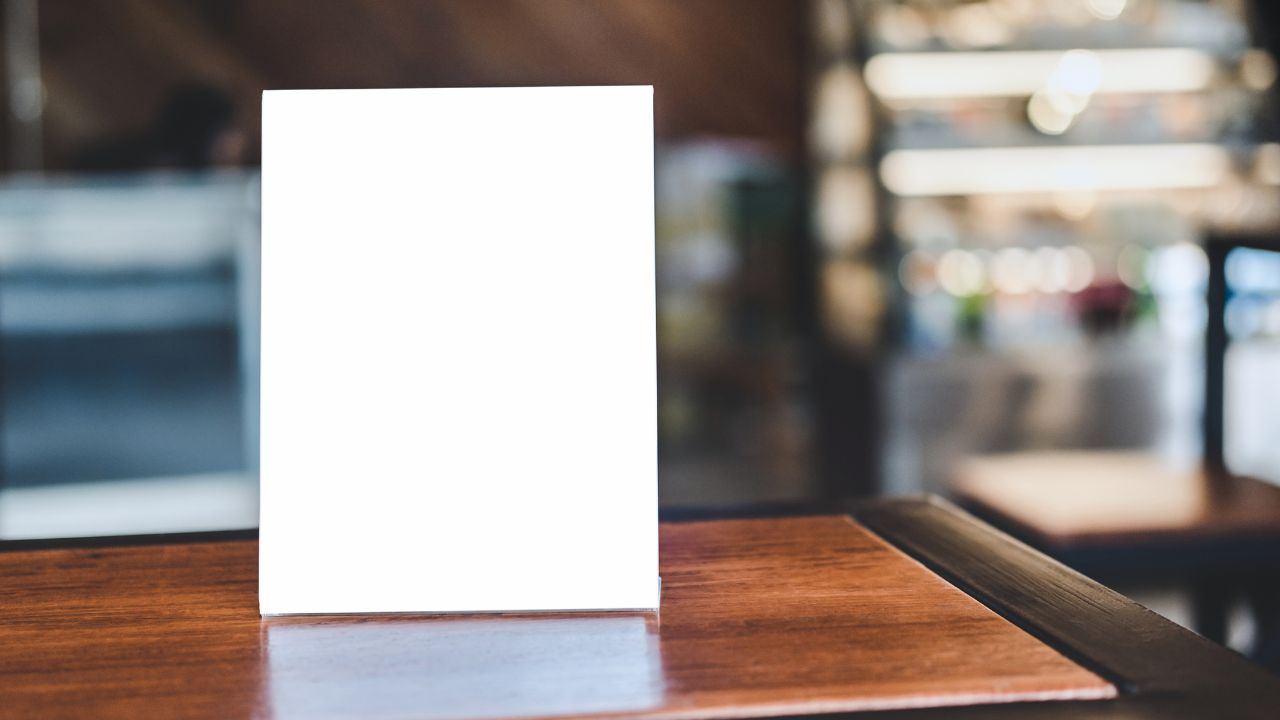
Acrylic sign holders provide transparent, rigid support for printed materials at counters, tables, and walls. These holders protect paper inserts while maintaining visibility from multiple viewing angles.
The sign holder market is divided into five material categories based on performance characteristics. Metal holds 38% market share, acrylic commands 28% and is growing, plastic accounts for 20%, wood represents 10%, and glass captures 4%.
What Materials Are Common for Sign Holders?
Metal dominates high-traffic applications requiring maximum durability and premium appearance. Acrylic serves retail visual merchandising where optical clarity directly influences brand perception.
Plastic materials, including polycarbonate and PETG occupy quick-service restaurant contracts emphasizing unit economics. Wood holders serve boutique environments while glass remains limited due to weight and fragility concerns.
What Types of Acrylic Sign Holders Exist for Retail Spaces?
Slant back holders position content at an upward angle for ergonomic viewing by standing customers. Table tent holders offer double-sided visibility with a compact footprint suitable for restaurants and cafes.
Wall-mounted sign holders AD frames feature fixed installation with frameless or framed options for offices and healthcare facilities. Side-loading frames provide enhanced security against tampering, while top-loading and bottom-loading holders enable quick content changes with double-sided visibility.
How Do Acrylic Holders Enhance Store Presentation?
Acrylic offers 92% light transmittance, creating a glass-like appearance without fragility risks. This optical performance allows printed materials to display true colors and sharp text without distortion.
Clear displays build customer trust according to shopping preference studies. 82% of shoppers prefer transparent displays that demonstrate product authenticity and quality standards. Displays and Holders manufactures its acrylic sign holders in-house in Anaheim, California, which keeps optical clarity consistent from one order to the next.
Why Choose Acrylic Over Other Materials?
Material selection determines display longevity, maintenance frequency, and total replacement costs over multi-year periods. Performance differences between materials become evident through hardness testing, transmittance measurements, and field durability studies.
Acrylic provides a middle ground between budget plastic options and premium metal fixtures. This balance makes acrylic suitable for businesses requiring professional presentation without industrial-grade pricing.
| Attribute | Acrylic | Plastic | Metal |
| Typical lifespan | 10 to 30+ years | 1 to 5 years | 5 to 10+ years |
| Optical clarity | 92% transmittance, 90% after 30 years | Yellows within 1 to 3 years | Opaque |
| Scratch resistance | Rockwell M 94 to 105 | Polycarbonate M 70 to 75 | Dents and shows wear |
| Maintenance | Soap and water | Frequent replacement | Rust prevention treatment |
How Does Acrylic Compare to Plastic and Metal in Durability?
Acrylic delivers a lifespan of 10-30+ years under normal retail conditions. Metal holders last 5-10+ years while requiring rust prevention treatments in humid environments.
Plastic holders deteriorate within 1-5 years as UV exposure causes material breakdown. Hardness testing shows acrylic achieves Rockwell M 94-105 compared to polycarbonate's M 70-75, indicating superior scratch resistance.
What Are the Optical and Aesthetic Advantages of Acrylic?
Acrylic maintains 90% transmittance after 30 years of continuous use. This UV stability prevents yellowing that degrades plastic alternatives within 1-3 years.
Material strength testing reveals acrylic is 17 times stronger than glass. Optical clarity importance weighs at 92% in procurement decision frameworks, making acrylic the preferred choice for premium retail applications.
How Does Acrylic Perform in Maintenance and Longevity?
Long-term performance data confirm acrylic maintains 90% transmittance after three decades. Simple cleaning with soap and water restores clarity without specialized maintenance products.
Alternative materials require ongoing care that increases operational costs. Metal demands rust prevention treatments while wood needs periodic sealing to prevent moisture damage.
Which Acrylic Sign Holder Designs Suit Different Store Environments?
Design selection must align with specific viewing conditions, space constraints, and customer traffic patterns. Each holder style serves distinct retail functions based on placement height and viewing distance.
Market segmentation data reveal growth concentrated in specific categories. Understanding these trends helps retailers choose designs with proven effectiveness across similar business types.
When Should You Use Slant Back Holders at Counters?
QSR chains, retail checkout counters, and corporate reception areas rely on slant-back holders for standing customer visibility. These angled designs eliminate neck strain when customers read content from elevated counter positions.
The slant back segment reached USD 187.4 million in 2026 and is forecast to grow to USD 283.33 million by 2035. This 4.70% CAGR reflects standardization across franchise networks using countertop displays as primary communication tools.
What Are the Benefits of Table Tent Acrylic Holders?
Restaurants, cafes, hotels, and event venues deploy table tent menu holders for seated customer engagement. Double-sided visibility maximizes information density while minimizing table surface footprint.
The table tent market, valued at USD 0.4 billion in 2025, is expected to reach USD 0.56 billion by 2034. Acrylic commands 35.2% of this market with a 3.8% CAGR driven by antimicrobial surface treatments and stackable modular designs.
How Do Wall-Mounted Acrylic Holders Optimize Space?
Office buildings, healthcare facilities, and educational institutions use wall-mounted holders for compliance notifications and directional wayfinding. Fixed installation eliminates surface area consumption while maintaining content visibility at eye level.
Wall mount holders, valued at USD 1.28 billion in 2025 forecast to grow to USD 2.05 billion by 2033. This 5.8% CAGR reflects modernized workspace adoption where slatwall displays integrate with vertical merchandising systems.
How to Assess Your Store's Needs Before Buying Acrylic Holders?
Systematic evaluation prevents mismatched purchases that fail to serve intended functions. Three assessment categories guide proper selection: viewing environment, space availability, and security requirements.
Data-driven decision frameworks reduce trial-and-error purchasing while ensuring displays align with customer interaction patterns. This analytical approach minimizes replacement costs and maximizes display effectiveness.
What Viewing Environments Affect Holder Selection?
Countertops require slant-back holders positioned for standing customers who view content from above. Tables demand top-loading or bottom-loading holders offering visibility from multiple seated positions.
High-traffic areas necessitate side-loading frames to prevent content removal during peak periods. Each environment creates distinct viewing angles that determine optimal holder orientation and mounting style.
How Do Space Constraints Influence Acrylic Holder Choice?
Limited counter space demands wall-mounted options or compact table tents, preserving work surfaces. Window displays leverage custom acrylic shapes, creating storefront showcases without interior space consumption.
Space evaluation must account for content change frequency and staff access requirements. Business card displays demonstrate how vertical orientation maximizes density while maintaining individual card accessibility.
What Are Considerations for Customer Traffic and Security?
High-traffic areas require side-loading frames providing security against accidental removal or tampering. During busy holiday seasons, impact resistance becomes critical as plastic carries a high cracking risk.
Choosing sign holder designs must balance accessibility for legitimate content updates against protection from unauthorized changes. Side-loading mechanisms add friction to removal while maintaining authorized staff access through straightforward insertion procedures.
How to Balance Cost and Value When Selecting Acrylic Holders?
Pricing analysis must extend beyond the initial purchase price to include replacement frequency and maintenance costs. Total Cost of Ownership calculations reveal long-term financial implications often invisible during initial procurement.
Material tier positioning reflects manufacturing complexity and performance durability. Understanding these tiers helps buyers match specifications to actual requirements without overpaying for unnecessary features.
What Are the Pricing Tiers for Acrylic Sign Holders?
Plastic holders occupy budget tiers from $ 1.25 to $ 5.00, with mid-range options reaching $5.00-$15.00. Acrylic pricing spans $2.00-$10.00 budget, $10.00-$35.00 mid-range, and $25.00-$100.00+ premium categories.
Metal holders start at $5.00-$15.00, extend to $15.00-$40.00 mid-range, and reach $40.00-$150.00+ premium levels. Customization, including logos and special finishes, adds a 30-40% premium to base costs across all materials.
| Material | Budget | Mid-range | Premium |
| Plastic | $1.25 to $5.00 | $5.00 to $15.00 | Not offered |
| Acrylic | $2.00 to $10.00 | $10.00 to $35.00 | $25.00 to $100.00+ |
| Metal | $5.00 to $15.00 | $15.00 to $40.00 | $40.00 to $150.00+ |
How Do Bulk Orders Impact Acrylic Holder Costs?
Wholesale purchasing reduces per-unit costs by up to 60% through manufacturing economies of scale. Volume discounts make premium materials accessible at price points approaching budget alternatives purchased individually.
Multi-location operators benefit most from centralized procurement standardizing displays across franchise networks. This consolidation approach combines volume pricing with consistent brand presentation across all customer touchpoints. Displays and Holders accepts custom runs from a 50-unit minimum and ships in-stock items the same day on orders placed before 2 PM PST, so multi-location buyers avoid long lead times.
What Is the Total Cost of Ownership Compared to Alternatives?
An acrylic holder purchased at $10.00 lasting 10 years costs $1.00 annually. A plastic holder at $4.00 requiring replacement every 2 years costs $2.00 annually, doubling the long-term expense.
Total Cost of Ownership analysis must incorporate initial investment plus replacement costs across multi-year periods. This comprehensive view reveals acrylic vs plastic comparisons favor acrylic despite higher upfront pricing when evaluated over typical retail cycles.
What ROI Can Store Owners Expect from Acrylic Sign Holders?
Purchase behavior studies quantify how display quality affects transaction rates and average basket size. Premium presentation materials correlate with measurable sales increases beyond anecdotal observation.
Financial modeling helps justify display investments by projecting revenue increases against implementation costs. These frameworks support budget approval by demonstrating concrete returns rather than abstract aesthetic improvements.
How Do Acrylic Displays Influence Purchase Behavior?
Products displayed in high-quality acrylic units experience purchase increases ranging from 80% to 478%. Average weekly sales increase attributed to premium display units reaches approximately 217 Euros per unit.
Clear displays build brand trust according to 82% of shoppers surveyed. This trust translates to higher conversion rates as transparency signals product quality and organizational professionalism.
What Are the Long-Term Financial Benefits of Acrylic Holders?
Premium acrylic units generating 217 Euro weekly sales increases deliver substantial cumulative returns. Over a 10-30+ year acrylic lifespan, this weekly increment compounds into significant revenue enhancement.
One-time investment in durable sign holder solutions eliminates recurring replacement costs affecting plastic alternatives. This financial stability allows budget allocation to marketing initiatives rather than continuous display maintenance.
How Does Brand Perception Improve with Acrylic Displays?
82% of shoppers associate clear displays with trustworthy brands and quality merchandise. Scratched, yellowed plastic holders undermine this perception by signaling operational neglect or cost-cutting priorities.
Acrylic maintains 90% transmittance after 30 years, preserving a pristine appearance throughout extended service life. This consistency reinforces premium positioning, essential for most popular displays in competitive retail categories.
How Do Regional and Demographic Factors Affect Acrylic Holder Choices?
Geographic markets show distinct material preferences reflecting economic development, import logistics, and local manufacturing capabilities. Regional analysis helps suppliers forecast demand patterns and optimize inventory distribution.
Demographic segmentation reveals urban-rural divides in display sophistication and budget allocation. These patterns guide targeted marketing strategies and product development priorities for manufacturers serving diverse markets.
Which Markets Show Highest Demand for Premium Acrylic Displays?
Asia Pacific holds 42.5% geographic market share, driven by hospitality expansion in China and India. North America commands 28.4% through centralized procurement, consolidating multi-location operators.
Europe represents 20.0% with stringent EU Green Deal mandates promoting recyclable acrylic formulations. Latin America and MEA combine for 9.1% as emerging markets develop organized food service infrastructure.
How Do Urban and Rural Retail Environments Differ in Acrylic Use?
Urban markets show higher adoption of premium acrylic and metal displays, supporting intense brand competition. Sophisticated visual merchandising becomes a necessary differentiation when similar retailers cluster in dense commercial districts.
Rural markets demonstrate higher utilization of injection-molded plastic and budget options, reflecting cost consciousness. Lower competitive pressure reduces urgency for premium presentation materials in markets with limited retail alternatives.
What Trends Are Emerging in Acrylic Holder Adoption Globally?
The overall retail displays market is valued at USD 18.5 billion in 2025 projects growth to USD 33.2 billion by 2035. This 6.0% CAGR reflects post-pandemic retail recovery and omnichannel strategy implementation.
The acrylic sign holder base market is valued at USD 1.10 billion in 2025 and is forecast to expand to USD 1.73 billion by 2033. Growing market share indicates continued displacement of traditional plastic materials as retailers prioritize longevity and presentation quality.
Choosing the Right Acrylic Sign Holders for Effective Retail Display
Material selection, design configuration, and cost analysis form the foundation for effective display procurement. Acrylic sign holders deliver superior optical performance and extended lifespan, justifying a higher initial investment through reduced replacement frequency and enhanced brand perception.
Strategic evaluation of viewing environments, space constraints, and traffic patterns ensures proper holder selection. Regional market trends and Total Cost of Ownership calculations provide data-driven frameworks supporting procurement decisions aligned with long-term operational goals.
Store owners balancing quality with affordability find acrylic offers the optimal midpoint between budget plastic and premium metal alternatives. Custom printed signs complement these holders by ensuring content quality matches display presentation standards. Displays and Holders has supplied acrylic sign holders from its Anaheim, California, facility since 1986, serving more than 100,000 businesses.
Choose Displays and Holders for Your Acrylic Sign Holders
Your displays shape what customers think the moment they walk in. Displays and Holders has manufactured acrylic sign holders in-house in Anaheim, California since 1986, serving more than 100,000 businesses that expect clarity, durability, and fast turnaround. We ship in-stock items the same day on orders placed before 2 PM PST, and we produce custom runs with your logo from a 50-unit minimum.
Tell us your counter, table, or wall setup and we will point you to the right holder for the job. Call 714-527-1179 or request a quote to get started.
Frequently Asked Questions
Q1. What size acrylic sign holder do I need for my store?
A. Match the holder to your media size and viewing distance. Countertop slant-back holders suit standard 8.5 by 11 inch signage for standing customers, while table tents fit smaller double-sided menus and specials. Measure both your printed insert and your available surface before you order. Then confirm whether top-loading, bottom-loading, or side-loading access works for how often you swap content.
Q2. Are acrylic sign holders better for retail than plastic?
A. Acrylic keeps its clarity far longer than budget plastic. It holds about 92% light transmittance and resists the yellowing that affects plastic within one to three years. Acrylic also rates higher on scratch resistance at Rockwell M 94 to 105, compared with polycarbonate at M 70 to 75. For displays you want to keep looking clean for years, acrylic is the stronger choice.
Q3. How long do acrylic sign holders last?
A. Acrylic sign holders last 10 to 30 or more years under normal retail conditions. They hold roughly 90% light transmittance even after three decades of use. Simple cleaning with soap and water keeps them clear, with no special products needed. That lifespan lowers the total cost of ownership against plastic holders that need replacing every one to five years.
Q4. Can I order custom acrylic sign holders with my logo?
A. Yes. Displays and Holders produces custom acrylic sign holders and adds logos or branding through in-house imprinting in Anaheim, California. Custom runs start at a 50-unit minimum, which keeps branded displays affordable for small stores and multi-location brands alike. Send your artwork and specifications, and the team will confirm sizing and finish options before production.
Q5. How fast can acrylic sign holders ship?
A. In-stock items ship the same day on orders placed before 2 PM PST. Displays and Holders manufactures and fulfills in-house, which shortens lead times compared to overseas suppliers. Custom orders take longer because they move through fabrication and imprinting first. Call 714-527-1179 if you have a firm deadline and need to confirm timing.