










Key Takeaways:
- Plastic sign holders last 1-5 years versus acrylic's 10-30+ years, with outdoor signage showing the starkest difference: 2 years for plastic versus 20 years for acrylic.
- Plastic yellows within 1-3 years under UV exposure, achieving only 80-88% light transmission versus acrylic's 92% clarity that lasts decades.
- Break-even for acrylic investment occurs at 2.5 years (30 months), with annual costs favoring acrylic: $15/year versus $60/year for plastic in outdoor applications.
- Plastic degrades above 140°F and cracks under daily handling stress, making it suitable only for temporary promotions, low-traffic indoor settings, and budget-constrained short-term use.
- Products in quality acrylic displays experience 80-478% purchase increases, with 82% of shoppers preferring clear displays that build trust through unobstructed product views.
Plastic sign holders cost less upfront than acrylic alternatives. This price advantage appeals to budget-conscious businesses, temporary promotions, and low-traffic indoor applications. However, plastic's lower durability, rapid clarity degradation, and frequent replacement needs create hidden costs that offset initial savings.
Understanding when plastic makes financial sense versus when it becomes a false economy requires examining material properties, usage contexts, and lifecycle costs. This guide helps procurement teams, operations managers, and business owners make informed decisions based on actual performance data rather than purchase price alone.
What Do We Mean by "Plastic Sign Holders," and How Are They Different from Acrylic?
Material composition determines performance characteristics. Common plastics and premium acrylic represent fundamentally different products despite similar appearance when new.
What Types of Plastic Are Commonly Used for Sign Holders?
Common plastics include PET (polyethylene terephthalate), polystyrene, polycarbonate, and PVC. Each polymer exhibits distinct characteristics and performance profiles. Polycarbonate offers superior impact resistance but often sacrifices optical clarity. PVC and polyethylene typically appear opaque or cloudy compared to acrylic.
Thin plastic holders measure 1-2mm, suitable only for disposable or short-term use. Standard plastic ranges 2-3mm but lacks the rigidity and scratch resistance of equivalent acrylic thicknesses. These materials serve applications where aesthetics and longevity take secondary priority to initial cost savings.
How Does Plastic Compare to Acrylic in Clarity, Rigidity, and Overall Feel?
Acrylic is PMMA (Polymethyl Methacrylate), a thermoplastic material engineered for optical clarity. Acrylic transmits up to 92% of light versus traditional plastics achieving only 80-88% light transmission initially. This 12-percentage-point difference creates noticeable visual impact in customer-facing applications.
Premium acrylic features 2-5mm thickness for moderate to heavy-duty applications. Standard acrylic grades measure 2-3mm for everyday use. Luxury applications specify 5mm+ premium acrylic thickness for maximum structural integrity. Understanding cast versus extruded acrylic differences helps buyers distinguish quality grades that affect long-term performance.
When Is a Plastic Sign Holder the Right Choice for Day-to-Day Business Use?
Plastic serves specific use cases where its limitations don't create operational problems. Matching material to application prevents both overspending on unnecessary quality and underinvesting in critical customer touchpoints.
Which Low-Risk, Short-Term Uses Fit Plastic Sign Holders Best?
Temporary promotions and seasonal displays where use limited to few weeks or months justify plastic's lower cost. Indoor-only short-term applications without UV exposure or extreme temperatures extend plastic's viable lifespan. Budget-constrained small businesses often use plastic as temporary solution with intention to upgrade as cash flow improves.
Low-traffic, indoor-only environments where holders unlikely to be handled frequently or exposed to UV light allow plastic acceptable service life. Bottom-loading sign holders in these protected settings can function adequately with plastic construction when replacement budget exists.
What Business Settings Typically Don't Need Premium Acrylic Clarity?
Decorative or rarely-touched displays achieve longer lifespans with either material. Protected indoor locations make plastic economically viable for specific applications. Environments where holders won't be subject to frequent customer interaction reduce wear factors that destroy plastic prematurely.
Settings where brand perception less critical to customer purchasing decisions can accept plastic's lower aesthetic quality. Back-office areas, employee-only spaces, and temporary staging areas represent contexts where functional adequacy outweighs premium presentation. However, customer-facing environments require careful evaluation of brand impact before accepting plastic's visual compromises.
What Tradeoffs Should You Expect When Choosing Plastic Over Acrylic?
Understanding plastic's degradation patterns prevents surprise replacement costs. Performance limitations appear predictably across specific timeframes and environmental conditions.
How Do Scratching, Bending, and Clouding Show Up Over Time?
Plastic yellows within 1-3 years under UV exposure, creating hazy, discolored surfaces that diminish professional appearance. Traditional plastics prone to UV degradation become brittle and discolored simultaneously. Polystyrene is particularly sensitive to sunlight effects, losing clarity within months of outdoor exposure or window placement.
Traditional plastics like PVC and polystyrene show pronounced susceptibility to scratches creating worn appearances. Scratches on most plastics are permanent, forcing early replacement despite otherwise functional structures. Plastic degrades above 140°F, limiting applications in sunny windows or heated environments. Traditional plastics become brittle, discolored, or cracked under environmental stress. Many plastics crack or deform during cutting and bending operations, restricting custom design possibilities.
When Can Frequent Replacement Become the Hidden Cost of "Cheaper"?
Plastic lifespan ranges 1-5 years versus acrylic's 10-30+ years depending on quality and environment. Display holders average 1.5 years for plastic versus 4 years for acrylic. Organizer holders achieve 3 years for plastic versus 6 years for acrylic. Stand-up holders show 2.5 years for plastic versus 5 years typical acrylic lifespan. Outdoor signage delivers only 2 years for plastic versus 20 years for acrylic.
Acrylic requires 2-5 times higher initial investment than plastic. Break-even occurs around 2.5 years (30 months) for typical commercial applications. Annual cost for outdoor signage runs $60 per year for plastic versus $15 per year for acrylic. Labor costs for sourcing, ordering, receiving, and installing replacement holders compound material expenses. Businesses with multiple locations or extensive signage networks find replacement cycles consume significant operational resources.
How Can You Decide Between Plastic and Acrylic Without Guessing?
Systematic evaluation prevents costly mismatches between material capabilities and operational requirements. Simple criteria reveal whether plastic's limitations create acceptable or unacceptable risk.
What Simple Questions Should You Ask About Traffic, Handling, and Lifespan?
UV exposure causes yellowing over time and breaks down chemical structures in plastic. High temperatures soften acrylic and deform plastic more severely. Cold temperatures create brittleness and cracking risk in both materials. Indoor controlled environments significantly extend lifespan for both materials, but acrylic maintains advantage across all conditions.
Usage frequency impacts durability calculations directly. High-traffic or frequent-use applications generate wear, scratching, and stress favoring acrylic's superior performance. Traditional plastics like polystyrene and PVC crack under stress from daily handling, requiring frequent replacement in busy retail environments. Evaluate actual customer interaction patterns rather than assumptions about traffic levels.
How Do You Match Material Choice to Brand Perception and Customer Experience?
Material selection impacts brand perception at subconscious levels. Premium materials signal quality and professionalism to customers. Cheap plastic potentially damages brand image through visual cheapness that customers associate with products or services. This psychological impact operates independently of product quality or service excellence.
Research shows 82% of shoppers more likely to purchase products positioned at eye level in clear displays. Unobstructed views build immediate trust and interest. Products placed in well-designed acrylic displays experience purchase increases ranging from 80% to 478%. Average weekly sales increase approximately 217 Euros per display unit with quality acrylic displays. These documented sales impacts demonstrate material choice affects revenue beyond simple holder functionality.
What Is the Best Way to Buy Plastic Sign Holders for Your Team or Multi-Location Use?
Procurement decisions require balancing specifications, vendor reliability, and total cost considerations. Bulk purchasing amplifies both good and poor material choices across the entire organization.
Which Specs Matter Most When Ordering in Bulk?
Thickness standards provide first evaluation criterion. Specify minimum 2-3mm for standard plastic applications. Avoid 1-2mm thin plastic except for confirmed disposable use. Standard plastic at 2-3mm still lacks rigidity and scratch resistance of equivalent acrylic thicknesses but provides baseline functionality.
Plastic's lower melting point and structural weakness limit custom fabrication options. Extruded acrylic provides cost-effective solutions for standard applications but with lower quality than cast acrylic. Buyers seeking custom displays should understand material processing capabilities affect design possibilities and final product quality.
What Should Procurement Teams Check Before Approving a Vendor or Reorder Plan?
Cheaper plastic shows shorter lifespans despite lower initial costs, ultimately costing more through frequent replacement. Inconsistent material thickness creates weak points vulnerable to cracking under normal use. Poor edge finishing concentrates stress during handling, leading to premature failure. Weak seam construction separates under normal use conditions.
Manufacturing defects distinguish premium commercial-grade products from imported budget alternatives. Request samples before bulk orders. Test samples under actual use conditions for minimum two-week period. Verify dimensional consistency across sample batch. Check edge quality, seam strength, and optical clarity uniformity. Document vendor performance over time to identify reliability patterns affecting reorder decisions.
When Should You Step Up from Plastic to Commercial-Grade Acrylic Sign Holders?
Clear indicators signal when plastic no longer meets operational requirements. Recognizing these triggers prevents extended periods of substandard presentation and unnecessary replacement cycles.
What Are the Clear Signs Plastic Is No Longer Working for Your Displays?
Acrylic lasts 10-30+ years versus plastic's 1-5 year typical lifespan. Acrylic is 10 times stronger than glass, withstanding significant force without breaking or cracking. Acrylic maintains transparency and clarity for a decade or more even in harsh outdoor conditions. These performance differentials become critical when replacement frequency disrupts operations.
Minor scratches on acrylic polish out easily, restoring original clarity. Acrylic handles -40°F to 200°F operating ranges versus plastic degrading above 140°F. Acrylic withstands repeated touch in high-traffic areas, maintaining structural integrity where traditional plastics fail. Acrylic resists weathering, fading, and deterioration from rain, wind, and temperature fluctuations. When plastic holders show visible degradation within first year, switching to acrylic prevents recurring replacement costs.
How Do You Choose a Long-Lasting Acrylic Option Built for Daily Customer Interaction?
Cast acrylic offers superior optical properties and thickness uniformity for commercial applications. Manufacturing quality directly correlates with edge finishing, clarity uniformity, and absence of bubbles or imperfections. Precision cutting through laser, saw, or router methods enables complex geometries and tight tolerances.
Heat bending creates curves and angles impossible with flat plastic sheets. Complex edge treatments, integrated hardware mounting, and multi-piece assemblies leverage acrylic's material workability. Flame polishing creates smooth, clear edges that enhance optical properties and eliminate stress points where inferior products fail. Acrylic supports laser engraving for permanent branding and detailed graphics. The material accepts UV printing, vinyl application, and embedded inserts without structural compromise.
Real-world examples demonstrate performance expectations. Home office acrylic holder exceeded 7+ years with regular cleaning and sun protection. Business sign holder lasted almost 5 years with weekly sign changes and gentle handling. High-quality acrylic proves more durable and resistant to scratches, yellowing, and cracking far better than economy grades. Reduced replacement frequency from acrylic generates 30% savings on material and labor costs over multi-year periods.
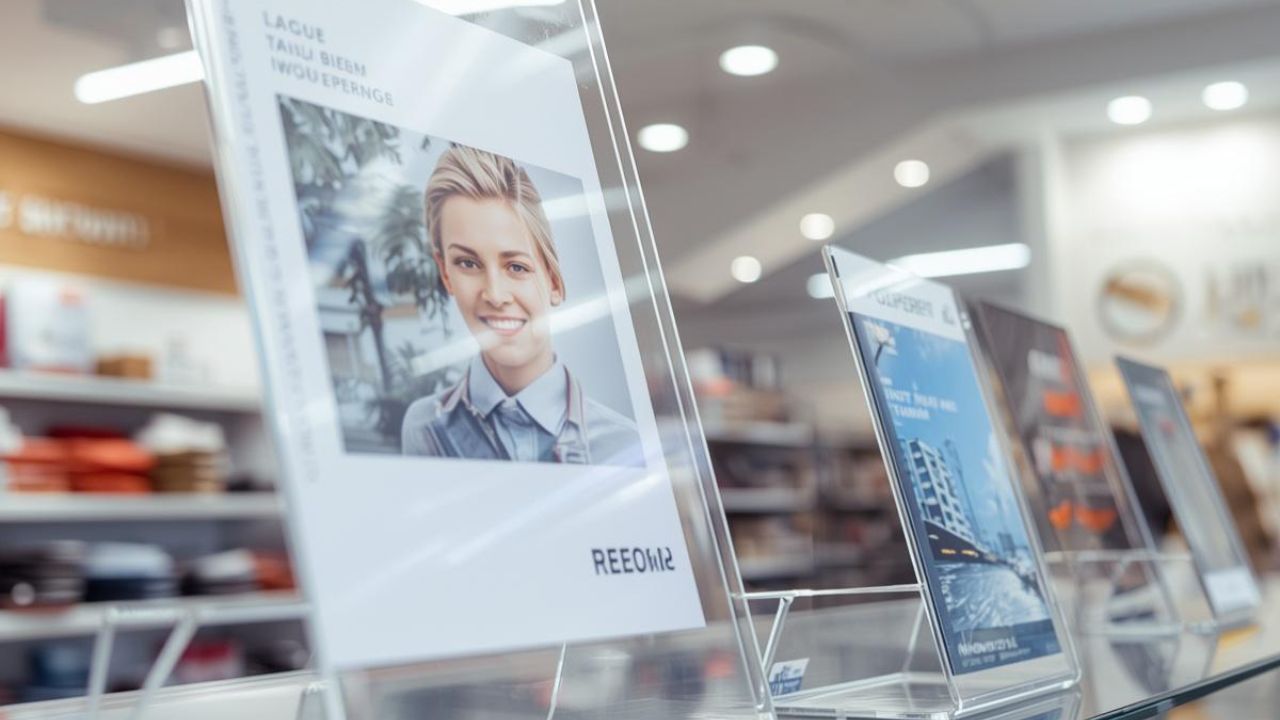
Professional business card displays and customer-facing sign holders benefit significantly from acrylic's superior clarity and durability. Investment in commercial-grade materials communicates organizational commitment to quality that customers perceive and appreciate.
Make Informed Material Decisions Based on Your Actual Business Needs
Plastic sign holders serve legitimate purposes in temporary, low-traffic, or budget-constrained applications. However, their limitations create hidden costs through frequent replacement, degraded appearance, and negative brand perception. Understanding these tradeoffs enables strategic purchasing aligned with operational requirements and customer expectations.
The decision between plastic and acrylic depends on specific use context, traffic patterns, environmental conditions, and brand positioning. Systematic evaluation using documented performance data prevents both overspending on unnecessary premium materials and false economies from inadequate budget options. Smart buyers match material capabilities to application demands, achieving optimal balance between initial investment and lifecycle value.
Displays and Holders provides commercial-grade acrylic sign holders engineered for demanding business environments. Our expertise helps operations teams, facility managers, and procurement professionals select optimal materials for specific applications. Contact our specialists to discuss your requirements and receive recommendations based on documented performance criteria rather than purchase price speculation.