










Physical brochure distribution remains valuable despite increasing digital channels. Well-positioned display stands create tangible customer touchpoints that support decision-making during critical in-store moments. Strategic placement and proper stand selection directly influence how effectively literature reaches target audiences.
Display stands serve as silent sales representatives delivering product information when customers need it most. Understanding placement strategies, material choices, and visual merchandising principles transforms basic brochure availability into coordinated distribution systems. This guide examines proven techniques that maximize engagement while controlling costs and maintenance requirements.
Key Takeaways
- Display stands influence over 60% of purchase decisions when comparing similar products in retail environments
- Placement in the 3.5 to 4.5 feet viewing zone maximizes brochure visibility and retrieval rates
- Multi-tier modular stands offer flexible literature display while conserving valuable floor space
- Material selection between acrylic, wood, and metal affects durability, visibility, and maintenance requirements
- Coordinating physical brochure availability with digital marketing creates consistent multi-channel customer touchpoints
What Are Display Stands and Their Purpose in Brochure Distribution?
Display stands are structured fixtures designed to organize and present printed marketing materials in accessible locations. These stands facilitate self-service information retrieval while maintaining professional presentation standards. Their primary purpose is delivering product details and promotional content to customers at decision-critical moments.
Effective display stands support broader marketing objectives by extending brand presence beyond digital channels. They provide physical reference materials that customers can examine, retain, and review later. This tangible connection complements electronic communications and addresses diverse learning preferences.
Types of Brochure Display Stands
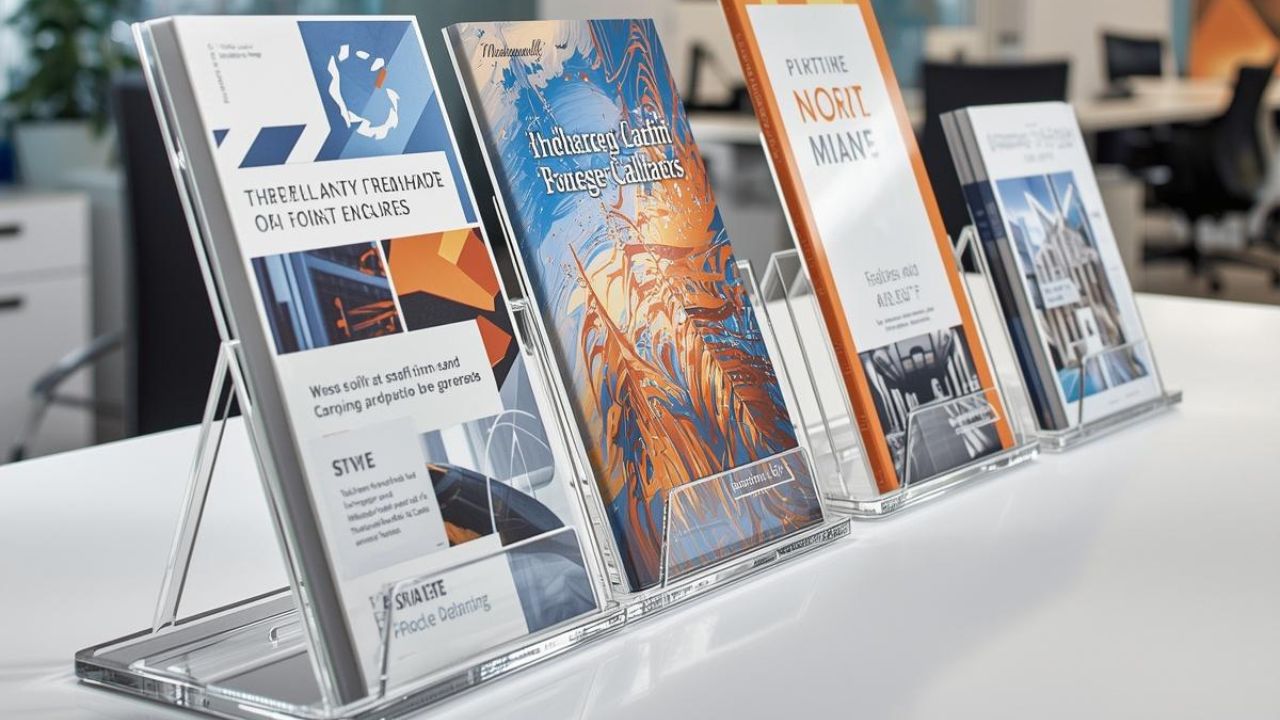
Countertop stands occupy minimal space while positioning literature at eye level for standing customers. Wall-mounted units maximize vertical space in high-traffic corridors with limited floor area. Floor-standing models offer maximum capacity and visibility for locations requiring substantial literature volume or multiple product lines.
Rotating stands provide 360-degree access to diverse materials within compact footprints. Tiered configurations display multiple brochure sizes simultaneously without requiring separate fixtures. Modular systems allow reconfiguration as literature needs change across seasons or product cycles.
Materials and Designs for Effective Display Stands
Acrylic is a thermoplastic polymer offering crystal-clear visibility that showcases brochure covers without obstruction. Acrylic is stronger than glass and lightweight, making it suitable for countertop applications. However, acrylic scratches easily, requiring careful handling during routine cleaning and restocking.
Wood offers an elegant appearance with customizable finishes that align with premium brand positioning. Metal stands provide extreme strength with long lifespans suitable for high-volume environments. Wood is susceptible to water damage, while metal units are heavy and expensive to repair when damaged.
The Role of Brochure Stands in Retail Environments
Brochure stands function as informational resources supporting purchase decisions for complex or high-consideration products. They reduce demands on sales staff by providing self-service access to specifications, pricing, and feature comparisons. This distribution efficiency allows personnel to focus on customers requiring direct assistance.
Properly stocked business card displays and literature stands create professional impressions that enhance overall brand perception. They signal organizational competence and customer service commitment through readily available information. Consistent availability builds trust and supports relationship development.
How Do Consumer Preferences Influence Brochure Distribution?
Consumer preferences directly determine which distribution approaches generate optimal engagement and retention rates. Different demographic segments exhibit distinct behaviors regarding physical literature interaction. Understanding these variations enables targeted placement strategies that align with specific audience characteristics.
Purchase decision factors vary significantly across age groups and locations, requiring adaptable strategies. Effective brochure placement considers both conscious preferences and subconscious behavioral patterns. Matching display stand types and placement to audience profiles maximizes return on literature production investments.
Generational Differences in Brochure Engagement
Baby Boomers control approximately 70% of U.S. disposable income and outspend other generations by $400 billion annually. This demographic prioritizes deals, quality, and durability, making detailed specification sheets particularly valuable. Baby Boomers demonstrate higher physical literature retention rates compared to younger segments who primarily rely on digital research.
Generation X shows the highest brand loyalty at 70%, responding well to comprehensive product documentation that reinforces purchase confidence. Generation Z prioritizes aesthetics, design, and sustainability, requiring visually striking brochure layouts with condensed content formats. These generational distinctions necessitate varied literature styles within the same distribution network.
Urban Versus Rural Brochure Distribution Approaches
Urban consumers seek variety and health-conscious options, favoring brochure content that emphasizes innovation and lifestyle alignment. Rural consumers prioritize price, value, and convenience, responding better to straightforward feature comparisons and promotional offers. These geographic differences influence both content emphasis and optimal placement locations.
Urban environments typically require more frequent restocking due to higher traffic volumes. Rural locations may benefit from larger capacity stands that reduce restocking frequency. Distribution efficiency improves when stand capacity and placement density align with actual consumption patterns.
Key Factors Affecting Purchase Decisions in Displays
75% of shoppers report that purchase decisions are not fully predetermined before entering stores, creating opportunities for informational influence. 92% of participants sometimes, usually, or always purchase unintended items during shopping trips. This well-placed brochure stands as a decision-shaping tool during active consideration phases.
Over 60% stated retail displays influenced their choice when comparing similar products or brands. More than 75% discovered a new product or brand after seeing it on a retail display. These statistics demonstrate how physical presence and information availability directly impact sales outcomes beyond predetermined shopping intentions.
What Are the Strategic Placement Techniques for Brochure Stands?
Strategic placement positions the brochure stands where customers naturally pause, wait, or evaluate purchase options. High-traffic areas generate maximum visibility but may result in hurried literature interaction. Dwell areas provide extended engagement opportunities where customers spend time considering options or waiting for services.
Effective placement balances visibility with practical retrieval logistics, ensuring customers can easily access literature. Integration with complementary retail elements creates cohesive visual merchandising. Placement decisions should reflect actual customer movement patterns documented through observation.
Identifying High-Traffic and Dwell Areas
Checkout counters represent premium dwell locations where customers wait with undivided attention. Product demonstration areas naturally attract customers already engaged in information-gathering. Waiting zones near service counters provide extended exposure time for detailed brochure content review.
Entrance transitions capture customers in receptive states before a specific product focus narrows attention. Strategic placement near complementary products creates natural information-seeking moments when customers compare options. Observation of actual traffic patterns reveals location-specific opportunities that generic retail design principles may overlook.
Integrating Brochure Stands with Other Retail Displays
Coordinated placement near product displays creates logical information flows that answer questions arising during physical product examination. Brochure holders positioned adjacent to complex merchandise provide immediate specification access without requiring customer navigation to separate information areas. This proximity reduces friction in the information-gathering process and supports faster decision progression.
Integration with digital displays creates multi-channel touchpoints where customers access both immediate digital content and portable printed materials. Complementary placement near promotional signage reinforces key messages through repetition across different formats. Visual coordination between stand design and surrounding fixtures maintains cohesive merchandising aesthetics.
Utilizing Multi-Tier and Modular Brochure Stands
Multi-tier stands display varied literature in organized configurations that guide customers through related information hierarchies. These vertical arrangements maximize information density within limited floor space, particularly valuable in high-rent retail locations. Clear category separation across tiers helps customers quickly identify relevant materials.
Modular systems allow configuration adjustments as product lines, seasonal campaigns, or promotional priorities shift. Reconfigurable components provide long-term cost efficiency by eliminating complete fixture replacement when display needs evolve. Standardized modular elements also simplify inventory management for multi-location operations.
How Can Design and Visual Merchandising Enhance Brochure Distribution?
Design optimization transforms basic literature availability into active engagement tools that attract attention and encourage interaction. Visual merchandising principles guide stand selection, positioning, and styling decisions that maximize brochure retrieval rates. Strategic design choices leverage psychological factors influencing attention allocation and information-seeking behaviors.
Effective design balances visibility with brand consistency, ensuring that the stands enhance overall retail aesthetics. Color selection, shape utilization, and sensory engagement techniques differentiate literature displays from competing visual stimuli. These elements must align with broader brand guidelines while incorporating proven retail psychology principles.
Optimizing Viewing Height and the "Strike Zone"
The Strike Zone is between 3.5 and 4.5 feet from the ground, where typical shoppers view while pushing carts. Placing key messages in this viewing zone maximizes brochure visibility during natural shopping movements. This optimal height range ensures literature remains within comfortable sight lines.
Floor-standing displays should position primary content tiers within this critical vertical band to maximize engagement rates. Countertop stands naturally occupy this zone when placed on standard-height surfaces. Strategic height optimization increases casual discovery rates among customers not actively seeking specific information.
Using Colors and Shapes to Attract Attention
Warm colors trigger impulse buying and attract immediate attention in competitive visual environments. Cool colors communicate health and wellness, making them effective for product categories emphasizing these attributes. Bold, bright colors with vivid hues create stopping power that interrupts routine shopping patterns and directs focus toward brochure content.
Curves generate more sales lift in beauty and cosmetics categories compared to angular geometric designs. Unique shapes differentiate stands from standard fixtures, increasing memorability during subsequent store visits. Color and shape selection should align with product positioning while incorporating proven attention-capture principles.
Incorporating Sensory Engagement Beyond Visuals
Multi-sensory experiences create stronger memory encoding and emotional connections than visual-only interactions. Tactile elements in stand design encourage physical interaction that increases the likelihood of literature retrieval. Textured surfaces, weighted bases, and smooth paper stocks contribute to positive handling experiences that reinforce brand quality perceptions.
Interactive elements such as sample drawers or product models integrated near brochure stands extend engagement time and information retention. Scent marketing in proximity to literature displays can create positive associations, though implementation requires careful consideration of customer sensitivities. Sensory coordination across touchpoints builds comprehensive experiences that differentiate memorable interactions.
What Are the Best Practices for Maintaining and Updating Brochure Stands?
Routine maintenance preserves professional appearance and ensures continuous literature availability. Regular inspection schedules prevent stock depletion that creates negative impressions. Systematic maintenance protocols also extend fixture lifespan by addressing wear before requiring costly repairs.
Update cycles should align with product seasonality, promotional calendars, and inventory turnover rates to maintain content relevance. Coordinated maintenance across physical displays and digital channels ensures message consistency as campaigns evolve. Proper maintenance practices demonstrate operational competence that builds customer confidence.
Routine Display Maintenance and Organization
Daily restocking checks ensure literature remains available during all business hours, preventing customer frustration. Weekly cleaning removes dust and fingerprints that diminish professional appearance. Damaged brochures should be immediately replaced to maintain quality standards.
Organizational systems using labels or color coding simplify restocking by clearly identifying correct placement. Regular inventory counts prevent unexpected stockouts by triggering reorder processes before complete depletion. Maintenance logs document completion and identify recurring issues requiring design adjustments.
Seasonal and Product-Line Adaptation
Quarterly content reviews ensure distributed literature reflects current product availability, pricing, and promotional offers. Seasonal campaigns require coordinated updates across all distribution points to maintain message consistency. Outdated materials damage credibility and create confusion that undermines marketing investments.
Product line expansions necessitate stand capacity reassessment to accommodate additional literature without overcrowding, which reduces individual piece visibility. Discontinued product materials must be promptly removed to prevent customer inquiries about unavailable items. Adaptation protocols should balance timely updates with practical change management constraints across multiple locations.
Coordinating Physical Brochures with Digital Marketing
Consistent messaging across physical literature and digital channels reinforces key points through multi-format repetition. QR codes printed on brochures create seamless transitions to detailed online content for customers seeking additional information. This integration serves diverse information consumption preferences while tracking engagement across customer touchpoints.
Cross-channel coordination ensures customers encounter unified brand experiences regardless of initial contact method. Physical brochure availability supports digital marketing by providing offline reference materials that extend brand presence beyond screen time. Sign holders and ad frames positioned near literature stands can reinforce digital campaign visuals, creating cohesive multi-element merchandising zones.
How Does Brochure Distribution Impact Customer Experience and Sales?
Physical literature availability creates tangible brand interactions that differentiate experiences from purely digital competitor approaches. Customers value having reference materials they can review at their convenience without internet connectivity requirements. This accessibility particularly benefits older demographics who prefer traditional information formats and customers with limited smartphone proficiency.
Sales impact extends beyond immediate purchases to long-term relationship development through helpful information provision without aggressive selling pressure. Well-designed distribution strategies position brands as authoritative resources rather than purely transactional vendors. These perception shifts influence repeat purchase likelihood and referral generation.
Creating Tangible Connections Through Physical Literature
Physical brochures provide portable information that customers can share with decision-making partners not present during initial shopping visits. This shareability extends marketing reach beyond original distribution points into homes and offices where additional influencers participate. Tangible materials create psychological ownership feelings that digital content cannot replicate.
Quality paper stock and professional printing signal brand investment in customer education and business competence. Physical presence creates memory anchors that aid brand recall during subsequent purchase consideration cycles. These tangible connections complement digital strategies by addressing customers who value offline information access.
Influencing Impulse Purchases with Brochure Availability
Readily available product information reduces purchase hesitation by answering specification questions before they become abandonment triggers. Detailed brochures enable customers to self-educate about features and benefits without waiting for sales assistance. This autonomy accelerates decision-making for confident buyers while providing reference support for hesitant shoppers.
Strategic placement near complementary products suggests logical combinations that increase transaction values through related item discovery. Promotional literature highlighting limited-time offers creates urgency that converts browsing into immediate purchases. Information availability removes final objections during critical decision moments.
Building Brand Loyalty via Informational Displays
Consistent information availability across multiple visits demonstrates reliable customer service commitment that builds trust. Educational content positioned as helpful resources rather than aggressive sales materials creates positive brand associations. These relationship-building approaches generate loyalty that withstands competitive pricing pressure.
Comprehensive literature covering product lines signals expertise and depth that distinguish established brands from superficial competitors. Regular content updates reflecting industry developments position brands as knowledgeable authorities that customers return to for guidance. Long-term loyalty development through informational support generates higher lifetime customer value.
What Are the Technological and Material Innovations Shaping Brochure Stands?
Recent innovations combine traditional display functionality with digital integration capabilities that enhance engagement and tracking. Modular designs now incorporate USB charging ports and tablet mounts that transform literature stands into multi-function customer service stations. These technological enhancements address evolving customer expectations while maintaining core literature distribution capabilities.
Material science advances improve durability and sustainability without compromising aesthetic qualities. Manufacturing innovations reduce production costs while enabling smaller minimum order quantities for custom designs. Understanding available options helps businesses select solutions balancing current needs with future adaptability.
Advances in Modular and Digital-Integrated Brochure Displays
Digital screens integrated within traditional literature stands combine immediate visual engagement with portable takeaway materials. Interactive elements allow customers to browse digital catalogs while retrieving printed specifications for selected items. This hybrid approach serves diverse information consumption preferences within unified fixtures that conserve valuable floor space.
Modular frameworks now accommodate both standard brochure sizes and tablet devices within reconfigurable mounting systems. Quick-change components simplify updates as promotional priorities shift without requiring complete fixture replacement. These flexible systems reduce long-term costs for businesses managing frequent campaign rotations.
Comparative Analysis of Acrylic, Wood, and Metal Materials
Acrylic offers crystal-clear visibility ideal for showcasing brochure cover designs without material obstruction or color distortion. Acrylic is lightweight compared to glass or metal alternatives, simplifying relocation for cleaning or layout adjustments. Despite its strength advantages, acrylic scratches easily, requiring gentle cleaning methods and careful handling.
Wood provides an elegant appearance and customizable finishes that align with premium brand positioning in upscale retail environments. Metal delivers extremely strong construction with long lifespans suitable for high-traffic locations. However, metal stands are heavy and expensive to repair when damaged, while wood is susceptible to water damage in certain locations.
Pricing Tiers and Cost-Effectiveness of Different Stands
The brochure display stand market is valued at $1.2 billion and projected to grow to $2.1 billion by 2033, reflecting a CAGR of 7.5%. This sustained demand occurs despite digital communication expansion. Price ranges span from under $20 for basic countertop acrylic units to over $500 for premium floor-standing metal fixtures with custom finishes.
Cost-effectiveness calculations should consider durability, maintenance requirements, and aesthetic alignment beyond initial purchase price. Higher-quality materials reduce replacement frequency and maintain professional appearance through extended use periods. Volume purchases and standardization across multiple locations typically qualify for manufacturer discounts that improve per-unit economics.
Optimizing Effective Brochure Distribution Strategies Using Display Stands
Comprehensive brochure stand strategies integrate placement principles, design optimization, and maintenance protocols into coordinated distribution systems. Success requires balancing visibility with practical logistics while aligning literature content with audience preferences and decision-making patterns. Regular performance assessment identifies improvement opportunities as customer behaviors and competitive landscapes evolve.
Strategic brochure distribution extends brand presence through tangible customer interactions that complement digital marketing initiatives. Physical literature availability addresses diverse information consumption preferences while supporting self-service decision-making during critical purchase consideration moments. Organizations implementing systematic approaches to stand selection, placement, and maintenance generate measurable improvements in customer engagement and sales performance.
Displays & Holders specializes in professional-grade fixtures designed to enhance literature distribution effectiveness across diverse retail environments. Custom displays manufactured in Anaheim, California, provide tailored solutions with 50-unit minimums that accommodate businesses requiring brand-specific configurations. Same-day shipping on stock items ensures rapid deployment for time-sensitive campaigns and promotional initiatives.
Put Your Brochures Where Customers Are Ready to Look
The right brochure stand turns idle wait time into a sales conversation. Displays & Holders builds professional acrylic brochure holders and literature displays in Anaheim, California, with countertop, wall-mounted, and floor-standing options to fit any placement in your space.
Strategic investment in quality display stands and systematic distribution approaches delivers measurable returns through improved customer experiences and sales outcomes. Contact us to discuss how optimized brochure stand strategies can support your specific business objectives and retail environment requirements.