











Key Takeaways:
- Font size formula: 1 inch lettering readable at 10 feet, scaling proportionally for greater distances with optimal viewing range 3-10 feet based on sign size.
- Standard sizes: 8.5x11" for detailed menus, 5x7" and 4x6" for countertops, 11x17" tabloid for promotions, with heights 6-12" countertop, 48-65" floor stands, 48-66" wall center.
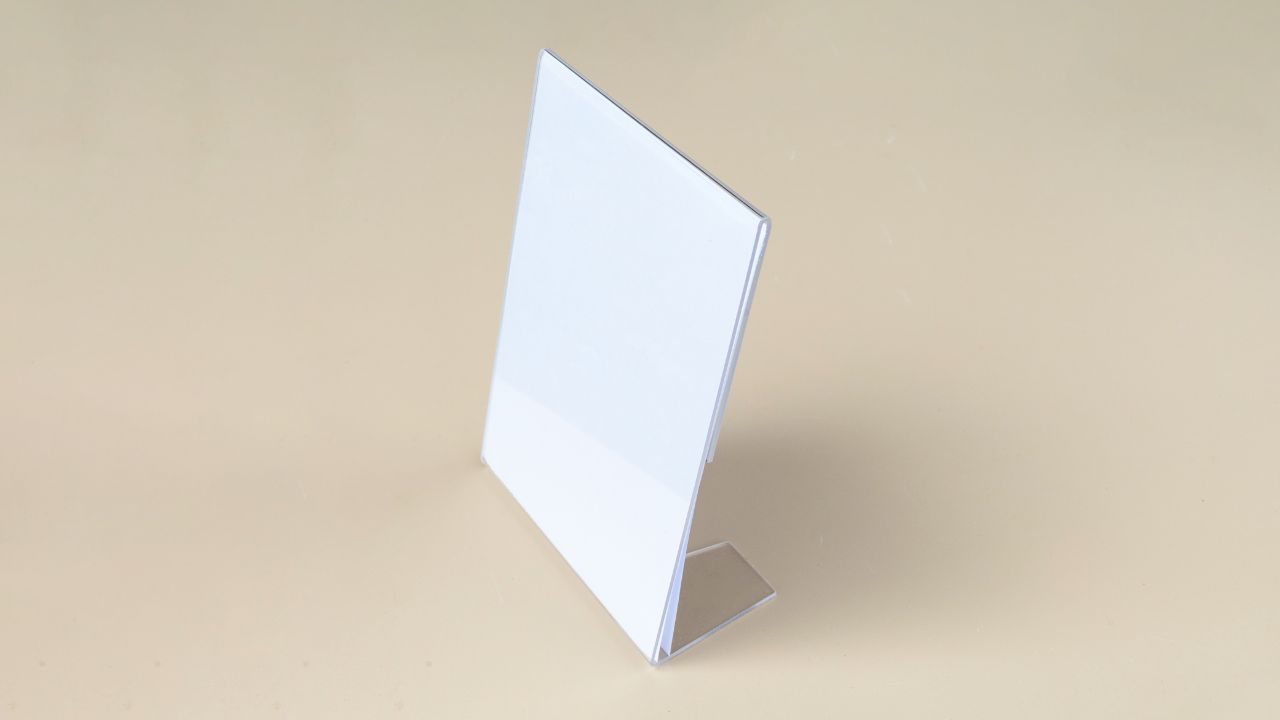
- Angled displays increase pickup rates 40-65% versus vertical with 35-70% engagement boost; 15-30° downward angle optimal for reading comfort and glare reduction.
- Strategic placement drives 12-25% retail sales increases with 65% of purchase decisions made in-store at impulse zones, 85% customer capture at entry walls.
- Conversion rates improve 15-40% from optimized placement with A/B testing, QR tracking, heat mapping, and depletion rate measurement validating size and location decisions.
Wrong sign holder sizes create readability problems, disrupt traffic flow, and waste valuable retail space. Right sizes enhance customer engagement, maximize message impact, and integrate seamlessly into store layouts. This guide provides specific measurements, placement criteria, and testing methods that help retail teams select optimal sizes based on viewing distance, location type, and customer behavior patterns.
Why Does Sign Holder Size Matter for Retail Visibility and Customer Flow?
Size determines whether customers see, read, and act on displayed information. Proper sizing creates a natural visual hierarchy that guides attention without overwhelming shoppers or cluttering valuable selling space.
How Does Size Affect Readability from Different Distances?
Font size requirements follow simple formulas: 1 inch lettering remains readable at 10 feet, increasing proportionally for greater distances. Optimal viewing distance ranges 3-10 feet depending on sign size. Readability formulas include white space ratios for comprehension, ensuring text doesn't appear cramped or overwhelming.
Image-to-text balance affects visual processing speed. Headlines versus body text hierarchy guides information scanning, allowing customers to grasp key messages quickly. Sightline calculations from customer eye level, typically 5-6 feet, determine whether signs appear within natural viewing zones. Signs placed outside these zones become invisible regardless of size and quality.
How Can Oversized or Undersized Holders Disrupt Store Layout and Presentation?
Competitive visual clutter reduces message effectiveness when too many large signs fight for attention. Brand consistency across signage maintains professional appearance that builds customer trust. Boutique versus big box store scaling requires different approaches—intimate spaces need smaller signs while warehouse formats demand larger sizes for visibility.
High-end versus discount retail aesthetic expectations differ significantly. Luxury retailers use minimal, precisely-sized signage while value retailers employ bold, larger displays. Avoiding dead zones in corners or behind fixtures maximizes visibility. Negative space importance prevents overwhelming customers, allowing breathing room between visual elements that improves message retention.
What Standard Sign Holder Sizes Should Retailers Know Before Ordering?
Industry-standard sizes accommodate common print formats and simplify reordering. Understanding these dimensions prevents custom printing costs and ensures compatibility with existing marketing materials.
When Should You Use 4" x 6", 5" x 7", or 8.5" x 11" Displays?
8.5x11 inch letter size handles detailed information and menus requiring multiple text blocks. 8.5x14 inch legal size serves regulatory postings and compliance notices needing extended vertical space. The 11x17 inch tabloid creates promotional posters with high visual impact. These sizes match standard printer outputs, reducing production expenses.
5x7 inch holders work for small countertop signs delivering quick messages at point-of-sale. 4x6 inch displays fit tight spaces like checkout counters or service desks. Tri-fold brochure holders come in standard, large, and jumbo configurations matching common brochure folds. Business card displays accommodate networking materials in compact formats. Custom sizes address specialized applications where standard dimensions don't fit unique content or space constraints.
How Do Vertical vs. Horizontal Layouts Change Size Selection?
Horizontal versus vertical orientation decisions depend on content structure and available space. Z-pattern reading behavior for horizontal layouts follows left to right, diagonal down, then left to right again. F-pattern reading behavior for vertical content creates top-to-bottom scanning with diminishing attention downward.
The human field of vision cone spans 60 degrees horizontal and 40 degrees vertical. Diagonal reading patterns revealed through eye tracking studies show customers process angled content faster. Peripheral vision engagement differs between orientations—horizontal layouts utilize wider peripheral zones while vertical formats rely on focused central vision. Match orientation to natural content flow and available mounting dimensions.
How Should You Match Sign Holder Size to Placement Location?
Location dictates size requirements based on customer proximity, dwell time, and competition for attention. Strategic sizing optimizes each placement zone's unique characteristics.
What Size Works Best for Countertops, Checkout Areas, and Service Desks?
Countertop displays measure 6-12 inches height for point-of-sale visibility without blocking staff-customer interaction. Checkout area placement captures 60+ second average wait times when customers stand stationary and receptive to information. Impulse buy zones near checkout drive 65% of purchasing decisions made in-store, making this prime real estate for promotional content.
Problem-solution positioning places solutions near pain points customers actively consider. Restaurants position menus at host stands and use table tents for specials. Healthcare facilities install check-in counter displays for intake forms and service information. Retail stores place fitting room signs and checkout promotions at decision points. Hospitality venues use lobby displays and in-room compendiums for service menus. Each location type requires sizes matching typical customer distance and dwell duration.
What Size Fits Wall-Mounted, Shelf-Edge, or Endcap Displays?
Wall-mounted sign holders require 48-66 inch center point height matching average adult eye level. Entry wall positioning captures 85% of entering customers during critical first impression moments. Endcap visibility at high-traffic pathway intersections demands larger sizes for distance viewing as customers approach.
Dressing room areas with 3-5 minute dwell times allow smaller, detailed signs customers read while waiting. Grouping related signs versus isolated placement strategies affect individual sign sizing—grouped displays use smaller individual units while isolated signs scale larger. Grid layouts versus asymmetric arrangements create different visual hierarchies. Real estate offices use window displays and reception area literature racks for property listings. Automotive dealerships install service area brochures and showroom floor stands at strategic touchpoints. Each environment demands sizing appropriate to viewing conditions and information density.
How Do Traffic Patterns and Viewing Angles Influence Size Decisions?
Customer movement patterns and sight angles determine which sizes perform effectively. Understanding these factors prevents investing in signs customers never see or can't read comfortably.
How Does Customer Distance (2 Feet vs. 10 Feet) Change Your Choice?
Customer eye level typically 5-6 feet determines optimal placement height and affects size requirements based on viewing angle geometry. Viewing distance optimal ranges span 3-10 feet depending on sign size—smaller signs work at close range while larger formats serve distance viewing. Heat mapping customer traffic patterns reveals engagement zones where customers pause versus walk quickly past.
High-traffic pathway intersections require larger sizes for visibility as customers move. Traffic flow analysis identifies optimal placement locations where natural paths create viewing opportunities. Security camera footage analysis of engagement shows distance-based interaction patterns that inform sizing. Conversion funnel integration places brochures at awareness stage entry points where customers begin product research, requiring sizes that introduce topics without overwhelming detail.
When Should You Scale Up for Window Displays or Entryway Promotions?
Ceiling heights affecting floor stand visibility from distance require taller signs in high-ceiling environments. Tall displays measuring 65-72 inches achieve visibility over crowds in trade shows and busy retail floors. Entry wall positioning for immediate visibility upon entrance demands larger sizes that register instantly from doorway distances.
Window displays require larger sizes for street-level viewing by pedestrians and passing vehicles at greater distances. Real estate offices use window displays for passerby engagement, competing with outdoor sight lines and competing visual elements. Seasonal display rotation planning accommodates promotional scaling that shifts with inventory changes and marketing campaigns. Scale up when viewing distance increases or when competing for attention against outdoor elements.
What Is the Bridge Step: How Do You Measure and Plan Before Purchasing?
Measurement prevents costly mismatches between sign size and available space. Testing confirms decisions before committing to bulk orders across multiple locations.
How Do You Measure Insert Size, Available Surface Area, and Clearance Space?
Space assessment methodology starts with measuring available retail space accurately. Wall space mapping identifies suitable mounting locations free from obstructions. Measuring available retail space prevents overcrowding that diminishes each sign's impact through visual competition.
ADA compliance considerations ensure accessibility for all customers. Ergonomic reach zones with optimal pocket placement at 30-60 inches from floor accommodate average adult heights. Children's eye level at 36-42 inches matters for family-oriented businesses. Elderly customer accessibility requirements include lower placement avoiding neck strain. Wheelchair user considerations require lower pockets within comfortable reach zones. Adjustable height models accommodate diverse customer needs across demographics. Modern hybrid display solutions integrate digital elements requiring additional power and clearance measurements beyond traditional static displays.
How Can You Test Mockups to Confirm Fit and Visibility Before Bulk Orders?
A/B testing different locations and measuring engagement provides empirical validation. Testing strategies start with high-traffic areas where results emerge quickly. Rotate placements monthly to optimize performance based on seasonal patterns and customer behavior shifts.
Measure engagement metrics including brochure depletion rates tracking how quickly customers take materials. Customer feedback collection provides qualitative insights into readability and usefulness. Competitive analysis of successful placements in similar retail environments reveals proven strategies. Customer surveys about information discovery patterns identify which signs customers notice versus ignore.
QR code integration enables tracking scanning data by placement, connecting physical sign interaction to digital conversion. Sales correlation analysis connects placement to revenue increases. These data points validate sizing decisions before enterprise-wide rollout.
How Can Retail Teams Standardize Sign Holder Sizes Across Multiple Locations?
Standardization simplifies procurement, ensures brand consistency, and enables performance benchmarking across locations. Clear specifications prevent size drift that dilutes visual identity.
What Specifications Should You Lock In for Consistent Reorders?
Standard floor standing heights measure 48-65 inches placing literature at comfortable browsing level for average adults. Standard countertop displays measure 6-12 inches for point-of-sale without blocking sightlines. Tall displays measure 65-72 inches for visibility over crowds in high-traffic or trade show environments.
Wall-mounted center point height standardizes at 48-66 inches matching average adult eye level consistently. Tracking brochure depletion rates by location enables performance comparison. Conversion rate improvements from optimized placement typically range 15-40%, providing clear ROI metrics. Heat sensors for dwell time measurement quantify customer engagement duration. Measurement and analytics track performance across locations, identifying which sizes and placements outperform. Ongoing refinement based on data prevents stagnation as customer behaviors evolve.
How Does Choosing the Right Size Improve Branding, Organization, and Store Flow?
Retail sales increases from strategic brochure placement average 12-25% when sizes match locations appropriately. Angled displays increase pickup rates 40-65% versus vertical displays through improved readability. Angled holders boost engagement 35-70% versus vertical formats in retail studies. Eye tracking data reveals longer fixation times on angled materials customers process more thoroughly.
15-30 degree downward angle proves optimal for reading comfort and neck strain reduction. 45-degree angle mimics natural reading position while reducing glare from overhead lighting. Motion parallax as customers walk past reveals content progressively, creating dynamic engagement. Subconscious associations with invitation and accessibility make angled displays feel more approachable.
Creating visual interest through dimensional variation prevents monotonous displays customers ignore. Contrast and shadow effects enhance visual appeal beyond flat presentations. Product adjacency matching brochures to related merchandise creates cross-selling opportunities. Seasonal placement rotating with inventory cycles maintains fresh, relevant messaging.
Educational content placement near complex products answers questions at decision points. Testimonial and social proof placement near final decision points validates purchase intent. Scarcity and urgency messaging at point of purchase converts consideration into action. Right sizing enables these strategic placements to function optimally.
Select Sign Holder Sizes Based on Measurement and Testing
Sign holder sizing affects visibility, readability, and customer engagement directly. Strategic size selection based on viewing distance, placement location, and traffic patterns maximizes retail signage effectiveness. Standard sizes simplify procurement while custom options address unique requirements.
Measurement methodology prevents costly errors. Testing validates decisions before bulk purchases. Standardization across locations ensures consistent brand presentation and enables performance benchmarking. Data-driven refinement improves results continuously as customer behaviors and retail environments evolve.
Displays and Holders provides comprehensive sizing options for every retail application. Our team helps operations managers and visual merchandising professionals select optimal sizes based on specific space constraints, viewing conditions, and customer demographics. Contact our specialists to discuss your requirements and receive recommendations based on documented performance data rather than guesswork.