










Key Takeaways:
- 1. Chemically recycled acrylic achieves 91% light transmission versus 92% virgin—imperceptible 1% difference delivering 94% overall performance at 15% cost savings.
- 2. Strand-woven bamboo exceeds 3,800 lbf Janka hardness surpassing traditional hardwoods with exceptional scratch and dent resistance for high-contact surfaces.
- 3. Target deployed 2,000 Recrylic® signs nationwide reporting no discernible difference in appearance, durability, or performance versus virgin acrylic.
- 4. High-concentration alcohol causes crazing in acrylic, requiring acrylic-safe non-alcoholic cleaning agents and strict protocol enforcement for longevity.
- 5. Environmental impact reaches 3.13 kg CO2 savings per kg recycled versus virgin acrylic—Target saved 110 tons across 2,000 signs.
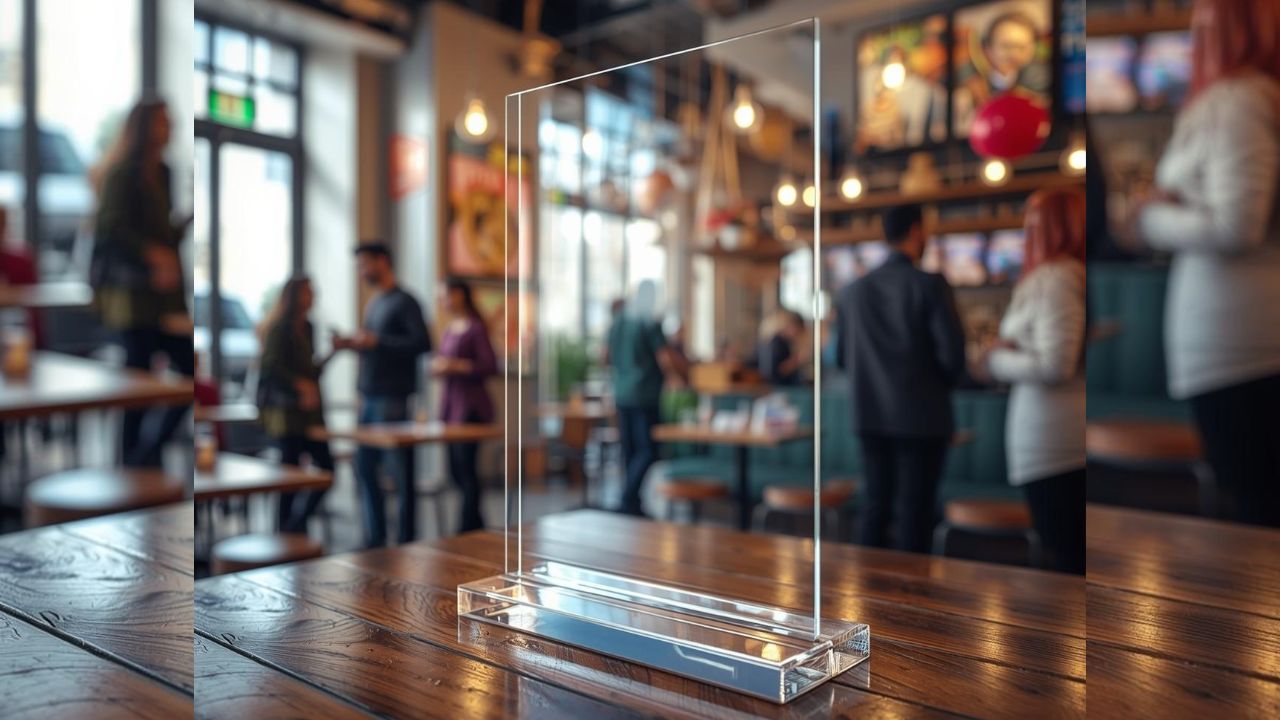
Material choice determines survival in high-traffic retail environments. Chemically recycled acrylic delivers 94% of virgin performance at 15% cost savings—making it ideal for a high-quality acrylic sign holder built to withstand daily use. Strand-woven bamboo exceeds 3,800 lbf Janka hardness surpassing traditional hardwoods. Performance testing reveals which sustainable materials withstand constant customer interaction.
Durability, scratch resistance, and stability vary significantly across eco-friendly options. Testing combines standardized protocols with commercial deployment validation. Target deployed 2,000 Recrylic® signs reporting no discernible performance difference from virgin acrylic. Life Time athletic centers confirmed exceptional performance in demanding facilities.
Understanding material limitations prevents premature failures. PLA biodegradable plastics unsuitable for permanent displays despite environmental appeal. Mechanically recycled acrylic shows 87% light transmission with visible imperfections versus 91% for chemical recycling. Strategic material matching optimizes outcomes.
What Defines a High-Traffic Retail Environment for Tabletop Displays?
Customer interaction frequency and environmental stress determine traffic classification. Point-of-sale locations, hospitality settings, and checkout areas experience highest handling rates. Material selection must account for accumulated physical stress.
Which retail locations experience the highest tabletop display interaction rates?
Point-of-sale locations face continuous customer handling throughout operating hours. Menu holders in hospitality settings undergo repeated pickup and replacement cycles. Checkout areas combine high customer density with frequent staff repositioning.
Commercial flooring in airports and retail stores serves as a durability proxy. Constant foot traffic, rolling luggage, and frequent cleaning establish demanding standards. Bamboo flooring performance in these environments validates material suitability for most demanding fixture applications.
How does customer behavior increase physical stress on tabletop displays?
Constant customer interaction creates cumulative scratching and surface abrasion patterns. Browsing customers generate impact stress through frequent handling. Repositioning during product orientation testing creates torque forces on base structures.
Accidental knocking is common in crowded retail environments. Multiple daily interactions accumulate wear beyond isolated impact testing. Physical stress compounds through browsing, accidental contact, and intentional repositioning creating comprehensive durability requirements.
What Types of Eco-Friendly Tabletop Displays Are Used in Retail Today?
Chemically recycled acrylic, strand-woven bamboo, and biodegradable plastics dominate sustainable display manufacturing. Material properties determine application suitability and replacement cycles.
Which biodegradable and recycled materials are most commonly used?
Chemically recycled acrylic (rPMMA) restores polymer to original monomer state eliminating impurities. Performance nearly identical to virgin counterpart with 91% light transmission versus 92%. Excellent impact resistance makes material viable for most retail applications including menu holders and premium product displays.
Strand-woven bamboo exceeds 3,800 lbf Janka hardness creating exceptional dent and scratch resistance. Three-tier display bins and clothing racks demonstrate structural strength and load-bearing capacity. Natural aesthetic appeals to brand identities prioritizing sustainability messaging, particularly for premium business card displays requiring both durability and visual appeal.
Mechanically recycled acrylic involves shredding and melting for reprocessing. Exhibits significant optical quality drop with 87% light transmission and visible imperfections. Suitable only for less demanding applications where clarity is secondary.
PLA biodegradable plastics unsuitable for permanent displays. Low heat deflection temperature and limited toughness create vulnerability to heat, sunlight, and physical stress. Best suited exclusively for temporary or single-use applications.
Sustainable Enviro Board offers 24-inch wide tabletop displays with 100% recyclable construction. Multiple configurations demonstrate versatility while maintaining professional presentation standards. Recycled HDPE provides an excellent value score through low cost and decent performance for budget-conscious applications.
How do material choices affect structural strength and surface durability?
Strand-woven bamboo 3,800 lbf hardness exceeds traditional hardwoods establishing superior scratch resistance. Chemically recycled acrylic maintains structural consistency through the monomer restoration process. Mechanically recycled materials show degraded properties from thermal processing cycles.
Material hardness rating correlates directly with scratch resistance performance. Polymer chain integrity after recycling processes affects surface durability outcomes. PLA brittleness limits load-bearing applications to non-structural components only.
What Performance Criteria Matter Most in High-Traffic Retail Testing?
Scratch resistance, impact tolerance, and clarity retention determine commercial viability. Early failure indicators enable proactive replacement preventing brand perception damage.
Which durability indicators signal early display failure?
Eiger Scratch Scale establishes standardized methodology ranging from level 2 (graphite pencil) to level 9 (masonry drill bit). Common objects provide comparative hardness ratings revealing surface coating performance. Taber Abrasion testing measures weight loss per 1,000 cycles quantifying material durability.
ASTM standard apparatus features horizontal arms, stylus, and controlled force application. Load-bearing strength testing evaluates floor display fixture capacity for heavy foot traffic and product loads. Comprehensive prototyping evaluation precedes commercial deployment preventing field failures.
How does visual degradation impact brand perception at point of sale?
Clarity loss signals poor material selection or inadequate maintenance protocols. Yellowing from UV exposure compromises premium positioning immediately visible to customers. Surface scratching under retail lighting undermines professional appearance standards.
Optical quality degradation is more apparent at point-of-sale than peripheral locations. Premium brands require maintaining transparency standards throughout the display lifecycle. Visual merchandising effectiveness is reduced directly by surface imperfections affecting purchase decisions.
What Types of Damage Occur Most Often During High-Traffic Use?
Scratching, chemical damage, and structural stress dominate failure patterns. Material vulnerabilities determine replacement timing and maintenance requirements.
How do scratching and surface abrasion affect eco-friendly materials?
Chemically recycled acrylic is slightly more prone to scratching than virgin though the difference is often negligible in practice. Hard-coat finish provides added protection extending lifespan significantly. Strand-woven bamboo is exceptionally resistant due to 3,800 lbf hardness rating.
Regular cleaning schedules maintain scratch resistance preventing cumulative degradation. High hardness ratings critical for high-contact surfaces experiencing continuous customer interaction. Taber Abrasion testing quantifies cumulative wear from repeated contact patterns.
Why do bending, warping, and cracking occur under frequent handling?
PLA low toughness creates vulnerability to physical stress during repositioning. Biodegradable plastics unsuitable for frequent handling applications. Load-bearing structures require engineered materials like laminated bamboo preventing warping under stress.
Material brittleness increases cracking risk during normal handling operations. Heat deflection temperature affects dimensional stability under accumulated stress. Frequent repositioning creates cumulative damage in lower-performance materials requiring earlier replacement.
How do moisture exposure and cleaning chemicals accelerate wear?
High-concentration alcohol causes crazing in acrylic over time representing primary vulnerability. Limited resistance to certain cleaning chemicals requires protocol development. Acrylic-safe, non-alcoholic cleaning agents necessary for longevity.
Harsh solvents damage polymer surface integrity beyond mechanical wear. Abrasive materials cause surface degradation compounding chemical effects. Frequent cleaning in high-traffic environments multiplies chemical exposure requiring strict protocol enforcement.
How Do Eco-Friendly Tabletop Displays Compare to Conventional Display Materials?
Chemically recycled acrylic matches premium display standards in most applications. Strand-woven bamboo exceeds virgin acrylic durability metrics. Traditional plastics maintain narrow advantages in specific criteria.
Where do eco-friendly displays perform comparably to acrylic alternatives?
Chemically recycled acrylic achieves 91% light transmission versus 92% for virgin—marginal 1% difference imperceptible to the human eye. Transparency score 9.2 out of 10 versus 9.5 for virgin. Surface smoothness 9.3 versus 9.5 creating virtually indistinguishable appearance.
Target transitioned to Recrylic® for 2,000 in-store signs reporting no discernible difference in appearance, durability, or performance. Life Time athletic centers implemented Recrylic panels in demanding facilities with exceptional performance validation. Commercial-scale deployments confirm 94% overall performance at reduced cost.
Strand-woven bamboo meets or exceeds acceptable performance threshold. Average performance score surpasses virgin acrylic in durability metrics. Most balanced performance profile for demanding retail environments with natural aesthetic appeal.
Where do traditional plastic displays still outperform sustainable options?
Virgin acrylic maintains a slight edge in chemical resistance to aggressive cleaning agents. Chemically recycled acrylic is slightly more prone to scratching though often negligible. Virgin offers marginally higher transparency (9.5 vs 9.2) for ultra-premium applications.
Mechanically recycled acrylic shows significant performance drop with 87% light transmission and visible imperfections. PLA biodegradable plastics are unsuitable for permanent displays unlike traditional plastics. Traditional materials maintain broader chemical compatibility with standard cleaning protocols.
How Can Retailers Test Eco-Friendly Tabletop Displays Under Real-World Conditions?
Standardized testing protocols enable reproducible comparisons. Multi-location deployment generates statistically significant performance data. Real-world validation confirms laboratory predictions.
How can repeated handling and repositioning be simulated accurately?
Taber Abrasion testing simulates cumulative handling through cyclical contact patterns. Weight loss per 1,000 cycles quantifies durability under repeated stress. ASTM standard apparatus applies controlled force through a stylus with horizontal arms.
Sample motion control enables reproducible testing conditions across materials. Floor display prototyping includes handling simulation before deployment. Load-bearing testing evaluates stability under repeated repositioning scenarios matching retail use.
How can retailers document wear patterns consistently across stores?
Standardized scratch resistance testing methodology enables direct comparison between locations. Visual inspection protocols document surface degradation progression. Photo documentation tracks clarity loss over time providing quantitative assessment.
Eiger Scratch Scale provides consistent hardness benchmarking across evaluators. Weight measurements detect material loss from abrasion during testing cycles. Multi-location deployment like Target's 2,000 signs provides statistically significant performance data, particularly valuable for brochure holders and similar high-contact fixtures.
How long should a high-traffic test run to produce reliable results?
Long-term viability demonstrated through extended commercial deployment periods. Target case study validates multi-year performance expectations across nationwide locations. Life Time facilities provide ongoing performance validation in intensive-use settings.
Bamboo commercial flooring use in airports demonstrates multi-year durability. 1,000-cycle abrasion testing provides accelerated wear simulation compressing years into days. Sufficient test duration captures seasonal variation and campaign cycles affecting material performance.
What Design Factors Improve Performance in High-Traffic Retail Settings?
Base stability, material thickness, and modular construction extend usable life. Design optimization compensates for material limitations enabling broader sustainable material adoption.
How do base stability and weight distribution reduce tipping failures?
Freestanding displays require stability testing before commercial deployment. Weight capacity testing ensures load-bearing adequacy for intended merchandise. Tiered display designs demand rigorous stability evaluation preventing accidents.
Three-tier bamboo display bin design demonstrates stable configuration under load. Wooden base hybrid designs improve center of gravity. Matt lacquer wooden base with acrylic combination offers stability with aesthetic appeal suitable for versatile sign holders and ad frames requiring both function and form.
How do thickness, reinforcement, and edge design extend usable life?
Hard-coat finish on acrylic provides added scratch protection extending lifespan significantly. Engineered materials like laminated bamboo enhance load-bearing structures. Material thickness directly affects impact resistance and structural integrity.
Edge design influences crack propagation resistance during handling stress. Reinforcement strategies compensate for material limitations enabling use in demanding applications. Strand-woven construction increases bamboo structural integrity beyond natural material properties.
How does modular construction reduce full-unit replacement needs?
Component-based design enables selective replacement of worn sections. Hybrid wooden/acrylic designs allow partial component updates reducing waste. Modular systems reduce disposal from complete unit failure.
Sustainable configurations demonstrate adaptability across multiple retail layouts. Versatility in eco-friendly fixtures supports seasonal merchandising changes. Partial replacement extends the overall display system lifespan reducing total cost of ownership.
How Should Eco-Friendly Tabletop Displays Be Maintained During Active Use?
Proper cleaning protocols and storage practices extend material lifespan significantly. Chemical exposure and environmental conditions during storage affect performance between campaigns.
Which cleaning methods minimize surface breakdown and discoloration?
Acrylic-safe, non-alcoholic cleaning agents mandatory for preventing crazing. High-concentration alcohol causes long-term damage requiring complete avoidance. Clear staff instructions prevent abrasive material use during routine cleaning.
Harsh solvents damage polymer integrity necessitating protocol enforcement. Developed cleaning protocols extend material lifespan substantially. UV stabilizers necessary for sunlight-exposed displays prevent yellowing. Regular maintenance schedules preserve scratch resistance through proper cleaning techniques detailed in comprehensive maintenance guides for display systems.
How does improper storage shorten display lifespan between campaigns?
Environmental exposure during storage accelerates material degradation unnecessarily. Temperature extremes affect dimensional stability causing warping. Stacking without protection causes surface scratching reducing next-deployment appearance.
UV exposure during storage leads to yellowing before redeployment. Moisture accumulation between campaigns promotes material breakdown. Proper storage protocols preserve display quality maximizing campaign reuse potential.
When Should Eco-Friendly Tabletop Displays Be Replaced in High-Traffic Stores?
Visual indicators and structural degradation signal end-of-life timing. Replacement cycles align with campaign duration and foot traffic intensity.
What visual and structural indicators signal end-of-life performance?
Clarity loss indicates optical quality degradation affecting brand presentation. Visible scratching beyond acceptable aesthetic standards requires replacement. Yellowing from UV exposure or chemical damage compromises appearance.
Surface crazing from alcohol-based cleaning signals material failure. Structural instability from material fatigue creates safety concerns. Weight loss from abrasion indicates material depletion approaching failure. Crack development signals imminent catastrophic failure requiring immediate replacement.
How should replacement cycles align with campaign duration and foot traffic?
High-traffic environments accelerate wear requiring shorter replacement cycles. Campaign duration planning incorporates material lifespan expectations. Temporary displays suit biodegradable materials with limited durability.
Permanent fixtures require chemically recycled acrylic or bamboo durability levels. Seasonal promotions enable planned replacement scheduling. Multi-year commercial deployments like Target and Life Time establish cycle benchmarks for planning purposes.
Are Eco-Friendly Tabletop Displays Viable for High-Traffic Retail at Scale?
Cost-per-use analysis reveals economic viability. Environmental benefits justify acceptable performance trade-offs. Commercial deployments validate large-scale implementation.
How does cost-per-use compare across sustainable and traditional materials?
Chemically recycled acrylic delivers 15% cost savings versus virgin acrylic. Delivers 94% performance at 85% cost creating significant value advantage. Strand-woven bamboo commands 20% cost premium but exceptional durability may justify investment for very high-traffic areas.
Recycled HDPE offers excellent value scores from low cost and decent performance. 10-year total cost of ownership analysis includes replacement costs. Strand-woven bamboo shows excellent long-term value despite initial premium. Chemically recycled acrylic demonstrates strong financial viability over lifecycle.
Target rollout saved approximately 110 tons CO2 for 2,000 signs. CO2 emissions savings reach 3.13 kg per kg using recycled versus virgin acrylic. Life Time facilities save the equivalent of 1.5-2 tons CO2 per location. Environmental ROI supports circular economy goals beyond direct cost savings.
How do sustainability goals influence acceptable durability trade-offs?
Tangible sustainability stories provide brand value beyond cost savings. Consumer expectations increasingly favor sustainable alternatives. 94% performance acceptable when sustainability benefits are included in evaluation.
Brand positioning supports premium bamboo in luxury applications. Slight scratch proneness acceptable given 15% cost savings and environmental benefits. Commercial-scale deployments validate trade-off acceptability. Marketing value from sustainability commitment offsets minor performance differences.
How Should Retailers Apply High-Traffic Test Results to Future Display Decisions?
Test outcomes guide material selection by store type and application. Standardized testing protocols improve long-term performance across deployments.
How can test outcomes guide material selection by store type?
High-traffic, high-contact surfaces require strand-woven bamboo with 3,800 lbf hardness. Premium visual merchandising applications need chemically recycled acrylic with 91% transmission and 9.2 transparency. Budget-conscious, low-impact applications suit recycled HDPE providing durable cost-effective solutions.
Temporary or promotional displays accommodate biodegradable plastics (PLA) or cardboard for short-term use. Luxury brands and very high-traffic areas justify strand-woven bamboo 20% premium. Most retail applications fit chemically recycled acrylic sweet spots at 15% savings.
Load-bearing structures need engineered materials like laminated bamboo or recycled composites. Menu holders and hospitality settings require chemically recycled acrylic maintaining clarity. High-end athletic centers validated rPMMA in demanding environments. Nationwide chains demonstrate Recrylic® performs with no discernible difference.
How can retailers standardize testing to improve long-term display performance?
ASTM standard test apparatus provides reproducible methodology across facilities. Taber Abrasion testing enables quantitative durability comparison between materials. Eiger Scratch Scale establishes consistent hardness benchmarking eliminating subjective assessment.
Multi-location deployment generates statistically significant performance data. Comprehensive prototyping evaluation before commercial rollout prevents failures. Standardized cleaning protocols prevent premature failure from chemical damage. Regular inspection schedules detect degradation before catastrophic failure occurs. Performance data from commercial deployments informs future specifications improving outcomes.
Strategic Implementation of High-Traffic Eco-Friendly Displays
Chemically recycled acrylic delivers optimal balance hitting 94% performance at 15% savings. Strand-woven bamboo exceeds traditional materials in durability applications. Material selection matrix matches properties to application requirements.
Testing validates sustainable alternatives that match traditional materials in most applications. Target 2,000-sign deployment and Life Time facilities prove commercial viability. 91% light transmission versus 92% virgin creates an imperceptible difference. Transparency scores 9.2 versus 9.5 maintain premium standards.
High-traffic testing reveals material-specific vulnerabilities enabling mitigation. Alcohol-based cleaners cause crazing requiring protocol enforcement. Hard-coat finish extends acrylic scratch resistance substantially. 3,800 lbf bamboo hardness exceeds traditional hardwoods creating superior durability.
Cost-performance analysis shows 15% savings with 94% performance creating value advantage. 10-year total cost of ownership includes replacement cycles. Environmental benefits reach 3.13 kg CO2 savings per kg. The target saved 110 tons CO2 across 2,000 signs. Life Time facilities achieve 1.5-2 tons per location.
Standardized testing protocols enable reproducible comparisons. Taber Abrasion quantifies wear through 1,000-cycle simulation. Eiger Scratch Scale provides consistent hardness benchmarking. ASTM apparatus ensures controlled force application. Multi-location deployments generate statistically significant data.
Design optimization extends usable life compensating material limitations. Base stability testing prevents tipping failures. Hard-coat finish provides scratch protection. Modular construction enables selective component replacement. Hybrid designs combine material advantages.
Material selection matrix guides application matching. High-contact surfaces require bamboo 3,800 lbf hardness. Premium visual merchandising needs chemical recycling 91% transmission. Budget applications suit recycled HDPE value propositions. Temporary displays accommodate PLA biodegradable short-term use.
Maintenance protocols prevent premature failure. Acrylic-safe non-alcoholic agents are mandatory. UV stabilizers necessary for sunlight exposure. Proper storage preserves quality between campaigns. Regular inspection detects early degradation.
Replacement timing aligns with visual and structural indicators. Clarity loss signals optical degradation. Surface scratching exceeds aesthetic standards. Crazing indicates chemical damage. Structural instability creates safety concerns. Cycle planning incorporates campaign duration and foot traffic intensity.
Commercial validation proves large-scale viability. No discernible performance difference reported by Target. Exceptional performance confirmed by Life Time. Bamboo flooring durability in airports and retail validates fixture applications. Multi-year deployments establish replacement cycle benchmarks.
Professional Eco-Friendly Display Implementation
Displays and Holders specializes in sustainable display solutions balancing environmental goals with performance requirements. Our team provides material selection guidance based on actual high-traffic testing data, commercial deployment outcomes, and total cost of ownership analysis.
We understand matching eco-friendly characteristics to real-world retail conditions. Our comprehensive approach includes durability testing coordination, standardized cleaning protocol development, and replacement cycle planning ensuring successful program outcomes. Expert consultation covers chemically recycled acrylic specifications, strand-woven bamboo applications, and performance trade-off evaluation.
Contact Displays and Holders today for high-traffic testing consultation. We offer material performance analysis, cost-per-use calculations, and implementation planning support. Our evidence-based approach leverages commercial deployment data from Target, Life Time, and airport installations informing specifications that withstand demanding retail environments while advancing sustainability objectives through proven material alternatives.